

THE other day, the Nigerian Presidency made efforts to refute a rating by anti-corruption watchdog, Transparency International (TI), which reported that the country had slid down its perception index. TI’s rating showed Nigeria dropped to 149th position out of 180 countries assessed. It was the country’s worst showing on the Corruption Perception Index since 2015.
Notwithstanding the vehemence with which the government attempted to refute the rating, there were a plethora of other disturbing developments, which combined to validate the rating, while raising questions about the government’s avowed commitment to address corruption.
Nigerians will recall that on the campaign trail of 2015, and later in 2019, President Muhammadu Buhari and his party, the All Progressives Congress (APC), made corruption a major issue in the debates. The President left no stone unturned in presenting the election as a choice between a “corrupt and clueless” Peoples Democratic Party (PDP) government and an APC government of “change,” which would clean the Augean stable. Almost six years on the saddle, the President and his party appear to have forgotten those many pledges. The result is that the anti-corruption efforts of the government have become ineffective and tepid.
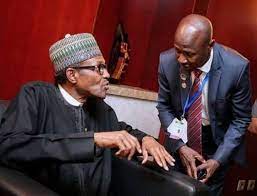
First, there are the several unresolved issues, which led to the unceremonious departure of Ibrahim Mustapha Magu, the former Acting helmsman of the Economic and Financial Crimes Commission (EFCC). Magu was suspended from office last year and brought before a Presidential Panel set up to probe his activities at the Commission. The Panel, which was headed by a former President of the Court of Appeal, Justice Isa Ayo Salami, after much delay, submitted a report to the President. The public deserves to know the key outcomes of the Salami report, and how it shaped the recent changes at EFCC. This should be standard practice for a government serious about promoting openness, transparency and accountability. Unfortunately, till date, the Nigerian people have not been told if the former Acting Chairman of EFCC was found wanting of the allegations leveled against him or not.
It is similarly also not appropriate that up till this moment, the government has not provided any information to indicate whether other top officials in the Commission swept aside alongside Magu stand suspended, indicted or are altogether not guilty of the accusations, which led to their suspension. Such a hazy and opaque approach is likely to undermine public confidence in anti-corruption efforts. However, if the less than transparent handling of the Magu situation rankles, the open war of attrition between rival camps within President Buhari’s anti-corruption team is an embarrassment to the government.
The most recent manifestation of this syndrome of a house divided against itself is the open conflict between Professor Itse Sagay who chairs the Presidential Advisory Committee on Anti-Corruption (PACAC), and the Attorney-General and Minister of Justice, Abubakar Malami. The cause of the altercation between the two senior officials driving the President’s anti-corruption agenda can be traced to their differences over the appointment and recent confirmation of Abdulrasheed Bawa as substantive Chairman of the EFCC. Shortly after the nomination of Bawa, Sagay reportedly portrayed him as a minion of the Attorney-General, and expressed doubt about the possibility of the new EFCC helmsman freeing himself from Malami’s apron strings.
With such scathing scrutiny implying that the new EFCC helmsman is not likely to properly discharge the duty of decisively fighting corruption, the PACAC boss poured cold water on the initial commendation for Bawa’s appointment on account of his being a much younger pick. Malami later responded with his own vituperation against Sagay, which suggests a clear lack of unity and common vision to fight corruption. This open quarrel puts the EFCC in unflattering light with its independence being called to question, just as its leadership selection process has been assailed.
An effective anti-corruption institution cannot be built on the back of such verbal exchanges that creates bitterness and animosity. If two highly placed officials of the government are not on the same page on a matter as critical as who leads the EFCC, how will the administration record successful outcomes in the fight against corruption? The impolite exchange creates the impression that the government lacks the discipline to manage relations and communication between and among the members of the team. Apart from the erosion of trust, the face-off would send wrong signals to Nigeria’s many partners in the international community whose support is critical to achieving results.
Consequently, while top officials of the government have spent time bickering, several key tasks have been left unattended to. A number of civil society organisations have thus been raising alarm about abandoned cases of corruption amounting to billions of Naira. Interestingly, too, the recently released report of the Auditor-General has further brought to the fore the massive looting taking place on the watch of the government. As it stands, the report on its own has indicted several unscrupulous public officials in the ministries, departments and agencies of the government. What the government ought to do is to retool and empower the anti-corruption agencies to move in quickly to ensure that those responsible for the disappearance of public funds are held to account.
President Buhari should not forget that he has a Constitutional mandate as stipulated in Section 15(5) of the 1999 Constitution, as amended that: “The State shall abolish all corrupt practices and abuse of power.” With over two years remaining before the completion of his second term, the President and his government can still recover from their lethargic posture. They can do this by creating a strategy and support systems to enable the anti-corruption agencies decisively fight corruption across all tiers of government.
The government therefore has to put in place a mechanism to resurrect and diligently prosecute cases, which appear to have been abandoned by the Commission. In addition, beyond the reported high level corruption happening at the federal level, there is need to also focus on the corruption happening at other levels of government.
The EFCC, the Independent Corrupt Practices and other related Offences Commission (ICPC) and other anti-corruption institutions must pick an enduring interest in what is happening in the states and local governments, where incidents of petty corruption and financial crimes are equally pervasive. For all of these to happen, the President has to demonstrate the moral leadership required to rally his lieutenants to be on the same page. The President’s legacy will be assessed on the basis of how well he is able to deliver on his promise to lead Nigeria to deal a decisive blow against corruption. As President Buhari rightly observed in one of his soundbites on the issue, “If Nigeria does not kill corruption, corruption will kill Nigeria.”
With this knowledge about how badly corruption is hobbling Nigeria’s progress, the President can no longer remain aloof. It bears restating that the President’s rhetoric on the subject was one of the unique selling points of his campaign. The promise to the electorate was that an APC government would smash corruption and restore sanity in governance. Nearly six years down the line, and given the many anomalies which have become synonymous with the administration’s anti-corruption fight, very few Nigerians are convinced that the administration is on track to fulfill its promises. The earlier the administration realises the damage this poor perception poses and reset its priorities, the better for the country.


7 comments
… [Trackback]
[…] There you can find 17231 additional Information on that Topic: naijatimes.ng/resetting-buharis-anti-corruption-crusade/ […]
… [Trackback]
[…] Information to that Topic: naijatimes.ng/resetting-buharis-anti-corruption-crusade/ […]
… [Trackback]
[…] Information to that Topic: naijatimes.ng/resetting-buharis-anti-corruption-crusade/ […]
… [Trackback]
[…] Information on that Topic: naijatimes.ng/resetting-buharis-anti-corruption-crusade/ […]
… [Trackback]
[…] Find More here on that Topic: naijatimes.ng/resetting-buharis-anti-corruption-crusade/ […]
… [Trackback]
[…] Find More Information here to that Topic: naijatimes.ng/resetting-buharis-anti-corruption-crusade/ […]
… [Trackback]
[…] Read More to that Topic: naijatimes.ng/resetting-buharis-anti-corruption-crusade/ […]
Comments are closed.