

“Whether SERAP’s and similar calls by anti-corruption crusaders are heeded by the government or not, the reality is that the Buhari Presidency is already writing its history. The plethora of financial scandals, which have dogged the government since it came on board in 2015 are surely antithetical to its promises to crack down on corruption when it sought the votes of Nigerians.”
THE ongoing inquest at the Nigeria Ports Authority (NPA) over billions in revenues allegedly not remitted to the federation account, has again put government’s commitment to fiscal discipline, transparency and accountability under the microscope.
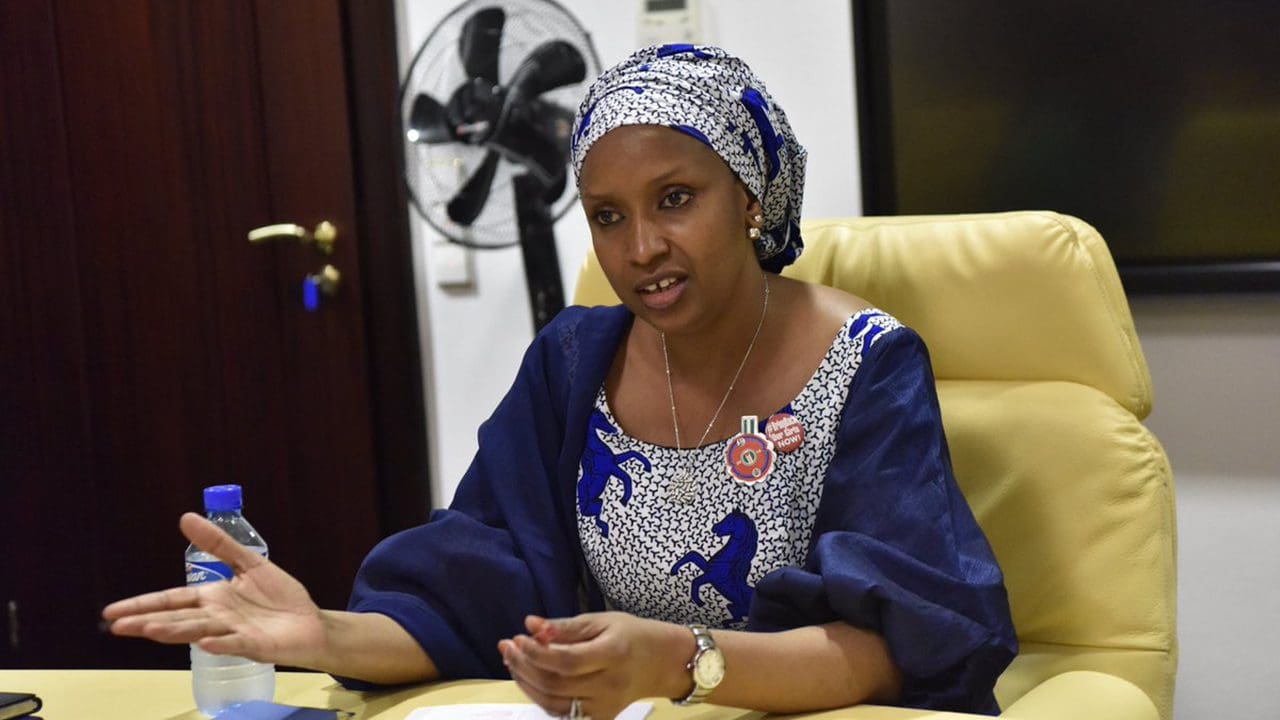
In the past week, there has been a cocktail of salacious media accounts, which have in essence pointed at the direction of Hadiza Bala Usman, who was recently eased out of her position as Managing Director of the NPA.
Leaked correspondence from the Minister of Transportation, Rotimi Ameachi urging President Buhari to authorise an investigation of the finances of the NPA from 2016 till date has caused ripples.
The need for an impartial probe is said to be the reason the erstwhile NPA helmswoman was asked to step down to pave the way for unfettered probe of the books of the agency.
Amaechi’s letter to Buhari on March 4, 2021 strongly canvassed the position that an outstanding balance of N165,320,962,697 had not been remitted to the federation account by the NPA. “In view of the above, I wish to suggest that the financial account of the activities of the Nigeria Ports Authority be investigated for the period of 2016 to 2020 to ascertain the true financial position and the outstanding unremitted balance…”
While a motley of other voices have attempted to portray Minister Amaechi’s letter as a power grab aimed at installing his loyalist at the helm of the agency, the key accountability issues raised appear not to have been satisfactorily dealt with.
In her response, the ex-NPA boss in a May 5, letter to the Chief of Staff to President Buhari tried to portray the crisis as one created by computational misunderstanding. She said the agency had been using a template provided by the Fiscal Responsibility Commission to calculate what should accrue to the federation account from the NPA’s operating surplus. Bala-Usman also implied that the figures provided by the Budget Office upon which the Minister invited a probe of the agency finances, were not accurate as they were not based on the actuals generated by the NPA.
The latest debacle over unremitted funds adds to a pile of many other controversies which have dogged the Buhari government over what many stakeholders perceive as lax fiscal management. At the last count, revenue generating agencies like the Nigeria National Petroleum Corporation (NNPC), and the Federal Inland Revenue Service (FIRS) have come under severe public scrutiny for their consistent failures to either meet revenue targets or send what is due to the federation account.
In the face of dwindling revenue, state governments are especially facing tough times. Last week, the NNPC made it clear in a letter to the Accountant-General of the Federation that there would be no funds to contribute to the federal pot for distribution in May. According to the national oil company, the commitment to subsidy payment especially in the face of the rise in the landing cost of petrol, has left it unable to remit any funds for the normal monthly sharing by the three tiers of governments.
However, as the government is crying to the high heavens about the funding constraints it is facing, experts in public finance have pointed at the fact that it has remained unwilling to do something about the many leakages draining the country’s finances.
Recently, BudgiT, a frontline civic group which monitors public finance released a report indicating that the 2021 federal budget contains 319 duplicated projects worth 39.5 billion. The damning report from the civic tech group also provided data to show that there were no audit records or trails for the N10.02 trillion received by the security sector between 2015 and 2021.
For anti-corruption crusaders, and other advocates of probity and accountability in public finance management, the many cases of financial recklessness, revenue losses and unbridled leakages are indicators of the lack of political will of the Nigerian leadership at the highest level to rein in those responsible for illegally draining the country’s financial resources.
While the public awaits the possible outcomes of the NPA probe, the government appears not too keen to take decisive action on the issue of duplicated projects in the 2021 federal budget. Since civic groups drew the attention of the government to the anomalies in the budget, mum has largely been the word from the responsible agencies. The only notable reaction has been from the Independent Corrupt Practices and other Related Offences Commission, whose Chairman, Professor Bolaji Owasonoye was quoted by the News Agency of Nigeria (NAN) to have warned public officials to desist from duplicating projects.
In the eyes of many anti-corruption crusaders the silence of the government conveys the impression that it is too weak to rein in those responsible.
Others have asserted that not much decisive action would be taken to arrest the unhealthy trend because the culture of impunity and financial recklessness in government is so pervasive that the vast majority of the bureaucracy is complicit in it.
Seeing no keenness on the part of the Presidency to decisively address the issue, the Socio-Economic Rights and Accountability Project (SERAP) has urged President Buhari to “direct the Attorney General of the Federation and Minister of Justice Mr Abubakar Malami, SAN, and appropriate anti-corruption agencies to investigate ministries, departments and agencies (MDAs), and members of the National Assembly suspected to be responsible for inserting N39.5bn for apparently 316 duplicated and mysterious projects in the 2021 budget.”
SERAP said: “Any such investigation should establish whether public funds have been mismanaged, diverted or stolen in the guise of implementing the duplicated and mysterious projects. Anyone suspected to be responsible should face prosecution as appropriate, if there is sufficient admissible evidence, and any stolen public funds should be fully recovered.”
In the letter dated May 8, 2021, and signed by SERAP deputy director Kolawole Oluwadare, the organisation said: “The misallocation of public funds for duplicated and mysterious projects has seriously undermined the ability of the indicted MDAs, and the government to ensure respect for Nigerians’ human rights through developing and implementing well-thought-out policies, plans, and budgets.”
SERAP also said: “We are concerned that the N39.5bn duplicated and mysterious projects may have been used as a ploy to divert and steal vital resources from MDAs. Budget allocations and expenditure ought to be well-suited to ensure access of Nigerians to basic public services, and responsive to the people’s needs in order to prevent corruption or unnecessary or wasteful spending.”
Whether SERAP’s and similar calls by anti-corruption crusaders are heeded by the government or not, the reality is that the Buhari Presidency is already writing its history. The plethora of financial scandals, which have dogged the government since it came on board in 2015 are surely antithetical to its promises to crack down on corruption when it sought the votes of Nigerians.
For an All Progressives Congress (APC) government, which clinched the Presidency partly on account of its messaging on the need to deal a severe blow to corruption, the tendency of frequent allegations of unbridled corruption within the government does its image no good.
Nearly six years after, the avalanche of financial infractions have cemented the impression that one of the many albatrosses the regime would carry is the one which spotlights how the government won an anti-corruption mandate, only to find itself drowning in one corruption scandal or the other.


1 comment
… [Trackback]
[…] Read More on to that Topic: naijatimes.ng/npas-unremitted-funds-and-govts-accountability-deficit/ […]
Comments are closed.