
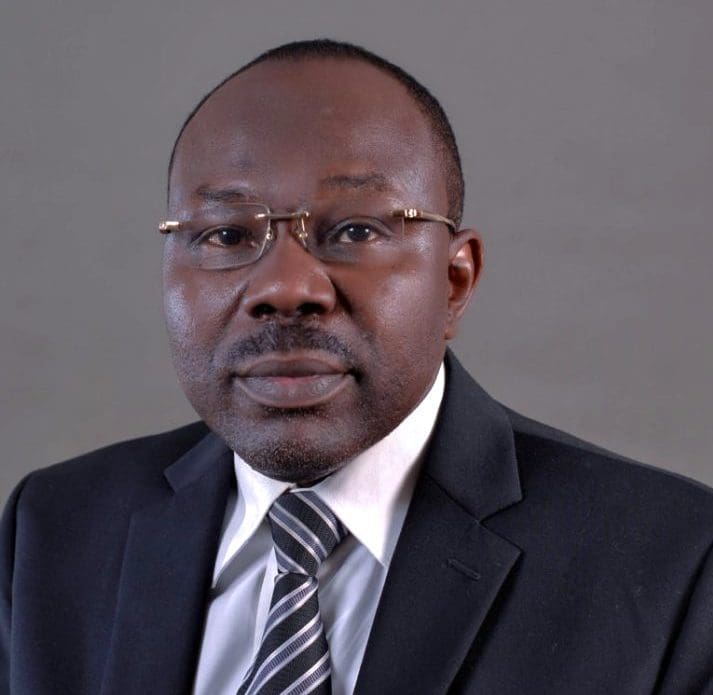

(Being text of a lecture delivered by Dr Muiz Banire, lawyer, political activist on occasion of the virtual celebration of 50th birthday anniversary of journalist, lawyer and PR practitioner, Niran Adedokun, today, September 18)
LET me start by congratulating my friend, Niran Adedokun, on his golden birthday jubilee. May the good Lord continue to abide with you as you sojourn ahead in ripen into a centenarian. I also appreciate you for providing this platform to share my thoughts on a seemingly intractable issue in our polity. It is equally my pleasure to be requested to deliver this lecture considering the audience here which composed of a galaxy of competent and astute men and women of knowledge in the area of journalism where you constitute a pillar in your own right. One of the rationales for declaring pleasure in this activity is not simply because I love public discourse, but due to the present situation of things in our country which calls for a sober reflection amongst all of us in our different capacities as leaders on one hand, and followers, on the other hand. It is a sad commentary on our affairs that our role as leaders in this generation has been a terrible source of worry. In consequence, those who should emulate our ways of life for the betterment of tomorrow have denigrated our profession of faith in the survival of Nigeria. They have justifiably concluded that we cannot will what we do not have.
For this wonderful opportunity to probably once again steer the hornet’s nest, may I express my appreciation to all of us on this platform that have gathered to listen to me in the celebration of a great journalist and lawyer. I must say that there is nothing special in what I will be discussing as several scholars or commentators would have, at one time or another, said similar things. However, before venturing into the full purport of my discourse, and since the topic revolves round the country called Nigeria, I consider it desirable and probably worth having an incursion into what the nation depicts, particularly in terms of its content.
NIGERIA
Although it might appear like giving a description of what is clearly known to all by attempting to describe the country, Nigeria, since, presumably, my audience consists of Nigerians, but on a second thought, that assumption might be erroneous as the possibility of non-Nigerians listening to this presentation cannot be ruled out. In addition, a paper of this nature can, at a point in time, get into the hands of someone who is not a Nigerian, particularly in this age of social media. Aside from that, it is doubtful if some Nigerians even understand the nature of their country which makes them to hold fast to an opinion about how the country should be run no matter how inconsistent with the reality of the whole drawn from its parts.
To this end, therefore, I consider it apt to delve a bit into the entity called Nigeria. The country is located in West Africa with an area coverage of 923,769 square kilometers and an estimated population of over 240 million people. Although the capital is located in a place called Abuja, it is often said that the commercial capital is in a place called Lagos which is the most populous city in the country and one of the most populous in the world. In fact, Lagos is the second biggest city in the African continent and said to have a population in excess of twenty million people.
The country, Nigeria, came out of the merger of the Northern and Southern protectorates in 1914. Of importance to our discussion today is the various ways in which the peoples that constitute Nigerians emerge. There are about 350 national or ethnic groups in the country, each with its own distinct language, culture and to a large extent, religion. While the fact of the number of ethnic nationalities might be controversial, that which is not disputable is the existence of not less than ten principal national groups, constituting not less than eighty percent of the population. They are Hausa/Fulani, Yoruba, Ibo, Efik/Ibibio, Kanuri, Tiv, Ijaw, Edo, Urhobo, Nupe. In many ways, culturally, politically, socially, customarily and even religiously, they all differ from each other. This explains the adoption of different models of colonization for the Northern and the southern parts of the Country. Whilst the colonialization of the south was done through the missionaries and traders, with the adoption of western education as a potent tool, the colonization of the North was largely executed through military conquest. This is the categorization often referred to as direct and indirect rule.
The governance model in the North was through the various Emirs and Native rulers as opposed to direct dealings with the subjects in the south. The conquest system was wheeled on the loyalty concept to the Emirs and Native rulers, unlike the practice in the South. Furthermore, as western education in the South was beginning to be an albatross for the colonial administration in the South by virtue of the people’s gradual resistance, there was absolute need for change of tactics in the North, the resultant effect of which was the discouragement of western education in the Northern protectorate. This led to Lord Lugard declaring western education to be a sin, an equivalent of what is in modern times referred to as boko haram. ( A Fatherless People, The Story of How the Nigerians Missed the Road to the Promised Land, by Dele Ogun, published by Lawless Publications, London, 2017). The only permissible form of education was technical education except for the sons of the Emirs. This was in line with the educational policy of E. D. Morrel (See ‘Nigeria: Its People and its Problems (1911)) that has the following characteristics adaptable to the people of the North. Education that placed development of character before the intellect (this is in terms of obedience), promotion of Islam and koranic education and exclusion of missionaries and western education. Comparatively therefore, unlike in the South where western education and missionary activities were actively promoted, the contrary obtained in the North. This factor had, and possibly still has its impact on the nature of the people from the North as opposed to those from the South.
Apart from the ten principalities hitherto mentioned, there existed several other independent ethnic nationalities such as the Yorubas, the Niger Deltans, Bonny people, Opobo, Tsekiri, Benin, Egba who had their own governmental structure and independence since 1893 till September 1914. Nupe, Sokoto, Fulani, Bornu, Tiv etc., all have distinct cultural backgrounds with different dispositions and resources. They were people of different cultural backgrounds as stated above.
Apart from those primordial distinctions, there was a wide gap in economic prosperity between the two protectorates. While the Northern region was perpetually in deficit leading to the subsidization of the cost of administration of the Protectorates by the Home Office in London, the reverse was the case in the southern part of the country with economic buoyancy and surplus after the cost of governance and administration of the protectorate. As the governance subsidy from the Home office continued to mount and became a burden on the treasury of the Home Office, the idea was muted to merge the two protectorates into one so as to eliminate the burden of the Home Office in subsidizing the north. By this, the surplus of the Southern protectorate would be able to cover the deficit in the cost of governance of the northern protectorate. This economic imperative informed the eventual amalgamation of the of the two protectorates into one and designated as Nigeria in 1914.
It is important to continue to bear in mind the sustained differences amongst the different ethnic groups that were coerced into the marriage, the reality of which probably informed the view of some commentators including the late sage, Chief Obafemi Awolowo that Nigeria is just a mere geographical expression with distinct nationalities. I have gone this far to demonstrate the fact that Nigeria as a country has never been a united race and consequently, the potential of continuous conflict remains a perpetual reality. This is also to unveil the fact that historically, the North would appear to have traditionally been an economically unviable structure in the arrangement, the administrative imperative of which compelled the amalgamation.
This brief account of the evolution of Nigeria also confirms the loyalty system obtainable in the North which is still prevalent. With this scenario, the expectation upon the formation of the country would be the promotion of nationalism in the land. To what extent this has been achieved, can be gleaned from the First Republic to the present. From late Awolowo’s perspective, factors such as ‘gross incapacity and utter lack of honesty and comprehension on the part of those who directed and administered the affairs of the federal government; abnormal imbalance in the constituent units of the federation; total absence of correct ideological orientation and of courageous and unselfish leadership at all levels of our governmental activities, but more especially so at the federal level; tenacity of office, that is, overpowering an obsessive desire on the part of our political leaders to stick indefinitely to public offices by all means, fair or foul’ were responsible for the fall of the First Republic. These failures he attributed to both the deficiency in the Constitution and the human propensities to evil-doing. All these are still very much with us a nation. Suffice to say that the situation, rather than improving, is degenerating vastly by way of the promotion of our diversity. How this impacts the growth of the country and shall continue to do so, will unveil in the course of our engagement. With this disposed of, I further consider it material to undertake conceptual clarification of other key concepts of the topic.
CONCEPTUAL CLARIFICATIONS
Reform
As part of the key words crucial to this discussion is ‘Reform’. According to Meeriam-Webster English Dictionary, reform is ‘to put or change into an improved form or condition; to amend or improve by change of form or removal of faults or abuses; to put an end to (an evil) by enforcing or introducing a better method or course of action; to induce or cause to abandon evil ways’. In the context of our discussion, this means the displacement of the old or evil ways of doing things that has not been beneficial to the nation or the system. It is this that will constitute our working description of the term.
People
Another term worthy of considering is the word ‘people’. The New Webster’s Dictionary defines it as ‘Human beings. A collective group of persons, one’s family or parents. The members of a particular race or nation…’
Oxford Advanced Learner’s Dictionary on the other hand, defines it as “persons; men, women and children. Persons in general or everyone. All the persons who live in a particular place or belong to a particular country, race etc.”
Black’s Law Dictionary gives a wider definition which may situate the concept more within the context of our discussion here. To this extent, it defines the word “people” as “Men, women and children generally; persons other than one’s self, often those of a particular type. The citizens or other permanent residents of a particular country or area. Those of a particular race. All the ordinary residents of a country or state as opposed to the government or ruling class. Those that a monarch or leader rules or governs; subject generally.”
From the various definitions proffered above by the authors, two salient features of people are germane to our discussion. Contextually therefore, ‘People’, for our purpose refers to all the persons that live in a particular place or belong to a particular place or race; collective or community of an ethnic group. The other connotation is that of all persons existing in a nation excluding the ruling class or leadership.
Structure
The word “structure” is quite important in our discourse of today. Lexical definitions, just like in the cases of the other terms considered above, have given us some perspectives into the meaning that can be ascribed to the word. Thus, according to the New Webster’s Dictionary, the word “structure” is defined as
Something (e.g. a building or an organism) made of parts fitted or joined together. The essential supporting portion of this (e.g. the framework of steel girders supporting a building). The way in which constituent parts are fitted or joined together, or arranged to give something its peculiar or character, plant structure, the structure of the society.
The Oxford Advanced Learner’s Dictionary defines the word as
‘The way which parts of something are connected together, arranged or organized; a particular arrangement of parts. A thing that is made of several parts especially a building. The state of being well organized or planned with all the parts linked together; a careful plan. To arrange or organize something into a system or pattern.
Inferable from the definitions given above is the reality that the ‘structure’ referred to in this engagement relates to the ways and manner in which the constituent parts of Nigeria are put together, whether organized or planned. I have refrained from wholesomely adopting any of the definitions offered by the authors, bearing in mind the caveat of Niki Tobi, JSC, of blessed memory in the case of Olafisoye v FRN [2004] 4 NWLR (Pt. 864) 580 @647, para E when His Lordship said:
“…………. Definitions are definitions because they reflect the idiosyncrasies, inclinations, prejudices, slants and emotions of the person offering them. While a definer of a word may pretend to be impartial and unbiased, the final product of his definition will, in a number of situations, be a victim of partiality and bias”.
Our thesis, stemming from all the above, is that the country called “Nigeria” is not in a good state for reasons quite obvious to all but seemingly intractable. Hence the enquiry as to whether it is the people that inhibit the country’s growth or the structure. The essence of the inquisition being to discover factors necessary to be put in place towards rejuvenating the dysfunctional country. Arising even from the topic, there is the presumption that the country is unhealthy but with no clear diagnosis capable of providing prognosis. This accounts for the various policy experimentations in the country with no desirable accomplishment.
In this exercise, I equally will not claim to have the antidote to the various ailments afflicting the nation but will only attempt to lay before you some of my thoughts for further interrogations. Now with the conviction that Nigeria is not too distant from a failed nation; with insecurity ravaging all parts of the country, unemployment figures soaring daily, the value of the currency and by extension, the purchasing power dwindling, infrastructure collapsing, health care in a state of coma, quality education vanishing, food security endangered, justice on the run, even morals and value eclipsing, it is certain that we have more than enough to deal with. Evil will seem to be flourishing in the country as religion has equally ceased to answer its natural design of what it used to be in point of salvation but now centers on prosperity. All hopes, it will seem, pardon my pessimism, are lost and the situation seems irredeemable. Things, as rightly captured by Chinua Achebe, have fallen apart and the center can no more hold, the falcon can no longer hear the falconer. Any hope for revival? This is the fulcrum of the next ensuing discussion.
Why Nations Fail
The above caption, though, a phrase borrowed from two giant writers, Daron Acemoglu and James A. Robinson, in their book, Why Nations Fail – The Origins of Power, Prosperity and Poverty, adequately represents our view of the topic under consideration. It is important to realize that Nigeria, as a nation, is on the precipice of failure if the opinion that we have failed is bad luck that we must wish away. However, it is certain that the way we have travelled has accounted for our misfortunes of today and why reforming Nigeria has become an imperative that we cannot avoid.
The duo of Acemoglu and Robinson, in the Preface to the book, considered the reason for Egypt’s poverty as an example of a poor country and came to the right conclusion that Egypt’s failure at achieving prosperity is not accounted for by geographical factors as some thinkers would like to surmise, but rather precisely “because it has been ruled by a narrow elite that have organized society for their own benefit at the expense of the vast mass of people. Political power has been narrowly concentrated, and has been used to create great wealth for those who possess it, such as the $70 billion fortune apparently accumulated by ex-president Mubarak. The losers have been the Egyptian people, as they only too well understand.” The writers concluded that the structural imbalance in Egypt is accountable for the economic and political failures of the country.
Today, not only economic imperatives of hunger and poverty that have compelled the need for reforms, the frightening spate of insecurity which, like disease, is a product of poverty and ignorance, has necessitated an urgent reform as several parts of Nigeria are ruled by bandits and terrorists. Coupled with the recycling of spent and moribund forces of atavistic politicians whose interests do not coincide with nation building or development of the country. The history of Nigeria is replete with a class of leaders without developmental capabilities and the stock has largely been drawn from a small elite of political forces. Nations that have attained economic prosperity and political advancement did not do so by mere arrogance of force of perpetuating inequalities and nursing collapsing buildings by tying the dilapidated walls together with ordinary ropes. They worked towards structural or institutional revolution like what is recorded in England, France, the United States, Japan, Botswana, Brazil and lately, Rwanda.
Economic failures of countries that are poor have been traced to the existence and preservation of extractive economic institutions which “do not create the incentives needed for people to save, invest, and innovate” and the extractive political institutions which “support these economic institutions by cementing the power of those who benefit from the extraction.” See Acemoglu & Robinson, (supra) @ page 372. Extractive institutions that expropriate and impoverish the masses and frustrate economic advancement for society are quite dominant in Africa and Nigeria is among such countries. These have engineered conflicts which in turn lead to state failure as we are currently witnessing in the North-Eastern part of Nigeria, the middle belt and States like Niger State and Katsina. This is a consequence of decades of rule under extractive economic and political institutions in which the minority educated elite in the northern part of Nigeria has made education inaccessible to the masses and the thousands of almajirai communities created and nurtured under extreme poverty are the ones declaring hostilities on both state institutions and the people today.
In the south, the devastation visited on the economy by the extractive economic institutions and the extractive political institutions over time, has rendered the people comatose. The nation is not progressing unlike what we witnessed in the 60’s despite the challenges of the time. It is imperative to examine the stagnation that has afflicted Nigeria in the context of what is needed to rejuvenate its economic progress and look inwards in the light of the structures or institutions that have facilitated this stagnation.
REFORMING NIGERIA (MY PERSPECTIVES).
Again, the topic assigned presupposes the possibility of reforming Nigeria. The truism or otherwise of this is contingent upon the occurrences of certain events. However before expressing my personal preference, let me draw your attention to two important contributions to this discourse, one, which I stumbled on and the other which I participated in. The first relates to a seminal treatise of Olabode Agusto in the social media where he expressed the optimism of possible revamping of Nigeria. This view accords with that by one time Vice Chancellor of the Lagos State University, Prof Lanre Fagbohun, SAN in a lecture delivered on the 21st March, 2021, titled ‘A better Nigeria is possible: The importance of Leadership, Citizenship and Integrity in National Rebirth’. In both presentations, after analyzing all the challenges of the nation and propounding solutions to them, the presenters concluded that while the country can be rescued, it is a fundamental pre-requisite that the people at the helms of affairs by way of leadership must not only be sincere but must have presence of mind. Such leader, in Fagbohun’s opinion, must possess the following characteristics: ‘Leadership that is firm, fair and just both in distribution of rewards and punishment. There must be equity in development;
- Leadership that must be keenly interested in enabling strong Institutions that can drive clear focus, deliberate, purposeful and consistent policies. To thrive;
- Leadership that can entrench and deepen a culture of integrity and accountability;
- Leadership that would lead by example, where nobody is above the Law;
- Leadership that will give credence to dignity of labour;
- Leadership that will have respect for merit;
- Leadership that will take education and consistent engagement with the citizens as fundamentals;
- Citizens who will passionately love and keep country/systems first;
- Finally, citizens who will question the impunity of their leaders, insist on what is right and take responsible ownership of their country’.
The point of convergence of the two commentators is that leadership is crucial to the reform of the country. In as much as I agree with the postulations of the two scholars, I, however, have a caveat as to the emergence of such leadership, given the present state of our electoral system, a point I shall dwell upon later on in this discourse. Suffice, however, at the risk of pessimism to state that I am not disposed to the optimism of the two. In other words, the challenges of Nigeria appear so daunting and possibly nebulous to the extent of having no hope and looking quite irredeemable. I beg for your forgiveness for this pessimism. This is because in the last couple of years, I have x rayed the problems of Nigeria and the possible solutions, but the more I dig, the more remote the solution becomes. The situation is best captured by the Yoruba proverb of Egbinrin ote, bi ase n pa ‘kan, ni ikan n ru which literally translates to mean stratagems in multitudes, scattering one births another. The challenges resemble the formless amoeba with the consequential effect of ‘amubo’ in Yoruba language, which means “intractable” in English language.
While virtually all the major challenges, ranging from insecurity, political instability, economic downturn, pathological corruption, etc. would appear to have solutions, the reality that always stares one in the face is the incapacity to advance the ultimate solution, which is the right leadership. Thus, as the late sage, Obafemi Awolowo puts it, the sources or harbingers of the problems are both human, (people) and structural, (the Constitution). The solution, where feasible, will, therefore, revolve round the reorientation of the people as well as tinkering with the structure. To this end and commencing with the people as a solution, there is the compelling need to classify the people into two broad categories. Those who are the leaders and those that are the followers. The two will constitute the change agents. The leaders are expected to formulate the route to take and ensure compliance by the followers. However, the competent leaders to achieve this, must be those leaders with leadership acumen that encompasses the features earlier stated. How does this type of leadership emerge? here is where the followers have a role to play under the electoral system.
Although Nigeria is said to run a democracy, the reality is that this is far from the truth as all the incidents of true democracy will appear lacking in our system. Hence, I always prefer to describe the country’s political system as civil rule. Now, by the Constitution of Nigeria, leaders are expected to emerge through the ballot. Votes are expected to be cast by the electorate. This is where the people, by way of followership, matter. Regrettably, hardly do votes count in the country due to the inherent flaws in our electoral system. Apart from the various manipulations associated with the country’s election, viz; alteration and forgery of results, political thuggery, political mercantilism, godfatherism, lack of internal democracy and so many other forms of electoral fraud, have all combined to render us a different species from the civilized part of humanity. Voting and counting of votes are still largely manual, with the end manipulation of the process through political thugs, politicians and some corrupt electoral officials.
The latest introduction of the electronic transmission of results is being resisted by the National Assembly for obvious reason of rigging elections. This could have enhanced the result transmission process and save it from manipulations such as forgery and alteration, defacement of result. Victorious candidates are often raped of the results earned at this level of transmission. To worsen the situation, the election petition Tribunals are not that helpful in enthroning electoral justice. Even, the minimum qualification threshold is too low to produce the enigma we are searching for. At the end of the journey, what we witness is garbage in, garbage out. This is the product of the extractive political structure that we have retained in the nation that is making political and economic advancement of the people impossible.
Thus, until we clean the various irregularities in the system, the electoral system cannot give us the desirable leader. As posited above, therefore, without such a leader, the various afflictions suffered by the nation cannot be cured, the implication of which is that the country cannot be reformed in this manner. Furthermore, there is huge voter apathy to the extent that the last presidential election only witnessed thirty five percent participation. Of these thirty five percent, over seventy percent of the voters are the ignorant lots. Those who could not connect their votes to their lives. They don’t know why they are voting, much less knowing the reason they are voting a particular political party or candidate. They often treat their votes as a product for sale and which indeed, in a lot of instances, are/were sold. Apart from this, where they vote voluntarily, they vote on the basis of parochialism dictated by sentiments of nepotism, tribal affiliations, township loyalty or other primordial wishy-washy considerations often aided by desperation to ensure victory for the preferred individual or party. Hence, at the end of the ballot exercise, not only do the outcomes not reflective of the genuine will of the voters/electorate, they are often torpedoed by sharp practices which enable the incompetent lots to be declared as winners and by implication, the leaders of the people. This type of leaders cannot drive the process of reformation of the country as they are ab initio out there for their selfish reasons of personal aggrandizement and material acquisition.
Be that as it is, the people must still be part of the process inevitably. The case of the elites and the middle class is even worse as they mainly remain lackadaisical, having no fate in the electoral system. They neither vote nor even help in enlightening the ignorant electorate who determine their leadership for them and by so doing, endanger them. This accounts for the voter apathy experienced in the country elections most times. Most commentators, including those alluded to above, have the challenge of positing on the emergence process of the leaders with the qualities identified. A leader that is able to unite the country and a people of Nigeria for a common purpose of progress. Again, as discussed above, the existence of several ethnic nationalities that constitute the people of Nigeria is still a challenge. Hence, there is the need to actively promote nationalism in them.
Towards achieving this, several policies and programs have been put in place but which seem to be retrogressive. They are mostly antithetical to the objective for which they are set. Examples are the federal character and quota system policies. In the educational system, in order to cater for the supposed educationally disadvantaged people, quota system was introduced. To the best of my knowledge, this is already abused to the extent of creating acrimony in the country. Thank God that Governor El Rufai recently objected to the continuous application of the policy that has not only turned out to be inimical to the system but unfair. The principle, predicated on the reverse discrimination of the United States seems, unlike that in America, to now be eternal notwithstanding that the objective has been realized. The federal character principle is not dissimilar as the same affliction affects it. They both encourage the recruitment of not only incompetent people into positions; they are now a debacle to the progress of the nation.
Now, patriotism or nationalism is eluding the nation as the basis of being patriotic is constantly eroded by the policies. A pupil who attempted an examination and did remarkably well is denied admission on the basis of his place of birth in the nation while another with a poorer result is admitted on the basis of where he is from, notwithstanding that none of the two is in a position to dictate their states of birth. This equally applies to employment in the country. How do you then intend to promote nationalism in the country? Are you then surprised that our diversity is now more pronounced than ever before? Those policies that ought to wedge us together are now a curse. In the circumstances, therefore, the continuing existence of ‘peoples’ in Nigeria are a militating factor against the reform of the country.
May I also say that where the leadership is forthright, followership, no matter how incorrigible, will always comply. This is my experience while serving in the Lagos State Government, particularly during the time of Governor Fashola. The leadership needs to lead by example and be fair and just at all times.
Finally in this segment, it is important that the office of citizenship, populated by the people, must be active, particularly in terms of accountability and probity. They need to be vigilant at all times. Under the people again, it has been suggested by Agusto that there is urgent need for the control of the country’s population which, according to him, is part of the encumbrance on the nation’s progress. I quite agree with this particularly as he has suggested the application of inducement and penalty.
Finally, is the issue of the total collapse of morals, values and virtues in our society. I am of the strong view that this need be restored. A nation where crooks are celebrated can never progress. The overwhelming incidence of fraudulent practices promoted and exacerbated by the society is deplorable. Let me remind us of the admonition of Pius Adesanmi of blessed memory in an article titled, ‘Ladies and Gentlemen, please rise up to recognize the presence of thieves’ when he said: “ The day you develop the courage to stop recognizing the presence of known thieves in your public and social ceremonies, we would have started our long journey to civilization”. This, therefore, takes us to the issue of the structure. As earlier remarked, structure represents the various interconnectivity in the country, mostly premised on the Constitution.
Constitutional Dysfunctionality
There are so many aberrations that are worrisome in the document called the Nigerian Constitution. Therefore, the calls for the jettisoning or overhaul of the document, or that for restructuring of the nation is not misplaced. In fact, the call for restructuring underscores the need for reform and confirms the proposition that structural adjustment is inevitable. It further shows that the structural frame of the country is not well knitted and requires, at the barest minimum, fine tuning. It certainly requires the review of all aspects of the operations of the country. Police for example. Certainly I am unable to capture all in a lecture of this nature but suffice to say that, with a forthright leader, all those challenges can easily become history. Just as demonstrated on the issue of patriotism, the present structure breeds injustice and unfairness. It discourages competition and promotes dependency of the constituent parts on the center. The center is completely over centralized and largely concerns itself with what ought not to be its business. All these constitute an impediment to the progress of the nation and an albatross to the reformation campaign. That forms the basis of the campaign for the regionalization of the country, particularly along the dictates of the erstwhile 1963 Republican Constitution which encouraged competition and productivity. That was when Regions were substantially autonomous.
Aside from the above, there is also the conception of the restructuring of the country along the line of fiscal adjustments. The adjustment of the revenue administration along the line of true federalism is still a challenge. Imbalance in the distribution of local Government councils. The current imbroglio on the value added tax (VAT) is a testimony to the structural imbalance. In this regard, the system of government we are running is not only expensive but wasteful. The Exclusive Legislative List is unenviable while even the structure of federal government is burdensome. How do you rationalize spending over 60 percent of revenue on recurrent, particularly, emoluments of just a million civil servants in the federal service? This is absurd. That explains the various agitations for restructuring in the country inclusive of the threat of secession.
The cost of governance is too high including multiplicity of functions and agencies that the federal government has not been able to muster the courage to rationalize. Thus, the structure created by the Constitution is a problem and needs to fixed. Presidential system is too expensive for our economy. Cabinet and legislative functions might need to be part time with only sitting allowances paid. It certainly won’t be a bad idea to have a unicameral legislature.
The challenge of the restructuring call, however, is that it is largely promoted by “activists” in terms of ethnic self-determination rather than value addition. It is presently misconstrued as an agenda to weaken a particular region of the country which is far from it. Again, for the fact that the resources that used to be available to support the present structure is no more available, demands the restructuring of the bourgeoning framework into a modest one.
If the judiciary is to be touched upon, the present structure which is unduly centralized has proven to be inefficient. Even the functionality of the organs is a problem. It takes an average of five years to initiate and conclude a matter at the Court of Appeal today while it takes an average of 15 years for a matter at the apex Court to turn around. The manner of justice we deliver is best left to your judgment in the circumstances. The 2014 confab did a good job in addressing this challenge through proposing the decentralization of the justice system. The fate of the report which is still in Archives is hanging in the balance.
The constitution itself is not only an unduly a voluminous document, it is full of contradictions and various complexities. It contains so many unintelligible and controversial provisions. It addresses several issues that ought not to be in the document. It is one of the most voluminous constitutions I have ever come across. American Constitution remains just a pamphlet as it addresses only fundamental issues of the union. That explains why multiple issues of state are able to be dealt with in a dynamic manner. In Nigeria, so many issues that must not feature in a country’s constitution feature therein and the amendment procedure is stringent. Little wonder that we have hardly been able to update the provisions contained therein. A good example is the Land Use Act incorporated in the Constitution. Apart from the fact that it ought not to be a constitutional issue, it has stultified the migration of the transitional provisions contained therein. This is how bad and rigid the Constitution is. This hampers our industrialization in several ways.
Now, as if the structures are not bad enough, they are so weak to galvanize any positive reaction. Therefore, for a structure to be effective, it must not exist subject to the whims and caprices of human beings. A structure, particularly, the fiscal ones, to be fit for purpose and progressive must develop into institution. Regrettably, the country is yet to develop such level of structures that are mature enough to serve as catalyst for the development of the nation. Building institutions is usually a function of the rule of law. It is only in Nigeria that bodies and agencies birthed by an Act of the National Assembly are not administered in consonance with the dictates of the Act. The Nigerian Police Force, Customs, the Anti-Corruption Commissions, parastatals, military and para military bodies are all administered as often dictated to them by external bodies, particularly the Presidency and ministerial officials. A good narrative can be recalled from the attempted confirmation of the then Acting Chairman of the Economic and Financial Crimes Commission, Mr Ibrahim Magu. It will be recalled that the Department of State Security Services wrote a damning report on him after his recommendation to the Senate of the Federal Republic of Nigeria by the President. The aftermath of it was hues and cries by those who should know asking why such ‘aberration’ by another Agency in the Presidency opposing the clearance of a presidential nominee. They forget that the Department, by virtue of its enabling Act, can also write negative report about the President himself should there be a cause for it to the Senate.
These institutions are meant to only respect the law establishing them, laws of the land as corpus juris and not individuals. What obtains, however, in practice is to act on the directive of individuals. The net effect of this is that in Nigeria, the system continues to build strong individuals as opposed to strong institutions. It is the midst of all these confusions that one may inquire into the way out of the quagmire. Certainly, from the above, it will appear that both the people, in terms of leadership and the structure, where it is able to be developed into institutions, are essential ingredients of a new Nigeria.
In terms of economic challenges of the nation, I cannot pretend to be an expert in this regard but I am persuaded by the template supplied by Agusto in the treatise referred to above. After recognizing the fact that the ‘CBN and the FGN are pulling the economy in different directions, the CBN pursues a monetary policy that restrains growth in a weak economy; while the FGN is trying to stimulate growth by spending her way out of the recession’, he insists on population control, costs cut, enforcement of tax compliance measures and relinquishing government control over infrastructure funding. This is how much I can say but safe to conclude that he again admonished the realization of this by a sincere and courageous leader which is still elusive to the country.
CONCLUSION
As I remarked from the onset, the reformation of Nigeria will remain a mirage until the leadership recruitment process of the country is capable of producing leaders that are sincere, focused, visionary and missionary. The present electoral system cannot give birth to such leaders. Thus, as important as the people, in terms of leadership is important, the emergence remains a challenge. The role of the people, as in the followers, will also remain illusory until such time we are able to make their votes count and full participation actualized.
For the structures to aid the recovery of the country, it needs only not be restructured but must be midwifed into institutions. With such institutions, human elements impact will be minimized in the governance of the country. A good example is America under Trump administration where the institutions resisted all his attempts to desecrate their holiness. Although Fagbohun is optimistic about the country’s reformation, stemming from the experience of Ghana under Rawlings, Singapore under Lee Kuan Yew and Dubai under Sheik Maktounm, the scenarios are distinguishable from Nigeria. In really none of them did they have the kind of electoral system that is fraught with irregularities in existence like Nigeria. Besides, the leadership question further marks the difference. Hence, the seemingly impracticable reform of our electoral system is a vital component to the reformation of the Country. By way of conclusion, therefore, to reform Nigeria, a revolution, as it happened in some notable climes or a benevolent dictator like Rawlings might be required through a process I cannot say for now. A call for divine intervention in the affairs of the country cannot be ruled out. Without any of these, it will appear to me that the dream of reforming Nigeria will remain utopian.

