

We have spent decades studying problems in Africa but why don’t we say what are they doing right or what makes them survive as a community. People have said that Africa should move out of the informal sector but why not first understand the informal sector?
I HAVE confessions to make. I am an intellectual orphan. My existence as a scholar has no roots because I came into this business of reading, reflecting and writing too late in life. To make my matters worse, I transformed myself into an intellectual Ajantala –that mythical figure who started to speak the very day he was born. In my case, I spoke through one of my publications barely two years after completing my PhD. What I said has not been heard and as usual may remain hidden for years.
To be candid, this is not about my journey in the forest of a thousand cynical minds but a story of how the under-represented and mis-represented who abide just to get by within a biased system get along.
Universities all over the world are like military camps; where officers and men know their places. The hierarchy helps to maintain a certain kind of order by discouraging anarchy. At the university campuses, most outsiders are unaware of the strict hierarchy and pecking order that exists. This arrangement is reflected in the nature of research carried out by a majority of the scholars who enjoy their lordship (and ladyship) over others. Human beings become subjects and objects of their research endeavours with hardly anything to show in return.
It was no surprise that social philosophers and thinkers like Paulo Freire, a Brazilian, sought to create new models of research. Along the same paradigm, Sehinde Arigbede, the Nigerian medical doctor, created his own way of engaging peasants and bringing elite scholars to grassroots spaces. The impact of the cross-fertilisation of ideas is on-going and constantly growing. The textual trace that stands as evidence is the Coalition of Popular Initiative (COPODIN).
I urge readers to crawl the web in search of the COPODIN story.
NOW fast forward to the year of global pandemic and local pandemonium, a group of concerned and connected women are seeking for ways to produce relevant knowledge for the excluded. Their agenda is in the open and their vision not beclouded. They are not even afraid that the prying eyes of the usual spoilers may snuff out life from their initiative before it grows into adulthood.
“This is all to say that the Miami Institute is being established for many of us Global Majority scholars who have wanted to discover what it would mean to produce scholarship on the Global Majority in the social sciences beyond the white gaze of a dominating Global North academe and philanthropic circles. It is being established for all of us Global Majority scholars in the social sciences who intuitively have felt — but have not had the intellectual space or encouragement to investigate exactly — how knowledge production in the social sciences in the Global North academe discriminates against the Global Majority, even as it touts itself as the supreme judge and supplier of authoritative and objective knowledge on human beings all around the world. “
These are no ordinary words.
The weight can only be felt if read and digested slowly. Let every word sink in and every verb link to the very roots of our being. To be sure, the words you just read above did not just drop from the heavens. I had better bring in Dr. Caroline Shenaz Hossein, the scholar who coined Black Social Economy and social finance. She is an Associate Professor of Business and society at the York University in Canada. One of her major concerns is “how can we do business and re-organise ourselves along a new model that is more engaging, collective democratic and lateral”
The question leads to scholarship but its eventual destination is praxis. The uplifting of the marginalised in action-oriented research that does not only extract information from the field but feeds the participants with self-created knowledge.
If you ask Dr. Caroline Hossein, she will tell you that the genesis of her concept grew from roots of the Combahee River Collective that “ensured that Black women had a collective voice concerned about their social, political and economic issues.” The stellar group that has come together to power the Diverse Solidarity Economies Collective (DiSE) “are intent in decolonising and diversifying the political economy, and want to focus on work for us and by us!”
Since this is a technologically connected world, I asked her a few questions. I wanted to understand what the journey has been thus far.
“I am the first in my family to attend university, and my parents are Caribbean immigrants. Moreover, the precarity that I knew has been a driver for me to do the work I do. So even if there are bumps along the way and naysayers, I am committed to the work I do. In the beginning, I self-financed my research projects because that is what I have had to do, and when I started getting the data, and showing interesting findings it has enabled funders to have the confidence in the kind of research I am doing. My work pushes against the norm, and want to find ways in which to improve the economies of Black People in the diaspora.
“What are the hurdles on the way to your destination?” Her response was straight to the point.
“Valuing the informal. Self-help and informal coops are ignored. The academe, even within progressive spaces, are not ready to accept that Black immigrant women can coops economic goods from within. There is a bias for formal institutions, and we choose not to see marginalised people as possessing knowledge. It is like what [Stuart] Hall (1992) made clear that the concept of West is a political and historically-rooted concept that privileges white European knowledge, because other locations are viewed as inferior, and Black women within the West who choose informality are viewed suspiciously. In addition, academics who see value in these lives are dismissed as ‘popular and not serious academics.”
As I looked at the list of women who are already part of the initiative, I sked her how she decided on her team since the theme of engagement appear atomised.
In this line of questioning, I was only echoing Dapo Olorunyomi who counsels social change agents not to have atomised teams even when their themes are atomised.
“The Diverse Solidarity Economies (DiSE) Collective is made up of qualified women academics and activists who work in the field of political economics. These colleagues and experts have joined DiSE collective because of its mission. There is a DiSE collective based in Kerala, and my colleague Dr. Christabell PJ and I collaborate on projects.”
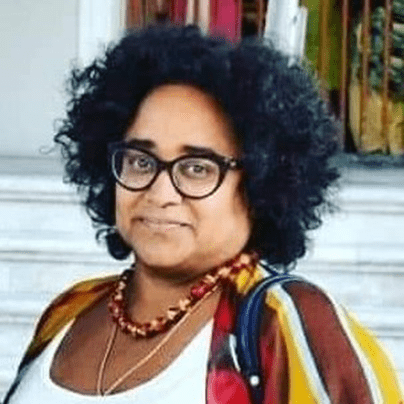
IF you are not in a hurry, I will like to tell you how I chanced by the innovative work that engages Dr. Hossein’s wakeful moments. The story is not that long, but it started during the lockdown when all souls were restricted to their homes but our minds free to fly beyond our spaces. It was during one of the moments of searching for materials for a new course (that I was to teach) that I came across the book on African markets written by Dr. Mary Njeri Kinyanjui. Her words leapt off the page and engaged me in an intellectual bout.
“As a business model, utu-ubuntu acknowledges that all economic transactions are embedded in social relations. From this perspective, the main purpose of doing business is to build and sustain the autonomous and self-regulating networks that one belongs to. For example, traders and artisans in Nairobi share operational costs related to transport, security and space. They also share their knowledge through exchanging stories about their experiences.” (Mary Njeri Kinyanjui, 2019)
Reading her words on the screen created a different effect from listening to her. “We need to take a new look at the market, their understanding of well-being,” she said to us with a modern-day pastor’s conviction. She went on, “Africa is not a basket case, Ubuntu is what Africa can pass on to the competitive & extractive world.”
The interact was brief but in the space of 20 minutes she created a new Africa with positive stories. Her parting shot to the students was: “We have spent decades studying problems in Africa but why don’t we say what are they doing right or what makes them survive as a community. People have said that Africa should move out of the informal sector but why not first understand the informal sector?”
Conclusion
If you are one of those who think knowledge needs not be racialized, it may be too difficult for you to explore different websites where Black knowledge producers/production can be looked at with greater empathy. I know the situation of knowledge production because I am presently an observant participant. The need for transformation is now not tomorrow.
- Ade-Odutola, poet, culture activist, teaches at the University of Florida, Gainesville, Florida, USA


6 comments
… [Trackback]
[…] Info on that Topic: naijatimes.ng/reflecting-on-black-knowledge-producers-production/ […]
… [Trackback]
[…] Info to that Topic: naijatimes.ng/reflecting-on-black-knowledge-producers-production/ […]
… [Trackback]
[…] Find More on that Topic: naijatimes.ng/reflecting-on-black-knowledge-producers-production/ […]
… [Trackback]
[…] There you can find 54757 additional Info on that Topic: naijatimes.ng/reflecting-on-black-knowledge-producers-production/ […]
… [Trackback]
[…] Find More on on that Topic: naijatimes.ng/reflecting-on-black-knowledge-producers-production/ […]
… [Trackback]
[…] Read More Information here to that Topic: naijatimes.ng/reflecting-on-black-knowledge-producers-production/ […]
Comments are closed.