
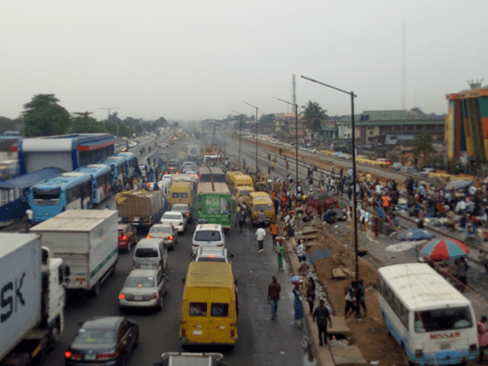

- Bad roads everywhere
- Endless constructions and repairs
- Poor management of vehicular movts
- Indiscipline and Impatience of motorists
As the yuletide sets in and Lagoians as well as Nigerians come to Lagos to buy goods for the festive season, traffic is expected to surge. But with apparatuses of traffic control yet to be restored, it is worrisome how Lagos would cope.
By Joe Agbro
AS the state with the smallest landmass, the most population, and highest concentration of businesses in Nigeria, heavy traffic has been synonymous with Lagos. But in recent times, many Lagosians have described the traffic as horrific.
From early in the morning, vehicular traffic builds up across the coastal state with a population of 25 million, according to UN-Habitat. Real-time traffic updates on radio paint a picture of a congested city just as pockets of Lagos glow red on Google maps, signifying high vehicular traffic. In recent times, major routes have glowed redder, and for longer.
The riots which followed the #EndSARS protests frightened policemen and traffic wardens off the streets. Lagos governor, Babajide Sanwo-Olu, placed a 24-hour curfew on the state on October 20. The curfew announced at about noon, which was to have started at 4pm was later extended to 9pm to enable people already out of their homes to return home. But at about 7pm, some men in Nigerian military uniforms arrived at the Lekki tollgate base of the Lagos protesters and sprayed live bullets on the unarmed youths, waving Nigerian flag and singing the national anthem. The following day, mayhem was unleashed by angry youths and especially hoodlums, resulting in loss of lives and properties on a grand scale. Even the police were dealt a heavy blow as 25 police stations were burnt during the riots.
For about a week after Lagos relaxed the curfew, law enforcement officials were absent from the roads. And by the time Lagos resumed normal activities on Monday, October 26, only few traffic officers were seen on the roads.
In the days following the lifting of the curfew in Lagos, vehicular traffic was nearly at a standstill on many roads. Maintaining order was left to devices of motorists. The result was confusion and standstill as motorists clogged the roads. Parts of Mobolaji Bank Anthony Way, Allen Avenue, Lateef Jakande Road, Oba Akran Avenue and Akanni Doherty Road, all in Ikeja, the Lagos capital, were blocked. Many people broke the 8pm and subsequently, 10pm curfew, imposed by the Lagos State government as a result of being held up in traffic.

Narrating his ordeal, Seyi Adeniji, a banker who resides in Agege, said he was stuck in traffic on Oba Akran Avenue.
“I spent over two hours from First Gate to Guinness,” he said of the distance which is about 300m and should have been a breeze.
“Cars coming from Ikeja had blocked both lanes and there was nowhere for anybody to go. It was just by inches we were moving. The curfew Lagos imposed met me there in my car. I didn’t get home till 11pm.”
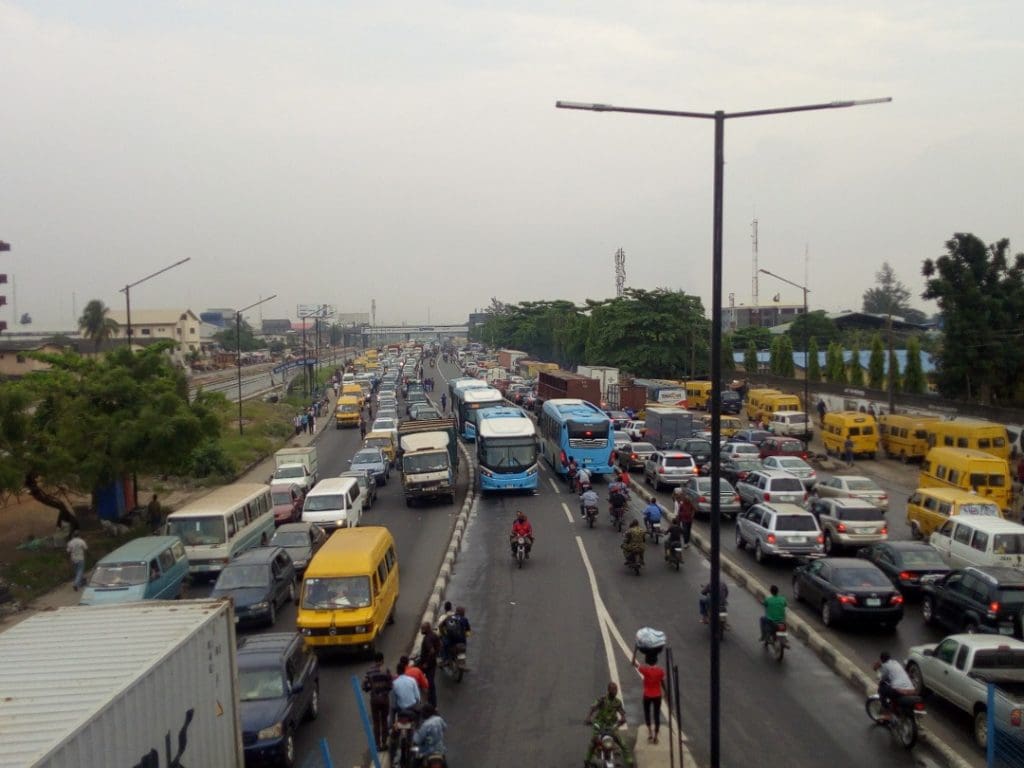
For Yusuf Ogunremi who works at the International Airport, getting home has been strenuous these past days, a development he attributed to BRT buses that have not plied the Oshodi/Abule Egba route.
“I waited for over 30 minutes before I could board a bus going to Agege.”
Also, it would be recalled that hoodlums had burnt over 80 BRT buses during the crisis that followed the #EndSARS protests. And the management of the transportation service had halted service. The BRT service only returned last Monday.
Terh Agbedeh, a journalist said he got into a traffic jam from the tollgate at Murtala Muhammed International Airport all the way to Allen Avenue, Ikeja.
“I was in traffic for two hours and everywhere was blocked in Ikeja,” he said.
“The Allen roundabout was blocked too. I think the new design has even worsened the traffic.”
Some months ago, the Lagos State government had redesigned several roundabouts to four-way intersections. Allen Roundabout was one of them.
However, aside from chasing security officials off the street, the riots which followed the #EndSARS protest saw much damage to public and private properties. And traffic lights on some streets were destroyed. Previously, the traffic lights had aided in ensuring traffic flow.
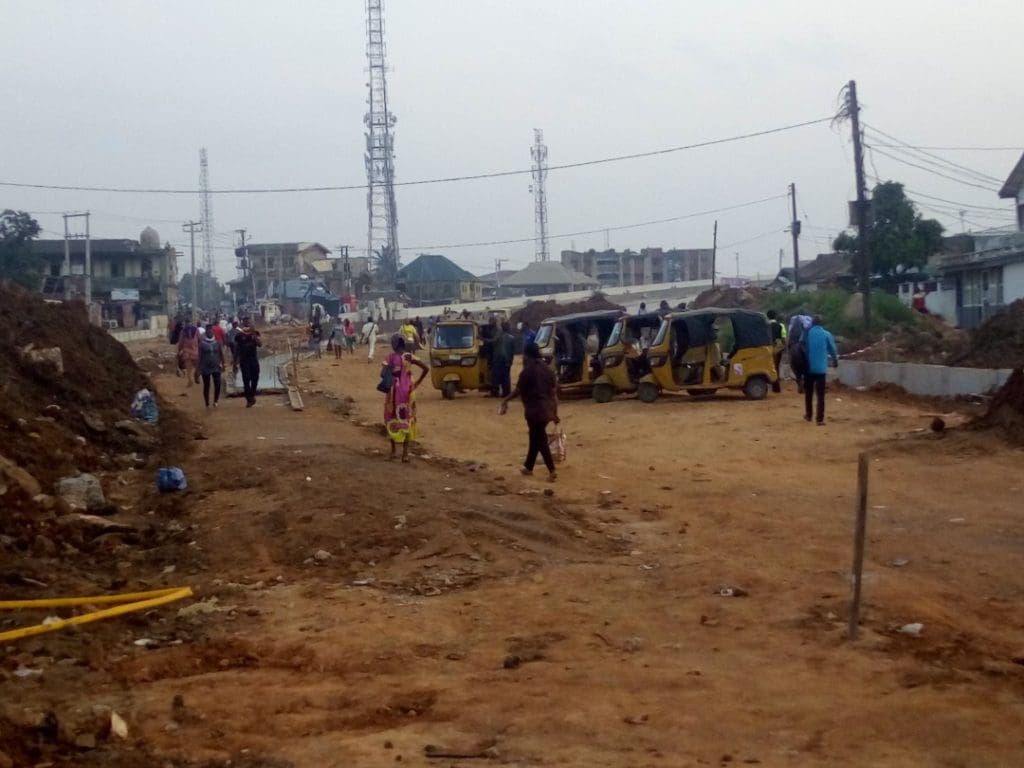
Bad roads under construction
THERE are several spots on the Abeokuta Expressway like (U-Turn bus stop), (before Ahmaddiya Bus stop on the way coming to Lagos) and along Alagbado (construction work is ongoing there) roads. But construction has been a source of traffic in many areas too.
Robert Egbe, a journalist who lives in that axis attributed worse traffic situations in that axis to road construction. Though the first phase of the reconstruction started earlier in the year, work only started on the Mile12 to Ketu axis two months ago.
“The traffic has been generally poor around that Mile 12, Ketu and Ojota areas because of the road constructions,” he said.
The road has ‘failed’, said Egbe.
“It has been very terrible, especially in the mornings and nights.”
Traffic has to be diverted on one lane, creating a long line of cars at peak periods. According to Egbe, on most mornings, the rows of cars often stretch from Mile 12 to Agric bus stop on the Ikorodu Road and in the evenings, the traffic builds up from around New Garage bus stop till after Mile 12.
Those who don’t want to be trapped in the traffic often have to pay as much as one thousand naira to be ferried across by commercial motorcyclists popularly called Okada.
“People spend hours on this stretch of the road,” Egbe, who uses the boat to get to Lagos Island, said.
Just like Egbe, more people who have business on the Island and live in Ikorodu, go there by boat. But for those who don’t want to endure long hours in the traffic
Egbe however, says that traffic is worse on Saturdays and Sundays are worse and some people have even left the area because of the perennial traffic.
“My neighbour said he would leave once his rent expires.”
In Agege, the ongoing construction of the Pen Cinema flyover has also led to a build-up of traffic on many of the internal streets.
The same story of construction hindering traffic exists in the Ajah-Lekki axis of the state.
“This place is nothing to write home about,” said Chizoba Osaji, who lives in Sangotedo and works at Lekki.
“The traffic has always been bad but this period, it is worse because there is no police on the road to co-ordinate the road. And there is this construction going on at Abraham Adesanya.
“They’re trying to remove the roundabout. I guess they’re trying to build drainage because of the water that stays there when it rains.
“But going and coming is usually very blocked. These days if I’m going to Lekki, I plan about three to four hours. Towards the end of October, there was a day I left Sangotedo to Ikeja for a meeting. We left here at 8:30am, we got to Ikeja at about 1pm.”
She listed other bottlenecks on that road to include Ilaje bus stop.
“When you’re coming from Lekki, usually the traffic starts from Eleganza, before the second tollgate. Then, it drags on like that to Ajah bus stop. From there, it’s free till you get to around Abraham Adesanya. Then you can stay there for hours. Then again at Ogidan bus stop, it continues like that because of the bad roads.”
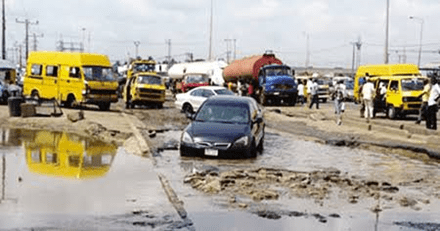
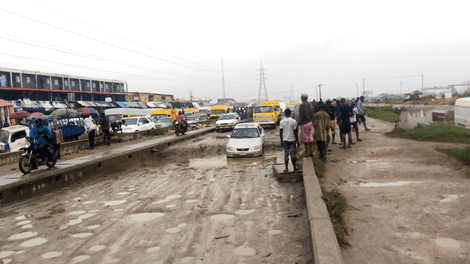
ON the Lagos-Badagry expressway, there is also a story of bad roads and construction that is responsible for the traffic there.
Segun Akinleye, a worker at Nestle in Agbara, said the journey to work from Iyana Ipaja which took about 45 minutes before, now stretches into hours. He highlighted the trouble spots on the Lagos/Badagry Expressway as around Adeniran Ogunsanya College of Education to the bridge where Customs officers stay and after the bridge.
“From the Customs Bridge to reach Agbara, you may spend five hours,” Akinleye said about his commute to work.
“So, I usually stop before the Customs Bridge and walk towards Agbara to continue my journey.”
The road which is being reconstructed by CCECC is a federal road which links Lagos to Benin Republic.
Then, of course there is the partial shutting of the Third Mainland Bridge for repairs by the Federal Ministry of Works and Housing on July 24. The 11.8km bridge is the busiest Nigerian road with an average daily vehicular traffic of 117,000 according to Minister of Works, Babatunde Fashola.
In August, Boboye Oyeyemi, Corps Marshal of the Federal Road Safety Corps (FRSC), noted that the partial closure reduced “the average daily traffic between Lagos Mainland and Island” to “60,000 vehicles inward bound Island at peak period and 20,000 outward.”
Surely, the diversion of the vehicles off the Third Mainland Bridge dealt a big blow to ease of movement in the city.
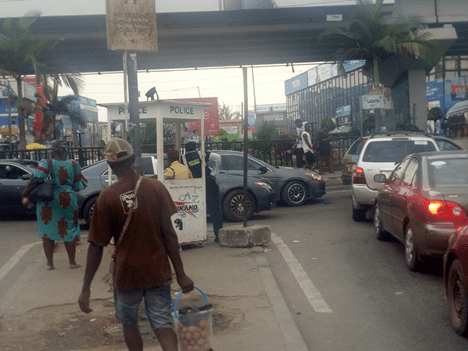
Indiscipline and Impatience
But it is not all the traffic situation that can be attributed to bad roads or construction. In some places, it’s just indiscipline and impatience that are responsible.
Every morning, a mass of vehicles squeeze through Agege, a suburb of Lagos, passing both secondary roads and side streets. On Oko-Oba Road, which has served as a major for the link, it is not unusual to see vehicular traffic build up as early as 6am on weekdays. Without the effort of local youths who act as traffic controllers, the roads get blocked as many drivers become impatient and drive. At other areas like Orile, also in Agege, the officials of the Neighbourhood Watch, begin traffic control. But as evening progresses into night, there is an absence of traffic controllers. Or where they are, they are overwhelmed.
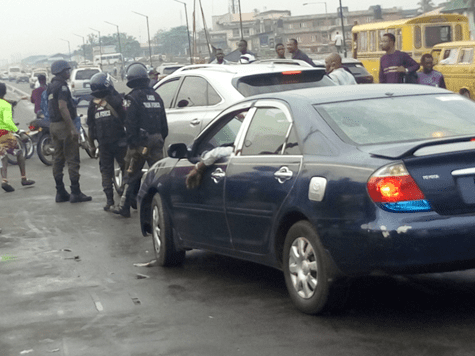
At Ikeja bus stop on the Abeokuta Expressway, the yellow and black-striped commercial buses form a cluster that impedes normal flow of motorists heading towards Iyana Ipaja and Agege. The congestion which was regular even with a complement of traffic officers has worsened recently. The spill-out from this particular spot usually extends to a U-turn further down the road and on the opposite lanes.
Managing traffic
The Lagos State Traffic Management Authority (LASTMA) was established on July 15, 2000 to ensure free flow of traffic in the state and also reduce road accidents.
And as a way of further managing traffic, Lagos also created Traffic Radio on May 29, 2012. Its mandate was to see how it can relieve Lagos motorists with traffic updates. Other radio stations and even blogs now have dedicated platforms to intimate Lagosians of the traffic.
Also, officials of the Lagos State Traffic Management Authority (LASTMA) have resumed but their impact is hardly felt. In the riots that followed the #ENDSARS protest, their offices at Agege, Ojudu, Iyana Oworo, Ejigbo and Badagry looted and burnt. Their operational vehicles and other vehicles parked on their premises too were not spared. Like the police, the agency would need more funds to recoup its loss.
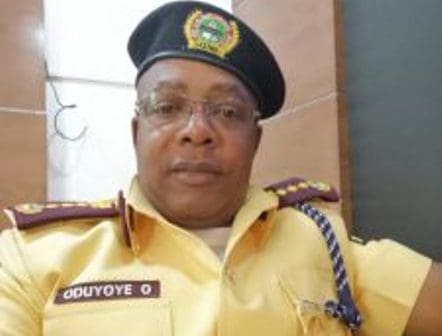
In an interview published on October 28 by Punch, the General Manager of LASTMA, Mr. Olajide Oduyoye, said that 12 LASTMA zonal offices were destroyed as well as physical attacks on LASTMA officers. He also said the events took a toll on psychology of officials of the agency.
“We are taking stock, restructuring, and re-strategising and this is the reason why we have only about sixty percent of our beats at some strategic intersections/junctions to eliminate frictions, reduce delays and ensure better flow of traffic,” he said.
“We are aware of the traffic congestion suffered by commuters as a result of many damaged traffic light junctions, absence of BRT bus operations, illegal vehicular movements, and the general lack of respect for driving ethics by some. In all, the safety of every LASTMA personnel as with all Lagos residents is equally paramount.”
A source at LASTMA who preferred to be anonymous as she wasn’t permitted to speak with the press said the officers were asked to be careful and not expose themselves unduly.
“In some places, our people have been harassed,” she said.
“It’s better to be alive than killed by hoodlums.”
The traffic situation is dire and a Halogen Intelligence report titled ‘Security and Traffic Gridlocks in Nigeria’ and published on November 6 said, ‘N250b is lost annually to traffic jams in Lagos State’
The report also says Lagos always has 60% traffic congestion, making it ‘the third worst city in the world’ for driving. But particularly chilling is that it says ‘three out of every 10 years spent in Lagos is lost to traffic.’
While factors like bad roads and construction would continue to hamper traffic, Oduyoye enjoined drivers to obey traffic laws of Lagos State.
“We must all have a change towards positive attitude of obeying the laws of the state which were made for the benefit of all, for orderliness and for fast-paced socio-economic improvement of individuals, corporate entities and generality of the people.”
As the yuletide sets in and Lagoians as well as Nigerians come to Lagos to buy goods for the festive season, traffic is expected to surge. But with apparatuses of traffic control yet to be restored, it is worrisome how Lagos would cope.


5 comments
… [Trackback]
[…] Info on that Topic: naijatimes.ng/the-traffic-trauma-of-lagos-tales-by-lagosians/ […]
… [Trackback]
[…] Read More to that Topic: naijatimes.ng/the-traffic-trauma-of-lagos-tales-by-lagosians/ […]
… [Trackback]
[…] Read More here on that Topic: naijatimes.ng/the-traffic-trauma-of-lagos-tales-by-lagosians/ […]
… [Trackback]
[…] Find More on to that Topic: naijatimes.ng/the-traffic-trauma-of-lagos-tales-by-lagosians/ […]
… [Trackback]
[…] Here you can find 19120 more Information on that Topic: naijatimes.ng/the-traffic-trauma-of-lagos-tales-by-lagosians/ […]
Comments are closed.