
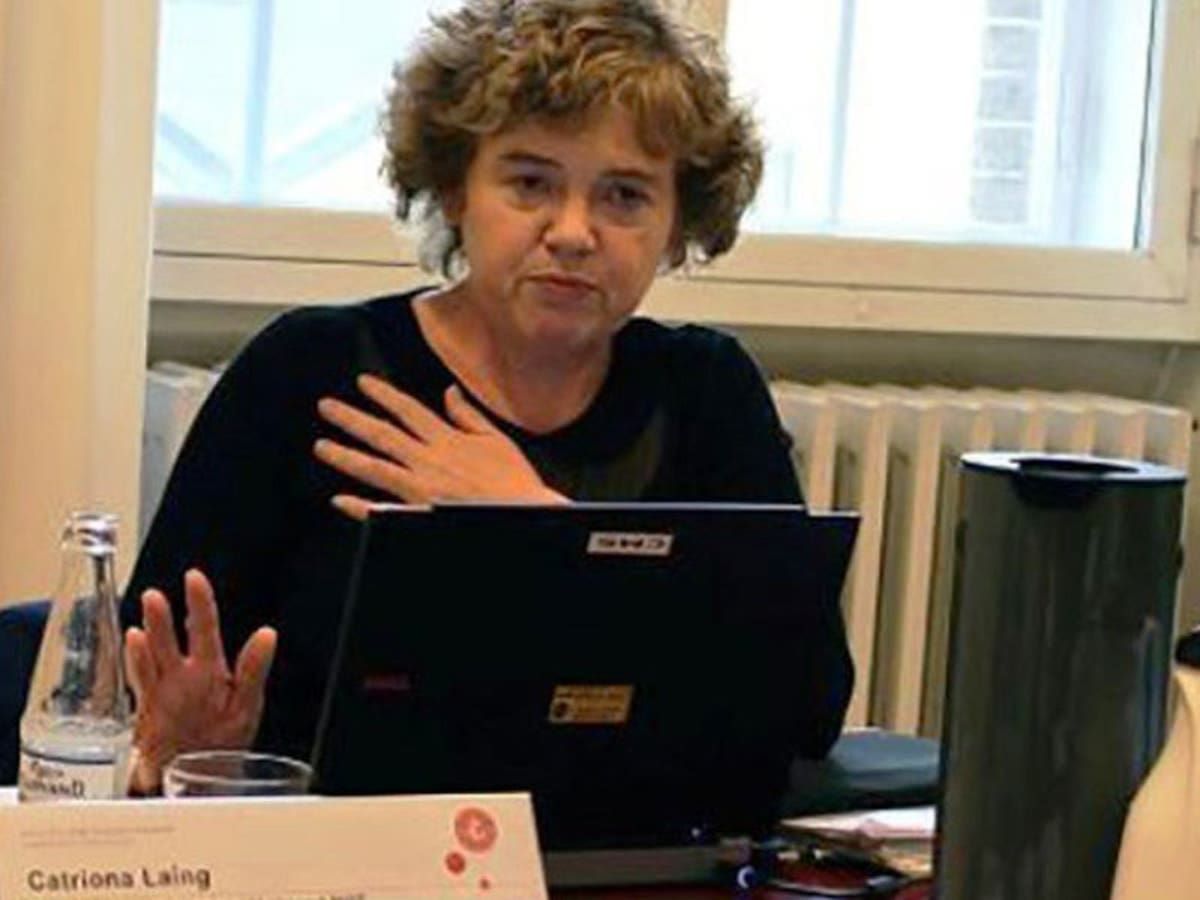

NIGERIA’S British High Commissioner, Catriona Laing, has stated that the United Kingdom is working in partnership with Nigeria towards combating illicit financing.
Catriona Laing said this on Friday in a statement titled ‘The Carnegie Endowment for International Peace Report’, commissioned by the UK Government, which spotlights risks of illicit financial flows to UK education sector’.
She said, “Tackling illicit corruption in Nigeria is critical to the country’s prosperity and security, and to addressing poverty and inequality.
“The UK is working in partnership with Nigeria to tackle corruption and illicit finance and has excellent relationships with Nigerian agencies and civil society who are fighting corruption.”
According to the statement, the Carnegie Endowment for International Peace in partnership with the Foreign, Commonwealth and Development Office also launched a paper.
The paper followed an assessment of bribery and corruption risks to UK independent schools carried out in December 2020 by the UK’s National Crime Agency and the Joint Money Laundering Intelligence Taskforce.
The assessment focused on West African elites, including those from Nigeria.
The intention was to start a conversation between independent schools and law enforcement in the UK, to develop shared understanding of the money laundering threat to the sector and identify how to best address the ongoing risks.
“It is difficult to calculate how much illicit finance flows into the UK private education system from West Africa.
“However, the report finds that the figure is likely to be more than £30m in fees alone and that most of these funds emanate from Nigeria (given its size and long tradition of families sending their children to UK private boarding schools and universities) and to a lesser extent Ghana,” the statement said.
“This estimated amount was calculated using recent school and university census data, average school and university fees for the 2019/2020 academic year and the more speculative estimate that five per cent of university students and 30 per cent of private boarding school students from countries in West Africa have financial links to PEPs.”
It, however, maintained that it was necessary to note that the overwhelming majority of Nigerian students in the UK posed no corruption risk and their families did not possess unexplained wealth.


4 comments
… [Trackback]
[…] Find More Information here to that Topic: naijatimes.ng/uk-and-nigeria-partner-against-illicit-financing/ […]
… [Trackback]
[…] Find More to that Topic: naijatimes.ng/uk-and-nigeria-partner-against-illicit-financing/ […]
… [Trackback]
[…] Read More on that Topic: naijatimes.ng/uk-and-nigeria-partner-against-illicit-financing/ […]
… [Trackback]
[…] Find More on that Topic: naijatimes.ng/uk-and-nigeria-partner-against-illicit-financing/ […]
Comments are closed.