

- ”A hungry, angry, alienated population has dire consequences…”
A CIVIL society coalition, the Alliance on Survival of Covid-19 and Beyond (ASCAB) recently brainstormed on the major drivers of insecurity in Nigeria, with the conclusion that the failure of the ruling class is responsible for the disorder and lawlessness across the land. ASCAB therefore admonished Nigerians not to fall for the antics of the ruling elite, whom it noted were bent on distracting citizens from the real issues by fanning the embers of ethnic discord.
Activists who spoke at a webinar recently organised by ASCAB agreed that the most pressing issue facing the country at the moment is the vulnerability of citizens to the activities of criminal elements. They also bemoaned the reaction of the government to the crisis of insecurity, describing it as embarrassing and incompetent. Discussants also lamented that those controlling the coercive instruments of state power have failed to assure Nigerians that it (the government) has the capacity to address the various manifestations of insecurity bedeviling the country.
In his opening remarks at the webinar, ASCAB Chairman, Femi Falana (SAN) slammed the government for its poor handling of the insecurity ravaging the country. The legal luminary and human rights crusader, decried the security situation in the North, as well as the South of the country.
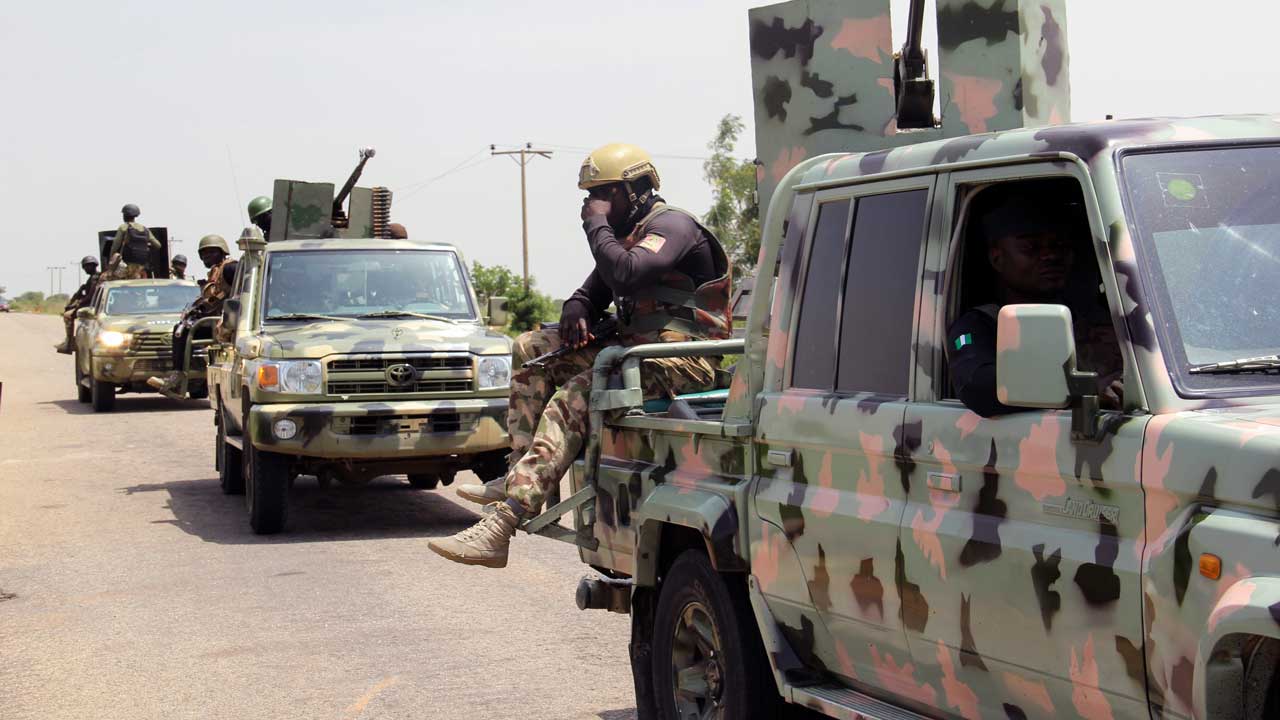
“We may talk of degree of insecurity; if you are talking of the North-East, we are fighting a war on terror; in the North-West, we are fighting bandits, and in other parts of the country, we are fighting kidnapping. We are also fighting AK-47-bearing criminal elements, who pose as herders,” stated Falana.
He added, “Unfortunately, the reactions of the government, governors and other rulers of the country have not assured Nigerians that the government is in control of the security apparatus of the state. Some of the comments of the government officials, have been very embarrassing. In fact, the comments have further confirmed that the government has lost its bearing as far as security is concerned in our country. Therefore, Nigerians are being told to take the law into their hands because the government has lost the power to promote law and order in the country and guarantee the security of lives and property.”
Falana also took a swipe at the recently retired service chiefs, whom he accused of offering lame excuses about their inability to stem the tide of insecurity during their tenure.
His words: “Much more embarrassing (than others) is the comment of former Chief of Army Staff, Lt-Gen Tukur Buratai who made a doomsday prediction that it will take Nigeria 20 years to tackle the insecurity in the country and put terrorism behind us. Of course, in spite of such reckless statements coming from them (immediate past service chiefs) they were screened and recommended to be appointed ambassadors.”
Falana further stated that some of the immediate measures pronounced by the government after its recent security council meeting did not indicate a real grasp of the issues at stake. The human rights activist dismissed President Buhari’s decision to impose a ‘no fly zone’ measure on Zamfara, a move he predicted would have no impact on the security situation in the state because the attacks by the criminal elements were being carried out on the ground, not from the air. He therefore dismissed the measure, just as he noted that the government was merely pretending to be addressing the problem instead of doing what is required to restore peace in the troubled areas.
“Nigerians have also been told that because of the Economic Community of West African States (ECOWAS) protocol on free movement of persons and goods, it is difficult for the government to challenge those who are coming into the country with arms and ammunition from the West Africa sub-region. But ASCAB has joined issues with the government by referring to Article 4 of the same protocol, which empowers every member state of the ECOWAS to refuse to admit into its territory, any criminal element. Of course the government has not been able to react to that,” Falana said.
“Let me therefore say that ASCAB totally disagrees with the reaction of the elite in the North and South, East and West, who have reduced this very serious insecurity problem to that of ethnic and religious motivations. If you read comments on social media, you will be appalled at the reductionist perspectives of the youths and the inciting statements of the elite. For me, this shows that we are simply playing into the hands of an incompetent government, instead of joining issues with the government.”
Subsequently, Falana accused the ruling elite of a ploy to divert attention from the crisis of education, unemployment, poverty and injustice, which were the main drivers of the insecurity in the country. He lamented that the government failed on several occasions to take steps to stem the tide, even after it (the government) had earlier announced such measures.
“The same government announced in 2016 that about 55,000 acres of land had been acquired in 11 states for the establishment of ranches so that these problems can be resolved once and for all.” The legal luminary wondered what had become of the plan and similar interventions previously announced by the government.
IN his presentation, the lead discussant at the webinar, Comrade Jaye Gaskiya expressed the position that insecurity cannot be addressed without looking at the failure of governance in Nigeria. He noted that violent crimes have become endemic, and have begun assuming the character of a pandemic.
His words: “If you look at some of the figures that are coming out for instance from the Nigeria Security Tracker, which is a US-based research group, you find that on the average, about a thousand lives are lost to violent crimes in Nigeria monthly. This tracking began in 2011, and in that period, Nigeria has had close to 80,000 fatalities resulting from violent crimes, and 40,000 of these would be from 2015 upwards. This is actually under reported because these are just the cases that make their way into the newspapers.
“We have seen that old communities have been displaced, and in fact, violent crimes have displaced more people in Nigeria than natural disasters, and there are close to two million people displaced as a result of violent crimes as of 2020.”
Comrade Gaskiya said the reason for the prevalence of insecurity could be traced to the terrible human development indices in Nigeria.
“According to government’s own figures in 2020, abject poverty rate is 40.1 percent, while relative poverty rate is 70 percent and we are talking about millions of Nigerians. There is also the unemployment rate of over 40 percent so on the average, two out every five able bodied Nigerians are out of work.
“When this is translated to youth unemployment and we know that Nigeria is a youthful population, it is more than 60 percent. That is more than three out of every five able Nigerian youth being unemployed and are without any income to sustain them. We have a staggering housing deficit that is around 20 million units; that translates into nearly 120million people that are either homeless or living in sub-human conditions.
“Added to this is that Nigeria has a population of nearly six million out of school children. This is one of the highest figures in the world.”
The frontline activist warned of further dire consequences as a result of a population that is hungry, angry and alienated from society. This set of citizens he noted are willing to do anything to make ends meet, and in that process get back at society.
“This is one of those classical examples where you say that the society prepares the crime, and the criminal commits it. The Constitution of Nigeria, in Chapter 2, Section 14, sub section 2b is very clear in stating that the security and welfare of the people shall be the primary purpose of government. If we look at it, the government has failed; in terms of the two things (security and welfare), which the constitution states are the primary purpose of government; that is why insecurity is a direct consequence of governance failure.


3 comments
… [Trackback]
[…] Read More here to that Topic: naijatimes.ng/insecurity-a-consequence-of-failure-of-governance-covid-19-coalition/ […]
… [Trackback]
[…] Information on that Topic: naijatimes.ng/insecurity-a-consequence-of-failure-of-governance-covid-19-coalition/ […]
… [Trackback]
[…] Find More on to that Topic: naijatimes.ng/insecurity-a-consequence-of-failure-of-governance-covid-19-coalition/ […]
Comments are closed.