

By Peter Boehm
* Fred Ajudua
IN summer 1998, I was detained for six weeks in the DR Congo capital Kinshasa. It was those troubled days, shortly after the Mobutu regime had crumbled, when a few journalists like me and everybody else who was mildly suspicious came into the crosshairs of the new regime. With me in my cell was a rotating bunch of the hapless, a handful of low-ranking civil servants of the hated old regime, a medical doctor, a priest, a few businessmen and some shady characters who didn’t even bother to come up with a cock-and-bull story how they’d ended up here. Whereas calling the place where we were held a cell would be stretching it. We were all kept in a big room in the basement of the mansion of a former Mobutu big shot, where the hastily set up secret service had established on of their makeshift prisons.
A few weeks in, three guys joined us. They couldn’t have been older than 25. We made our introductions in English. The three claimed they were Sierra Leonians on business in Kinshasa, but I knew their accent. And when they told me their business model was washing dollars – yeah, really, it works, you clean dollar bills with a chemical or something; sounds whacky, but I had to believe them, really, they’d seen it for themselves – I knew who I was talking to. At the time, the money-washing scheme was a staple of Nigerian scammers. In front of the eyes of their gullible marks, these wily criminals wiped one or two blackened dollar bills clean and sold them the expensive chemicals plus wads of worthless black paper. I knew. So, I asked them about the Qaddafi scam and pricked my ears.
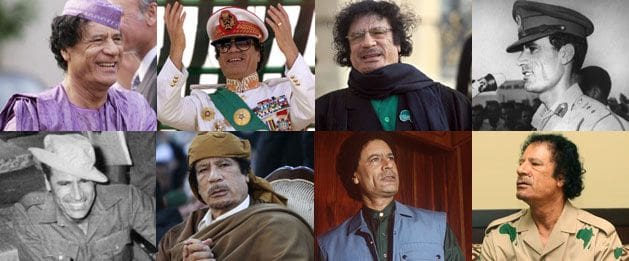
Because a few months earlier I had met someone in Nairobi who’d claimed he knew four Nigerians who’d hoodwinked Libyan leader Muammar Qaddafi out of one hundred million dollars. In cash.
Seriously, how’d they do it?
They took a military plane, the man answered, and told Qaddafi they needed the money for a coup. And I thought, right, it’s that easy.
The guy was a friend of my neighbor’s, and my neighbor was a hustler, doing all kinds of sketchy import-export deals. I knew. Because when I asked him to bring my car into the country, I ended up having to bribe all kinds of unsavory people at Nairobi airport. So, I thought, right, if you say so, four Nigerians flew to Libya and came back with $100 million in cash. I believe you.
But I was surprised to find that it really seemed to be true. At least that’s what the three Nigerians, or Sierra Leonians, in my cell in Kinshasa told me. Thinking strategically, I had shared the meager food I received from the German embassy with one of them, and he in turn told me what he knew. He said the four young Nigerian guys indeed sat on a military plane and flew to Libya. There they told Muammar Al Qaddafi they were four young Army officers who planned a coup, yet to finance it they needed 100 million dollars. And they needed weapons. He said they took the cash back with them on their plane. And the weapons, a fairly big consignment, when it arrived a few weeks later in Lagos harbour was snagged by the Nigerian military. As a quid pro quo, he suggested, for letting the four young guys pull off the scam.
Intrigued, I asked when was that. He wasn’t sure. A few years back, he said leaving a beat, sometime in the early ‘90s.
And who were the four guys? He didn’t know them personally, he told me. But what he went on to say has stuck with me, as if all of this happened yesterday. I see him in front of my eyes now, when he says, talking assuredly, as if it was common knowledge, “One of the four even built a large house for his father in his home place in the East.” Then his friend turned to us and said, “What are you telling this guy!” as if he’d let me in on a secret he wasn’t supposed to tell.
The next morning the three were gone.
But I thought, “Great, When I’m out of here, I’ll find the four and tell their story. How hard can it be? One of the four had built a house for his father in his place in Eastern Nigeria. People like that can be found.” And I was sure there and then, “This is going to make a hell of a movie.”
… A trip to Nigeria, meeting Ade Bendel
IT took me a few years, but when I had the time and the money, I flew to Nigeria to look for the four. Again, how hard could it be? From what the scammer had told me, they must have been national icons or at least minor celebrities. They had outsmarted their country’s arch nemesis, Muammar Al Qaddafi, and in such a clever, inventive and elegant way. They had to be widely admired in Nigeria.
But that wasn’t the case. Far from it. When I asked around in Lagos, nobody seemed to know the four, nor had anyone heard of the Qaddafi scam, as I now referred to the plot I’d been told about in Kinshasa. I talked to the EFCC, the special police unit in Nigeria to investigate financial crime. I talked to experts on advance fee fraud. I talked to journalists who’d written about it. I went through newspaper archives. I went to the small town in Delta state, where Fred Ajudua had grown up, the godfather of Nigerian fraudsters and a lawyer widely credited with having come up with the Nigerian scam. Nothing. No one had heard of the Qaddafi scam.
Then, finally, I found a man who did: Alumile Adedeji, better known as Ade Bendel. In the Nigerian press he is often called the country’s most successful fraudster, kingpin of 419 and more. I had met him in an Ikeja courtroom, where he was tried and eventually convicted of having defrauded an Egyptian general of $605,000. A few days later, I visited him in Kirikiri maximum security prison. By then, Ade Bendel had already gone through a serious conversion. From kingpin of the scammers, he had turned into a man of God. On the prison premises, he’d built a church, dubbed “Chapel of Freedom”, seating more than a thousand believers, and later he even became a pastor and went on evangelism jamborees around the country.
By now, I had resigned myself to the fact that I wouldn’t find the four young men, who’d swindled Qaddafi. But there remained an important question I hadn’t found an answer to: What part had the Nigerian military played in the scam?
When I met Ade Bendel in one of the staff rooms of the prison, he was treated by the guards more like an old friend than an inmate. Of course, he refused to tell me whether he knew the four or what their names were, but about the involvement of the Nigerian military he was adamant. “The four had zero help from the military,” he told me. “They sewed their own uniforms.” That’s all I could get out of him. But then, how credible was that?
Not very credible, I would venture. If the four young men had access to a military plane, they had to get help from the military. Because even in Nigeria you can’t just hire such a plane in the classifieds.
But how high up was the help coming from? From pretty high up, I would venture. The four had to have a crew assigned. If you fly a military plane, there are flight manifests you have to take care of, the route is to be planned and the flight security officially informed. And let’s not forget, of all places they flew to Libya, a country pitted against Nigeria in a proxy war at the time, and a country at that that was rumoured to have financed several coup plots against the Nigerian junta. So, with one word, pretty high up, I would venture.
To fully understand all this, you have to go back to the early ‘90s, a time, now almost 30 years ago, when Nigeria was run by a military junta led by General Ibrahim Babangida. He was an extremely shrewd political operative. For his skill of dribbling through metaphorical minefields and coming out unharmed, he was dubbed “Maradona” by his countrymen. Yet under Babangida’s rule corruption reached unprecedented levels, and he gave the big shot scammers virtually free rein. They were the toast of the town then and patrons of the arts. In the Nigerian press they were called “socialites”, throwing lavish parties, where their hireling musicians praised them in sycophantic songs. They moved around town, escorted and protected by large police convoys. Of all places, Fred Ajudua had his office in the Lagos annex of the Central Bank of Nigeria. Only when Sani Abacha, an even more brutal military dictator, took over in yet another coup in November 1993, did he start to crack down on some of the fraudsters.
…The Babangida factor
EVEN more important for the background of the Qaddafi scam are the events in the region at the time. On Christmas eve 1989, Charles Taylor invaded Northeastern Liberia with a small band of rebels, kicking off the Liberian civil war and throwing the region into turmoil. Taylor was Qaddafi’s proxy. He and his rebel force had been trained in Libya and were funded by the Libyan leader. Nigeria hastily convened the leaders of the region and tried to come up with a robust response. As a result, in August 1990 a first contingent of ECOMOG troops were sent to Liberia, ostensibly to stop Liberia from sliding into mayhem, yet with another arguably more important effect: to stop Charles Taylor from taking over the capital Monrovia.
At the time, tensions were running high with Libya. In spring 1992, there were rumours of a coup attempt against Babangida, denied by the Nigerian military, word being the strings had been pulled by Qaddafi. In April 1990 already, there had been a coup attempt against Babangida that had come uncomfortably close. Babangida had to flee Dodan Barracks through a back door, the seat of his government in Lagos, to avoid capture. The coup attempt was led by junior officers who were fed up with Babangida’s regime, without much planning or any outside help. But in November and December 1992, there were rumours again of an attempted coup against Babangida.
Now it gets intriguing. Yes, under his rule, Babangida gave the fraudsters free rein. But not only that. It also seems he was friendly with at least one of the big shots. According to Frieda Springer-Beck, Babangida attended a private dinner party in Fred Ajudua’s house. She says this was in August 1993, shortly after Babangida had had to step down.
This sounds outlandish, but Frieda Springer-Beck is a credible witness. She does not make an allegation like this lightly. She is one of Ajudua’s victims. After an arduous court battle that took more than 10 years, she managed to get her money back from him. She has been a consultant for the EFCC. I visited her in her office on the EFCC grounds in Ikoyi. She keeps on supporting the victims of the scammers.
When I called Springer-Beck up recently, she told me, she remembers the day in question very vividly. She was first contacted by one of Ajudua’s proxies at the beginning of 1993. Over the course of 1993, she paid Ajudua some $300,000, “fees for legal services”, to get funds released that were purportedly owed to her late husband. When in August of this year she realised she had been duped, she went to Ajudua’s house in Surulere to give Ajudua a piece of her mind. A servant told her to wait because his boss wasn’t around. But she got suspicious when she heard a group of people arriving in the next room. So, she decided to investigate. She pushed open the door and found herself in a room with a long, festively decorated table. At the far side she saw a burly man who struck her as the guest of honour. She confronted Ajudua and eventually left. When, a few days later, she happened on pictures of former president Ibrahim Babangida, she realised she had seen him at the dinner party at Ajudua’s house.
Today, Babangida is one of the richest men in Africa. According to a 2011 investigation by Forbes, he’s worth some $12 billion. And he still wields power in Nigeria. In 2007 and 2011, he tried to run for president, but was thwarted in the early stages. In the PDP, he is still considered to be one of the kingmakers. Alas, he is 79 years old and there are too many people who still remember his utterly shambolic rule, so he is not going to make a comeback.
You’ve guessed what I’m driving at? To pull off the Qaddafi scam, the four young men had to have help high up in the military. Babangida was friendly with at least one of the kingpin scammers. Qaddafi seemed to be plotting against Babangida. So Babangida had a motive, a payback for the coup attempts allegedly instigated by Qaddafi. But instead of sending bombs or missiles, he sent four young scammers to pick up a hundred million in cash and received a consignment of weapons that could be used against Qaddafi in Liberia – if Babangida so decided. Payback Maradona-style. And after it all went down Babangida most likely had a laugh. Granted, the evidence is circumstantial at best. But the idea that it happened like that is alluring. So, you think I believe Babangida had a hand in the Qaddafi scam or did at least know about it? You do the math.
And the movie? Although the details of how the scam went down are still missing, what is known is already enough to make for a riveting thriller or a mirthful comedy. Or both. Together with a Nigerian friend, I wrote a screenplay about it. Now it sits there and waits to be turned into a film, hopefully one that does the protagonists of the Qaddafi scam justice.
*Boehm is a Berlin-based writer and freelance journalist, and contributor to Naija Times.


3 comments
… [Trackback]
[…] Read More to that Topic: naijatimes.ng/how-four-young-nigerians-swindled-qaddafi-out-of-100m-a-journalists-notebook/ […]
… [Trackback]
[…] Here you will find 35361 additional Information to that Topic: naijatimes.ng/how-four-young-nigerians-swindled-qaddafi-out-of-100m-a-journalists-notebook/ […]
… [Trackback]
[…] There you will find 98196 additional Information to that Topic: naijatimes.ng/how-four-young-nigerians-swindled-qaddafi-out-of-100m-a-journalists-notebook/ […]
Comments are closed.