

“How will the government expect to get the cooperation of key allies like the United States, the United Kingdom, the European Union, and the relevant agencies within the landscape of multilateral diplomacy, if it is seen as a state that habours someone with extremist views right inside its cabinet? How will these allies trust Nigeria with high caliber weapons, technology and intelligence when they know that such secrets could be accessed by a sympathiser of a global terror group?”
SINCE the advent of Nigeria’s democratic dispensation in 1999, the institution of the Presidency as the pinnacle of governance has seen its fair share of controversies and contradictions. Depending on how the leader in the institution managed the crises they faced, each occupant of the office of President of the Republic, shaped the highest office in the land in accordance to their vision of nation-building.
Despite all his foibles, the Presidency of Olusegun Obasanjo largely cut the image of one, which managed to hold the country together, notwithstanding the centrifugal and centripetal forces, that tried to tear the country apart. In several instances, Obasanjo showed the political will to go after figures within his government who ran foul of the ground rules of governance.
Even if for the sake of symbolism and show to the public his intolerance for bad behaviour, the Obasanjo regime went after a sitting Inspector-General of Police when there were compelling allegations of corruption against him. It was in the same tenure of the Obasanjo Presidency that a sitting Minister was clamped into jail for alleged malfeasance relating to the National ID card project. This happened, notwithstanding the fact that the minister in question was from the then President’s South West geo-political zone. When the torch of the Presidency was passed on to Umaru Musa Yar’Adua, he made efforts to project the national interest as he sought to douse the tension in the land. President Yar’Adua, notwithstanding his frail health, moved decisively to douse the tension in the Niger-Delta by instituting the Presidential Amnesty Programme.
That masterstroke of astute statesmanship helped return the nation to a path of relative stability especially by shoring up the nation’s revenue base. Much more important is the fact that the initiative doused the unrest in the oil bearing region.
When the Presidency fell on the lap of Goodluck Jonathan after the demise of his principal, he tried to project his own iconic moment during which the national interest was placed above ethnic and sectarian considertions. His opportunity came after the historic 2015 general elections; the sitting President at the time could have decided to cling to power, with the deadly prospect of putting the country on a devastating path of deadly conflicts.
To the relief of Nigerians and the international community, President Jonathan chose to write his name in gold by unexpectedly conceding defeat. That singular act of statesmanship washed away much of Jonathan’s faults, cementing his place as one of the heroes of democracy in Nigeria.
FAST forward to the Presidency of Muhammadu Buhari, which has also had its moments to rise to Olympian heights by projecting the national interest.
The declaration of June 12 as the authentic Democracy Day is one of such moments, which served to address the historic injustice of the annulment of the election regarded as the freest and fairest ever conducted in the country. However, there has been a groundswell of criticisms that that one act of statesmanship has been cancelled out by many more acts, which have tended to project President Buhari’s tendencies for clannishness.
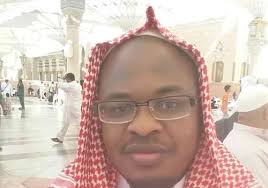
The most recent controversy, which has attracted a great deal of bad optics for the Presidency is the uproar over viral videos and documents, which indicated that the Minister for Communications and Digital Economy, Isa Pantami was once sympathetic to the views of global terror group, Al Qaeda. Nigeria’s social media has been convulsing in the last few weeks with claims and counter positions on what should be done about Pantami’s alleged active support for the views of a deadly global terror group. Several interlocutors who have called on the Presidency to distance itself from an alleged terror-sympathiser, have been miffed by the reluctance of the Buhari Presidency to buck.
AS a result, close watchers of the situation have gone on to conclude that the President is failing to act because of sectarian and ethnic considerations. A civic group, the Resource Centre for Human Rights&Civic Education (CHRICED) in a terse statement, warned that the Nigerian government was risking a lot with its decision to stand by Pantami, instead of letting him go. In a widely circulated statement, CHRICED Executive Director, Dr. Ibrahim M. Zikirullahi condemned what the group described as the “cavalier, lax and unacceptably permissive” reaction of the Federal Government to the revelation Pantami was once an avid supporter of the activities of the global terrorist group.
The frontline human rights group described the Buhari Presidency’s statement saying it was standing by Pantami as the most damaging communication to come out of the Nigerian Presidency. He said: “On the basis of that statement alone, countries around the world would not be blamed if they decide to categorise or classify Nigeria as a state-supporter of the activities of terrorists. This very grotesque reality, which appears lost on the government would then become the basis for further maltreatment and harassment of Nigerians in airports around the world. It is disturbing that the government of the day has of its own volition showcased readiness to embrace and cozy up to someone with a long history of endorsing terrorism and extremism.”
Other stakeholders who have weighed in on the debacle have drawn attention to the implications of shielding the minister on Nigeria’s already floundering efforts to contain terrorism. Specifically, these stakeholders expressed apprehension that Nigeria’s already dented reputation in the eyes of strategic international allies. As one security expert put it, no matter the government’s explanation, key international allies would not be too keen to assist Nigeria would in the face of the indications that a sitting cabinet minister once declared his support for the global Jihadist movement. According to some of the concerned stakeholders, the Buhari government would have an uphill task convincing key international allies to support its fight against terror as long as it does not do something decisive to get rid of the Pantami situation.
“How will the government expect to get the cooperation of key allies like the United States, the United Kingdom, the European Union, and the relevant agencies within the landscape of multilateral diplomacy, if it is seen as a state that habours someone with extremist views right inside its cabinet? How will these allies trust Nigeria with high caliber weapons, technology and intelligence when they know that such secrets could be accessed by a sympathiser of a global terror group?” they queried.
But worse than the external backlash is the fear that the handling of the Pantami affair could further provide propaganda materials for the separatist agitators looking for every means to dismember Nigeria. The apprehension is that for a country that is already being torn apart by sectarian strife, the government’s decision to side with a sympathiser of terrorist views, has sent the wrong signal and further heightened mutual suspicions.
On its part, the National Association of Seadogs (Pyrates Confraternity) has also condemned in unequivocal terms, the decision of the Buhari government to continue shielding the embattled minister. The group in a statement by its Capoon, Abiola Owoaje lashed at the government for exhibiting what it described as “gross incompetence, corporate irresponsibility and narrow-mindedness in choices that should not have been taken in the overall interest of the country.”
This NAS helmsman said: “For a country that is ranked third in the Global Terrorism Index; where insurgents have killed an estimated 36,000 persons and displaced two million from their homes according to the United Nations, the Pantami saga presented the Buhari’s Presidency with a rare opportunity to demonstrate its commitment to the fight against local and global terrorism and regain public trust. But yet again, the administration in its characteristic culture of impunity could not rise above sectarian interests.”


3 comments
… [Trackback]
[…] Info on that Topic: naijatimes.ng/pantami-presidencys-defence-inaction-ruinous-to-countrys-profile-in-war-against-terrorism/ […]
… [Trackback]
[…] Find More here to that Topic: naijatimes.ng/pantami-presidencys-defence-inaction-ruinous-to-countrys-profile-in-war-against-terrorism/ […]
… [Trackback]
[…] Information to that Topic: naijatimes.ng/pantami-presidencys-defence-inaction-ruinous-to-countrys-profile-in-war-against-terrorism/ […]
Comments are closed.