
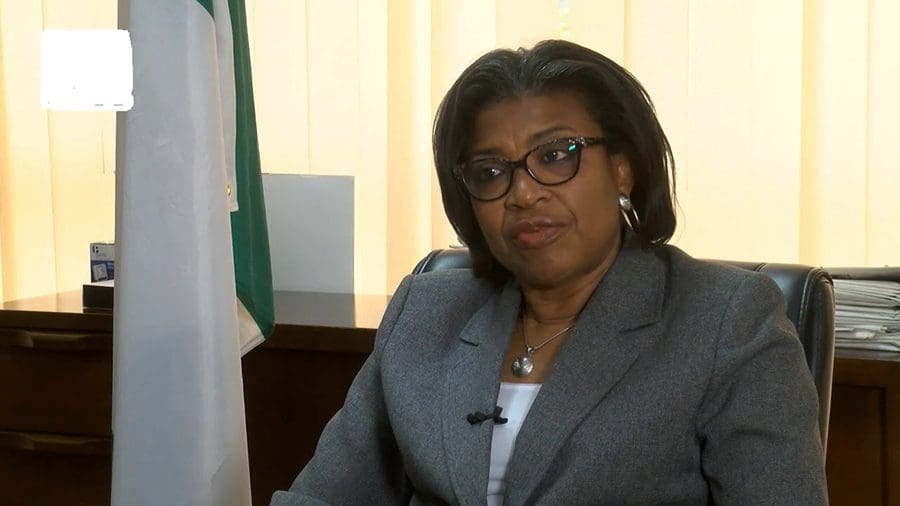

AHEAD of its schedule global investors schedule for Monday, Nigeria’s debt management office, (DMO) has said the Federal Government (FG) will issue about $3 billion Eurobond, no more $6.2 billion as initially planned.
Last week, the Nigerian government announced plans for a Eurobond issuance in the International Capital Market. DMO said the last time Nigeria accessed the foreign capital market was November 2018.
On Friday, Nigeria had a virtual meeting with investors as planned. DMO said in order to avail local investors, the opportunity to invest in the Eurobonds, meetings will also be held with local investors.
“This is the first time local investors will be included in the Roadshows, and this is one of the reasons why a Nigerian Bookrunners -Chapel Hill Denham Advisory Services Ltd – was appointed as one of the Transaction Advisers”.
It specifically stated that through the Eurobond issuance, Nigeria is expected to raise up to USD$3 billion but no more than USD$6.2 billion. Recalled that Nigerian lawmakers had approved a total sum of $6.19 billion foreign currency loans to support 2021 budget deficits estimated at about N6 trillion.
DMO noted that the issuance for which all statutory approvals have been received is for the purpose of implementing the New External Borrowing in the 2021 Appropriation Act. Proceeds are for the financing of various projects in the Act, it added.
In addition to providing funding to part-finance the deficit in the 2021 Appropriation Act, DMO said the issuance of Eurobonds by Nigeria benefits the country in many other strategic ways.
The agency said it is an inflow of foreign exchange, leading to an increase in External Reserves. Nigerian external reserve has seen low accretion in 2021 despite stability in the global oil market.
“External Reserves help support the Naira Exchange Rate, and Nigeria’s sovereign rating”, the DMO added. The agency noted that when Nigeria raises funds externally, through Eurobonds, it frees up space in the domestic market for the private sector and sub-national borrowers.
In effect, it helps the sovereign not to crowd out other borrowers in the domestic market, adding that the issuance of Eurobonds by Nigeria has opened up opportunities for Nigeria’s corporate sector notably banks, to issue Eurobonds to raise capital in the international debt markets.
By so doing, DMO explains that their capital base has been strengthened to provide banking services whilst also meeting regulatory requirements. Nigeria has a sovereign yield curve in the ICM, extending up to 30 years.
“The local listing of Nigeria’s Eurobonds on the Nigerian Exchange Ltd. and the FMDQ Securities Exchange Ltd., have increased the range of products on these two exchanges and their respective market capitalization.
“Overall, Eurobond issuances by Nigeria and the investor meetings that precede the pricing, have provided a strong global platform for Nigeria to tell its own story and opportunities available in Nigeria for investors”, DMO highlighted
In a related development, Nigeria has introduced a custody rule for its 4 trillion naira fund management industry, in a bid to protect investors and deepen the country’s capital market, its Securities and Exchange Commission said on Sunday.
Before the new rule, investment managers warehoused securities and cash, which meant that investors could lose in the event of one being declared bankrupt or insolvent.

