
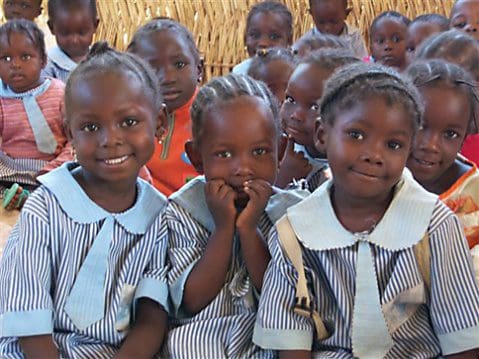

According to a Chinese proverb, education is the best legacy to give a child because “giving your child a skill is better than giving him or her thousand pieces of gold.”
ON this premise, a former Minister of Education, Prof. Ruqayyatu Rufa’i has said that it political will is necessary for addressing the challenges and issues of Girl-Child education in Nigeria.
Rufa’i stated this on Monday while presenting a paper titled: “Insecurity and the New Dangers to the Girl Child Education in Nigeria: Options for Nigeria Government” at the 4th Convocation ceremony of the National Institute for Legislative and Democratic Studies (NILDS)/University of Benin held in Abuja.
According to the ex-Minister, the primary ingredient to the design and implementation of education policies was the availability of a political will.
“Political will ensure that funds are appropriated for projects and functions relating to girl-child education, continuously monitored and assessed. This political will involves releasing funds as and when due and promoting accountability and value for money,” she said.
Speaking further, Rufa’i said to deal with the effect of insecurity on the education of girls, government must provide sustainable solutions to the root causes of insecurity. She added that to achieve this, attention must be given to promoting transparency and accountability in governance.
She explained that Nigeria had the highest number of out of school children with 10.5 million in the last 10 years. “What this translates to is that one out of every three school-age children do not attend school,” the former Minister stated.
She called on the government to devise approaches to tackle all the elements that promoted not only the challenges out-of-school girls but also conflict mitigation.
“This can be achieved through the capacity to articulate and implement policies relevant to other areas.”
In his remark, the Senate President, Ahmad Lawan represented by the Senate Leader, Sen. Yahaya Abdullahi said the NILDS was established to provide support services to legislation.
He reiterated that the National Assembly would continue to support the institute through adequate budgetary provision to ensure completion of their permanent site along Airport road.
The Speaker of the House of Representatives, Femi Gbajabiamila on his part said the country’s human capital was mainly built through the education system which had important implication for both the individual and the entire society.
“At an individual level, getting education, skills make people more productive and this productivity gains, translates into wage increases. At macro level, a well-educated labour force contributes to the economic and productivity growth and advances the innovative capacity of a society which all together helps in increasing the standard of living,” he said.
Commenting on the giant strides made by the institute, the Director-General NILDS, Prof. Abubakar Sulaiman said with the tremendous success of the postgraduate programmes, NILDS was set to receive the National Universities Commission (NUC) for another round of accreditation exercise for all its postgraduate programmes.
“The Institute secured the National Board for Technical Education (NBTE) approval and commenced the HND programme in Parliamentary Administration and Official Reporting in 2018. These diploma programmes are intended to address the needs of the lower and middle-level staff of the National Assembly,” he said.
A total of 112 candidates were conferred with various awards across all the postgraduate programmes and 18 candidates conferred with award of Higher National Diploma in official reporting.
Photo Credit: Flickers of Hope

