
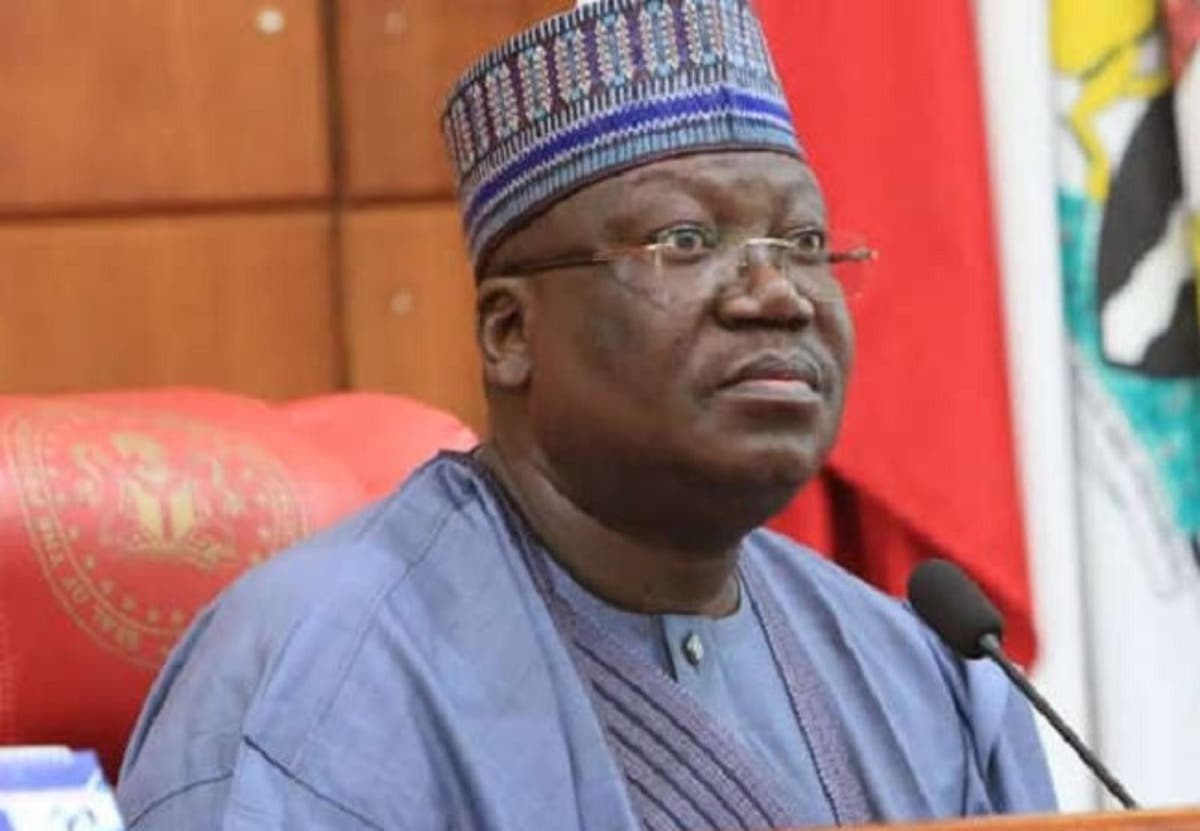

THE Senate today failed to override the veto of President Muhammadu Buhari on the 2010 Electoral Act (amendments) Bill 2021.
The red chamber made the decision after a 40-minute closed session.
The President of the Senate, Ahmed Lawan, explained after the executive session that the upper chamber had decided to consult with members of the House of Representatives on the matter.
He said since the House had gone on recess and the constitution prescribes that both chambers should take a joint decision on the matter, it would be proper for them to wait till January before any action could be taken.
Lawan also said the Senate in the closed session agreed that members should consult with their constituencies who are critical stakeholders in the electoral process.
He said, “The Senate discussed the way forward on how to respond to the letter from Mr President on the Electoral Act (Amendment) bill.
“The Senate consequently resolved to consult with the House of Representatives in January when the two chambers will be in full session”.
The Senate had yesterday, adjourned plenary till today to enable them to override the President, on the 2010 Electoral Act (amendments) Bill 2021.
Buhari had in a letter to the National Assembly, dated December 13, 2021, titled ‘Withholding of assent to Electoral Act (Amendment) Bill 2021’ withheld his assent to the Electoral Act Amendment Bill, citing economic, security, and legal issues.
While faulting the removal of indirect primaries as contained in Section 87 of the Electoral Act 2010, Buhari said the amendment as proposed violated the underlying spirit of democracy, which is characterised by freedom of choice.
The president also said the amendment would also stifle smaller parties without the enormous resources required to mobilise all their members for the primaries.
This, he said was not healthy for the sustenance of multi-party democracy in Nigeria.
The House of Representatives suspended the plenary yesterday after passing the 2022 budget.
MEANWHILE, the Senate has passed a N17.126trn budget for the 2022 fiscal year, raising the figure by N800 billion..
The passage of the budget followed the consideration of a report by the Committee on Appropriations on the 2022 Appropriations bill.
le the exchange rate was retained at N410.15.
It said the increase in oil price was to reflect the current market values of the oil barrel in the international market.
In his presentation, Chairman of the Committee, Jibrin Barau (APC – Kano North), while giving highlights of the bill, said out of the total sum of N17.126trn for the fiscal year 2022, N869.6bn is for Statutory transfers; N3.8trn is for Debt Service; N6.9trn is for Recurrent Expenditure; and N5.4trn for Capital Expenditure.

