


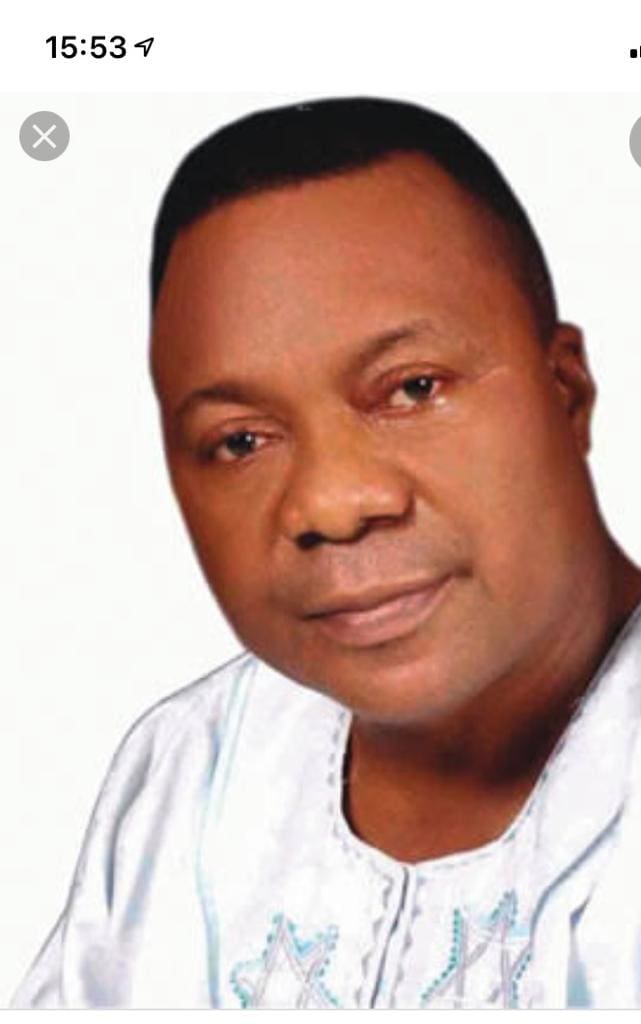
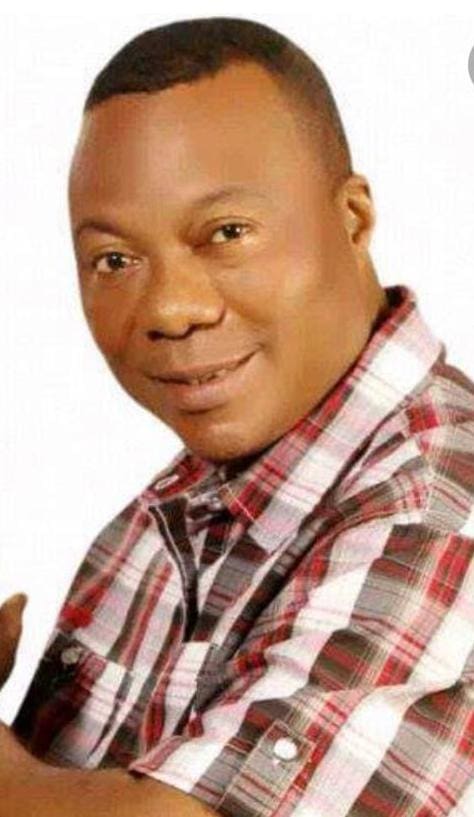
‘Dayo Kujore, apart from being a good musician, was also a good person with a great personality. His presence exuded humility and fine appeal. He easily forgot he was a star. In the midst of the crowd, he acted like he was nobody. And this often shocked people around him. This was someone who had performed his live music across Nigeria, some part of Africa, Europe and America. Yet, he related so well without an air of a typical celebrity’
THE Soko music creator and Juju music maestro, Dayo Kujore broke many hearts when he surrendered to death few days ago.
Prior to his sudden passing, Kujore was at the top of his creativity and career that make his music sell like hot cake.
When he released his first record titled Super Jet in 1990, it was a catapultic launch into the mainstream Juju music in Nigeria and beyond. Super Jet shook the music scene to its foundation. It was new with a fresh breath as against what had been.
A year earlier, Sir Shina Peters had released his most successful album dubbed Ace. Apparently, Peters was firmly in charge of the Juju music scene (even beyond the likes of King Sunny Ade and Chief Commander, Ebenezer Obey) when Super Jet was released and re-spelt a new dimension. As a matter of fact, when Sunny Ade was featured in Star Show, a monthly musical concert organised by NTA Channel 7 and hosted by the National Theatre sometime in 1990, Shina Peters who came to see the show was ushered on stage. As soon as he stepped on Stage, King Sunny Ade removed his guitar and handed it over to him. Peters played the guitar while Sunny Ade sang his famous Atori laye je, bo ba lo si waju, a tun lo s’eyin ni (Time is like a cane whip, it bends forth and back). Some members of the audience had rumoured that the symbolic meaning of that action was that King Sunny Ade had just stylishly handed the Juju music scene over to Shina Peters.
This was the kind of goodwill and stardom Peters was enjoying when Dayo Kujore broke into the scene with his Super Jet. It was a fast-paced music that matched Peters’ Ace and possibly outpaced it. The difference between the two albums is explicable.
Shina Peters’ Ace was laced with raw language that messed up the morality of the society. It encouraged pure immorality. This informed the decision of the Ogun State Government to ban the music from both Ogun Television and Ogun Radio. The music showcased Shina Peters’ youthful exuberance. The case is not the same in Kujore’s Super Jet. He was careful in his choice of language. In fact, he appealed to musician to jettison music of enmity and embrace music of love: Orin ife pelu irepo la fe l’asiko yii, epe ragaji t’on fi n korin l’aye atijo, ijadu agba; iwo l’egbon, emi l’egbon, e ba yen da si koto; e korin ife: Orin to le m’oko digbo l’aya dubule ayo, orin to le m’aya digbo l’oko dubule ayo, iyen la fe, e maa ba wa kalo (Let’s sing songs of love and cooperation. Put aside those songs of curses and unnecessary rivalry, and focus on songs that will make man and woman fall in love. That is what we want now. So, let’s go).
Interestingly, both Shina Peters’ Afro Juju and Dayo Kujore’s Soko music sound alike. The beats, the tone, the pitch, the style and the feel, everything sounds alike. Perhaps the difference is in the voice and lyrics. Shina’s voice is thick and bass-like, but Kujore’s is more like what Sikiru Ayinde Barrister describes as velvet tone. It’s smoother and more penetrating. The language that Kujore employs is more mature and philosophically richer. He also had the ability to go on higher octave with much comfort that doesn’t strain his voice at all.
As soon as Kujore’s first album was released, rumour mongers went to town from two camps. The first camp believed that Kujore copied Peters because he lacked originality. The second camp held that the original music, Ace, released by Peters was actually composed by Kujore. The group held further that Kujore had done a demo of the music, which later got into Peters’ possession. The next thing that happened was the release of Ace. However, despite the music purportedly composed by Kujore, credit must be given to Laolu Akins, the music producer who introduced the kind of percussion that gave the music a different feel and, therefore, redefined what eventually became Afro Juju music. Shina Peters had earlier released some music that had no impact on the scene. Laolu Akins is a master on the drums, and so, the story of Afro Juju cannot be complete without attesting to his genius and contribution.
One thing cannot be taken away from Dayo Kujore: his fountain of knowledge is filled to the brim with rich, deep and meaningful Yoruba philosophies. It is reflective in his line of thoughts as puritanically exemplified in his music. When he sings about love, the music itches in the ear. When he addresses the audacity of living, his philosophy is apt and succinct. When he compares the antecedents of a good man and a bad one, the song succinctly describes them in an unmistakable sonority.
Shina Peters calls himself 777 (Meje Irawo) while Kujore calls himself Osupa (The Moon) that had come to eclipse the stars. In spite of this musical rivalry, something cannot be taken away from the duo: they were both friends! Their friendship dates back to 1970s. Despite their musical rivalry, they still maintained their friendship until Dayo waved bye to the world.
DAYO Kujore, apart from being a good musician, was also a good person with a great personality. His presence exuded humility and fine appeal. He easily forgot he was a star. In the midst of the crowd, he acted like he was nobody. And this often shocked people around him. This was someone who had performed his live music across Nigeria, some part of Africa, Europe and America. Yet, he related so well without an air of a typical celebrity.
Kujore wasn’t so lucky in marital life – just like many artistes and celebrities. He lost some marriages and stayed unmarried for a long time. He rather focused on taking care of his children, a position he maintained for a long time until he met love again.
Joyously, he just got married to the new love of his life in December 2021, and sadly, bit the dust on January 10, 2022.
The world will miss a fine musician and a great personality.

