
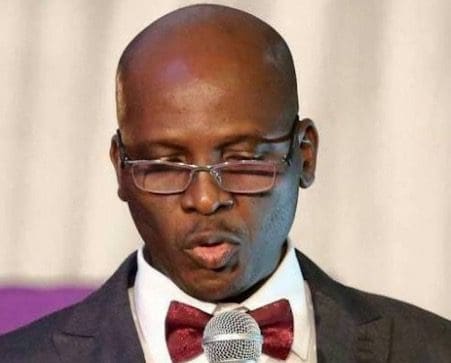

With a little over a year to the next general elections in Nigeria, the temperature of partisan politics has warmed up a bit, with all sorts of postulations and suppositions about the character, temperament and qualities of the individuals who fancy themselves as a possible replacement for the incumbent president, former army general, Muhammadu Buhari. We continue with the fifth installment in our perceptual explorations of selected individuals from the motley chorus of probable aspirants.
AMINU TAMBUWAL, 56
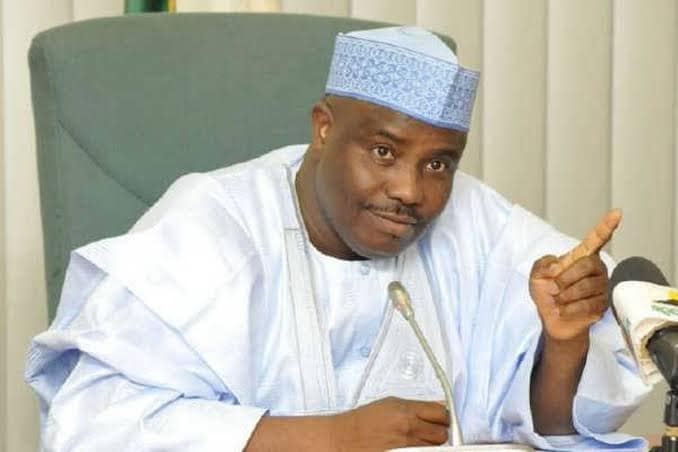
THE 10th Speaker of the Nigerian House of Representatives, chairman of the PDP Governors’ Forum, and incumbent governor of Sokoto State has etched a colourful imprint on the political landscape of the fourth republic, even in his favourite monotonic apparels. The young lawyer (called to the bar in 1992, a year after leaving Usman Dan Fodio University, Sokoto) dived into Nigerian politics at the lowest rung; he was a personal assistant on Legislative Affairs to the then Senate Leader, Abdullahi Wali, in 1999.
Subsequently, he started trudging up the ladder methodically: in June 2003, he entered the House of Representatives under the banner of the ANPP, and served briefly as the Minority Leader (2005). For the 2007 elections, he switched to the Democratic People’s Party, DPP, alongside former governor, Attahiru Bafarawa when ANPP became too hot to perch on. However, when DPP denied the Bafarawa entourage of legislators opportunity to contest the election on her platform, Tambuwal returned to the ANPP, and retrieved his candidacy. Then again, ticked by the fickle nature of Nigerian politics, he had to travel on someone else’s coattails when his governor, ANPP’s Aliyu Wamakko shifted to PDP – all, before the 2007 elections. Fortunately, both political ‘brothers’ were returned to their seats. Tambuwal also rose to occupy the position of the Deputy Chief Whip during his second four years in the House.
By 2011, Tambuwal not only returned as a ranking member of the House of Representatives, he was elected as the tenth speaker, and one of the longest running holders of that often turbulent office (June, 2011 – June, 2015). He succeeded Dimeji Bankole.
Tambuwal jumped alongside the aggrieved rump of the PDP chieftains to co-found the APC in 2014.. On the strength and diversity of that nascent political party, Tambuwal succeeded Wamakko as the governor of Sokoto State. Many pundits ascribed his success in upending the power-grip of PDP in the Northwest to the Buhari heatwave and frenzy that whip-lashed through most of the northern parts of Nigeria in 2015.
But by August, 2018, Tambuwal had had enough of APC and its shifting dynamics. He strolled back to PDP. Yet, like a Phoenix, shrugging off the backlash of the waning Buhari phenomenon, Tambuwal soared to regain the governor’s seat as a PDP man in the 2019 elections, though in a very close race. He barely beat his APC opponent, Ahmad Aliyu (backed by Tambuwal former godfather, Wamakko) by less than 400 votes – 512,002 to Aliyu’s 511,660 votes!
A man of graduated ambition, he was one of the top five contestants in the 2019 PDP presidential primaries (alongside Atiku Abubakar, Rabiu Kwankwaso, Bukola Saraki, etc); he came a distant second to Atiku Abubakar. Tambuwal has worked hard to nurture a clean image in a pool infested with shady and disreputable characters. His success in the 2023 race, within the PDP, will be dependent on several factors, including the ethno-geopolitical dimensions of APC flag-bearer, stemming agitations within the ranks of the most marginalized voting blocs within that party, and the multifarious tendencies primed to short circuit individual and regional ambitions across both major parties. And of course, the little matter of his stewardship in Sokoto, and its concomitant baggage.
The best advice for Umaru Tambuwal: Goodluck on the tortuous road to 2023.
*******
RABIU KWANKWASO, 65
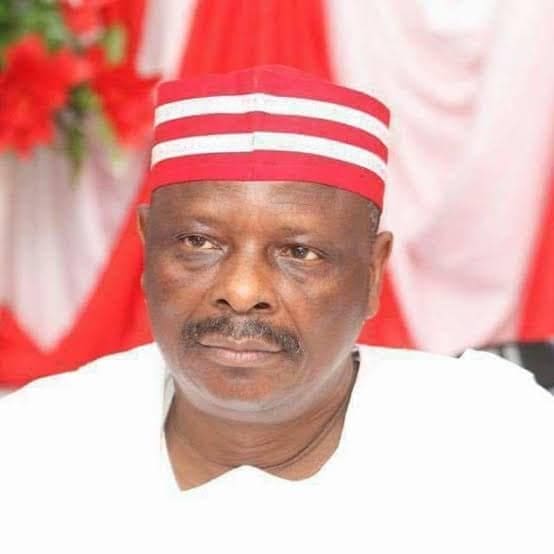
A FULANI prince from Madobi whose forays into politics predates the fourth republic. He was first elected into the House of Representatives as a member of the Social Democratic Party, SDP, during the ill-fated political transition rigmarole of the Babangida administration – after he resigned from the civil service as a water engineer in 1992. But his first political romance was with the People’s Front group (and subsequently People’s Democratic Movement, PDM) led by former Chief of Staff, Supreme Headquarters, Shehu Musa Yar’Adua. He was an active member from 1989 till 1993, when the so-called third republic collapsed.
He represented the people of Madobi Federal Constituency in 1992 House, where he later became a deputy speaker. He jumped from IBB’s SDP contraption, to one of the infamous “five-leprous-hands” Sanni Abacha parties, Democratic Party of Nigeria, DPN.
A political tactician imbued with chameleonic agility to leverage on prevailing political trends and movements, for his ultimate advantage. Kwankwaso joined PDP in 1998, and contested its Kano gubernatorial primaries, alongside current governor, Abdullahi Ganduje, who lost out, but became Kwankwaso’s running mate. They handily won the 1999 election.
For the grave sin of empathising with Obasanjo, against his rambunctious vice president, Abubakar, Kwankwaso incurred the wrath of some Kano power brokers, and he lost the return ticket in the 2003 elections to Ibrahim Shekarau.
Eight years later, the wily political chameleon wriggled his way back to the hearts of the power brokers, and returned to the governor’s office in 2011, of course, with his dependable deputy, Ganduje, beside him.
Even while out of state power for about eight years, he was not exactly in a political desert. Obasanjo, in a thank-you gesture, appointed him as the first minister of defence without a military background in the fourth republic (between 2003 and 2007).
His attempt to contest the governorship election in 2007 turned up sour grapes all across the Kano plains. A government white paper, from recommendations of a panel of inquiry, was briskly approved by his successor, Shekarau, which nailed Kwankwaso on many counts, and promptly shut down any hope of a glorious return. He was later compensated with an appointment as Special Envoy to Somalia and Darfur by Obasanjo.
After his second term as Kano governor in 2015, he turned over his massive statewide apparatus to the APC, as he joined the PDP renegades that co-founded the “change” party. He successfully installed his longtime friend and deputy as Kano governor, and he moved to the senate, representing the Kano Central senatorial district. All that was after he had attempted to wrest the presidential flag from the eventual winner, Buhari, in the APC primaries of 2015. He came a distant second to the Daura ex-military ruler, and promptly endorsed him.
He returned to PDP three years later, like a few co-travellers, to contest the 2019 presidential primaries. When he lost, once again, to Atiku Abubakar, he also quickly endorsed the winner, but refused to return to the senate.
Kwankwaso is quite a popular and an effective mobiliser in Kano politics. His smartly contrived political movement, Kwankwasiyya, leveraged on government patronage, building infrastructures, and investing in manpower, among other hands-on strategies. Some of the epaulets pinned on Kwankwaso during his two tours of duty in Kano were the establishment of two universities (Kano State University of Technology and North West University); he was reputed as the first fourth republic governor to introduce free school feeding and uniforms for primary school pupils – thus exploding enrolment by over 200%. Education was free at all levels, while more than 250 new secondary schools and training institutes were created.
His Kwankwasiyya Foundation has impacted Kano in ways that are difficult to dismiss as mere window dressing, or patronizing. However, like many of his ilk, his cupboards may be full of cobwebs and rodents. Kwankwaso was indicted in a 2004 white paper by Kano State government; a longstanding petition is before the EFCC alleging infractions of the Kano State Pensions and Gratuity Law of 2007. Of course, he vehemently denied everything. Yet, he was still being interrogated over the pensions brouhaha as late as October, 2021!
You can’t bet against Kwankwaso returning to APC to once again battle with others for the shiny diadem… it is the way of the chameleon. Can such a ubiquitous power-absorber be trusted with the ultimate power?
https://web.facebook.com/226456301556476/posts/1004912183710880/?_rdc=1&_rdr

