


‘…we know you are in a better place and will see you again on resurrection morning. Your legacy lives on in every one of us‘
IT is a year already that the beloved man of the screen and the arts, Raymond Oladipupo Ladebo, transited to ancestor-hood.
His loving family led by his wife, Irene, has just issued a very touching note on the man, who made such a huge impact on the Nigeria film scene when he returned hom from studies abroad.
Stated the memorial note:

“It has been a year since you left us and passed on to glory to rest in the bosom of our Lord Jesus. Although we miss you every passing day, we know you are in a better place and will see you again on resurrection morning. Your legacy lives on in every one of us. Continue to Rest in Peace.”
Aside the widow, Irene Ladi-Ladebo, the testimony is also signed by his three daughters, Precious, Joy and Imelda, Sons-in-law, Isi Osagie and Abi Kuku; and grandchildren, Imani, Aryela, Aziel and Kayomide.
Indeed, Ladebo who passed on Friday, April 16, 2021 at age 78, left a huge legacy through his works on film and television, where he operated majorly aside also being an art activist and culture advocate of renown.
His influence and impact in the media landscape was humongous, such that he was popularly called ‘Uncle Ladi’ by friends, associates and numerous mentees, the career of many of whom he helped to shape or advance through his warm spirit, generousity of means, and kind disposition.
To the many younger artistes he worked with while active on the home scene, he was not just a director but operated more as a teacher, career advisor, and moulder of talents and skills. It was no wonder, therefore, that when he passed on last year, the news jolted many in the film and allied industries.
BORN, May 7, 1942 was a renowned producer and director of famous works such as Bisi – Daughter of the River (co-author/producer), 1977; Countdown at Kusini (co author/producer) 1974 in collaboration with Ossie Davis; The Silent Sufferer (on WF) 1992 in collaboration with UNESCO/UNFPA; Vendor (writer/ director) 1987 for MAMSER, and several Television serials including Pariah, and The Thrift Collector, which starred ace actors Albert Egbe and maverick artiste, Tar Ukor, among other major stars.
A multi-award-winning filmmaker, he earned several laurels while active in his beloved filmmaking venture. These include: Best Script, Best Photography, Best Director and Best Feature Film, for Vendor at the first Nigerian Film Festival in 1992.
Holder of a Bachelor of Science in Business Administration from the Bowling Green State University, Ohio, USA (1968), he also earned an MBA in Marketing from the New York University Graduate School of Business in 1969.
Before taking up film production fully, he had worked as Media Analyst/Account Executive with Ogilvy & Mather, New York, USA, 1969-72; Clerk, Central Bank, 1963-65. He also contributed articles to many news mediums.
********

The monumental impact of Ladebo’s activities in the film and TV world of Nigeria and Africa have been well-captured in two separate articles – one while he was still alive, and another shortly after his demise last year, are reproduced below:
Ladi Ladebo: Footprints of a film legend
PUDGY. Assertive. Confident. Cerebral. Fast-talking. Hard-driving. Passionate. Staid. Unpretentious. All the elements carefully blended like vintage wine. He could have been a banker. An investment analyst/broker. A management consultant. Or an insurance broker. He holds a B.Sc. in Business Administration and an MBA. But for the Muses, he is a filmmaker. One of the trailblazers of the 70s.
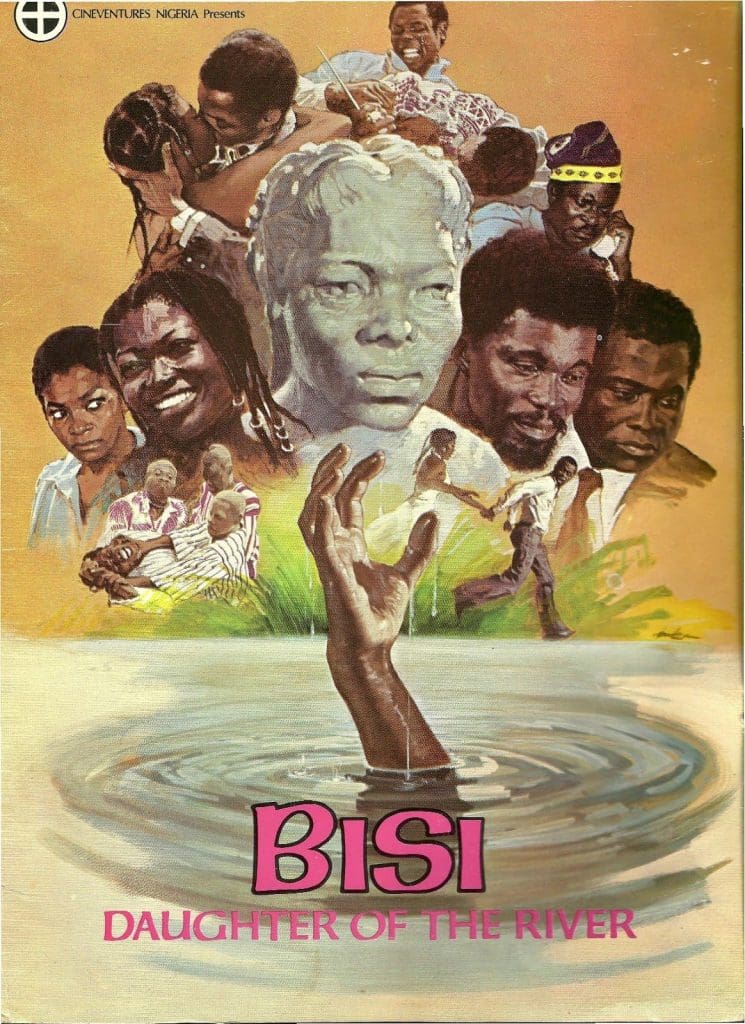
Riding on the crest of his successful outings in the United States of America (Final Comedown, Garden War and Today is Ours), Ladi Ladebo coasted home to make his debut with Bisi, Daughter of the River (1977), in collaboration with Jab Adu and Kola Ogunnaike. The picture, a toast of the late 70s is still recalled with nostalgia. It marked the beginning of his romance with ‘An African Legend,’ a label that has become his trademark and is proudly emblazoned on his feature films such as Bisi, Eewo – Taboo (1989), and will undoubtedly be stamped in his next picture inspired by the legendary Kwaghir puppetry of the Benue/Plateau area.
Ladebo’s resort to African legends, particularly his native Yoruba folklores, is to enable him use familiar indigenous leitmotif, stories, deities, beliefs and nuances, albeit in English language, to enlighten and entertain, and give his works authentic African origin – a rub-off of the ‘I’m Black and Proud’ era, during which he schooled and worked in the States.
Bisi (Patti Boulaye) is the story of Yemoja’s stubborn daughter who refuses to dedicate her life to her spiritual mother and serve as her priestess. She incurs the wrath of the river goddess. And she dies a victim of her own obduracy. Its overt ‘clash of cultures’ theme captures the zeitgeist of the post-independence African literature.
Employing the ancient Ifa art of divination to make a social comment in Eewo, Ladebo cast his cowries on the cocaine tin-foil of contemporary Nigeria. The divination: An ominous warning that spells grave disaster, “I am using this African belief to teach our youths,” said Ladebo (Daily Times, January 13, 1990) “that once you touch drugs you are actually having dinner with devil.”
In an earlier film, Vendor (1988), the film auteur’s social realism focus was on the bitter, dirty politics of the Second Republic. “The main objective of the film,” he stated, (Newswatch, March 28, 1990), “is to give a red signal to all Nigerians to be vigilant and not to applaud or sell our conscience to all those who engage in various vices against the economic survival of the nation.”
Both Eewo and Vendor are, in conception and realisation, expressionist films. This style suits Ladebo, who, justifiably, cannot come to terms with the awkward dual role of being a filmmaker and a hawker. His films are made with institutional buyers in mind; consequently they are not seen on the local cinema circuit. This explains why he is hardly known outside the professional circle of Nigeria filmmakers.
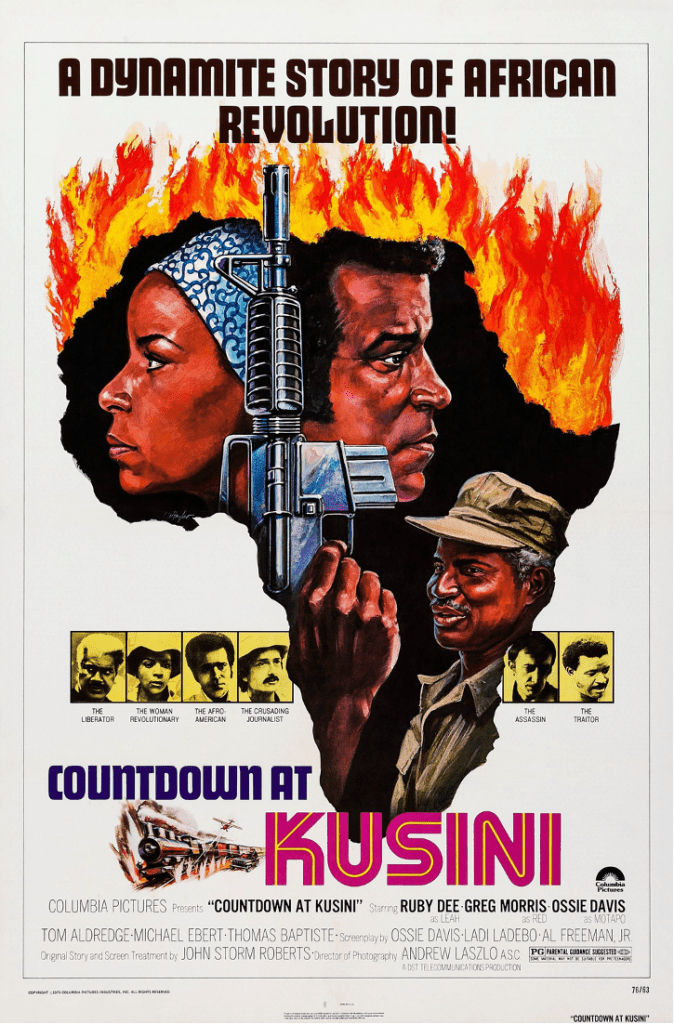
Between 1975 and 1976, he co-wrote and produced Countdown at Kusini, which, though a feature film, was hardly seen in the country. It had a brief run in the US against the popular Blaxploitation (Black exploitation) films of the 70s (e.g. the Shaft series, Superfly, Superfly TNT, Cotton Comes to Harlem, Three the Hard Way etc.) but lost out because it could not be easily placed or packaged for the uptown market.
He explains, “We wanted to bridge the gap between Africans and Black Americans in terms of the creative work. What we didn’t realise was that the perspective of the film couldn’t easily be identified as either African or Black American. So we got back to America with this type of film that the rhythm, the pacing was different from Shaft, Superfly and all the other Black American films… It was all thrown out there with all the other sleek, fast-paced movies… after eight weeks they withdrew it , and it ended up being played on cable television” (Daily Times of January 13, 1990). Countdown at Kusini, a production of Kusini Company was financed by the Delta Sigma Theta Sorority (USA).
In 1985, he completed two documentary films: (A) Children of God I & II, a film on the rise and popularity of the Aladura Pentecostal Churches; and (B) I Too Sing Nigeria based on a collection of poems by late Major General Mamman J. Vatsa, whose pre-empted coup and subsequent execution forced the film into the cooler. Ladebo describes the film as, “A special documentary motion picture which utilises very rich and humorous poetry to tell about Nigeria, its people, problems and historical experiences since independence from Britain in 1960.” Fifteen years earlier in 1975, he produced FESTAC ’77, a promo film on behalf of the Federal Government.
Ladebo is not only passionate about making movies; he is equally zealous about becoming a director, the man whose concept determines the look of the film. Guess this is natural progression for a man who all along writes and produces his pictures. He donned the director’s cap on I Too Sing Nigeria, Children of God I & II, Vendor and Eewo, all made between 1985 and 1989. Prior to 1985, his films were directed by African-American Ossie Davis (Today is Ours, FESTAC ’77 promo and Countdown at Kusini) and Jab Adu (Bisi). Ossie Davis it will be recalled also directed Francis Oladele’s Kongi’s Harvest (1971).
THE truth about Ladebo, however, is that he is not only a filmmaker; he is also a businessman (for real). Filmmaking for him is business, and business is a source of funds for film production.
(Originally titled Ladi Ladebo: To be a legend, it was first published in The Guardian, Sunday September 2, 1990)
******
Ladi Ladebo: A pioneer of Nigerian cinema
By Molara Wood
FILMMAKER Ladi Ladebo, who has died aged 78, was one of the pioneers of Nigerian cinema in the celluloid-era optimism of the 1970s, and wrote the screenplay for one of the most important black films ever made.
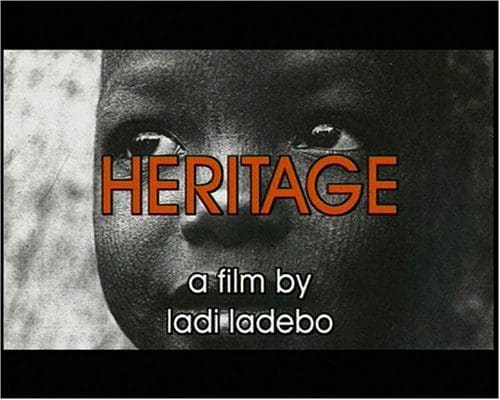
His death in London came nearly 20 years after his last directorial effort, Heritage. The film had its UK premiere at the Khalili Theatre of the School of Oriental and African Studies (Soas) in 2004.
Centred on the trade in African artefacts fuelled by the international art market, the film feels prescient in light of the current debate about the restitution of African art treasures from museums of the West.
Ladebo felt strongly about the issue, comparing looted African art to someone stealing the Statue of Liberty.
He argued that the loss of artefacts had an adverse impact on societal cohesion, as the objects were made for cultural purposes and their absence could only be detrimental, due to the removal of vital information pertaining to a people’s journey.
He did not spare the Nigerian elite in what he called the “social crisis” of art theft, pointing to acts of complicity in the illicit trade.
He was similarly unimpressed by African governments, which he accused of lacking seriousness about arts and culture, decrying their failure to accord museums their proper place in the education system.
Ladebo believed a realistic outcome for Nigeria would be part-return or part-purchase arrangements with Western museums. He further suggested periodical travelling exhibitions that would allow people to see the artefacts in their homeland.
But the ground has since shifted significantly. The debate over the Benin Bronzes has reached unprecedented levels, and developments are unfolding which might have seemed unthinkable a couple of years ago.
Germany is to return looted Benin Bronzes to Nigeria; so is the University of Aberdeen as well as several institutions, especially museums, from the UK to Europe and America.
In the current atmosphere, it is reasonable to think that Ladebo, too, would be much more strident today in his reckoning of an issue that preoccupied him so much he made a film about it, pumping much of his family savings into the project.
The director and producer had hoped to work with Swiss backers to make a series of documentaries titled, Who Owns Art and Culture? However, it does not appear anything came of the arrangement.
Heritage suffered the fate of much of his filmography – made with passion and idealism but seen by few.
‘Blaxploitation’
Born Raymond Oladipupo Ladebo in the city of Ijebu-Ode in Nigeria’s Ogun State, the director obtained business and marketing degrees from US universities, and worked as a media analyst and accounts executive before going into films in collaboration with African-American actor Ossie Davis, who described Ladebo as a son-in-law.
Their greatest collaboration was on the film Countdown At Kusini (1976), co-written by Ladebo and directed by Davis, who also starred in the film alongside Ruby Dee.
IMAGE SOURCE,GETTY IMAGES
Countdown At Kusini was the first of its kind in many ways, and its unique place in the history of black cinema is now an acknowledged fact.
“The first film to be made by Black Americans and Africans working together on African soil, Kusini gives us a rare glimpse of the modern reality of Africa. All film was done in and around Lagos, Nigeria,” noted the US newspaper, Ann Arbor Sun, in 1976.
A conscious Pan-African production conceived to counter stereotypical portrayals of African Americans particularly in the Blaxploitation films of the early 1970s, Kusini was the first film ever to be funded by a black women’s organisation, the Delta Sigma Theta Sorority, in a case of crowdfunding and media activism that was ahead of its time.
But for all the good intentions, Kusini’s backers had not banked on non-committal Hollywood distributors and theatres, as the film was pulled summarily from the cinema by Columbia Pictures.
When Kusini was shown at the Diaspora Festival of Black and Independent Film in the US in 2018, it was its first screening in 30 years.
Many older Nigerians fondly remember Ladebo’s iconic film, Bisi – Daughter of the River (1977), a vehicle for British-Nigerian actress, Patti Boulaye, in the high point of Nigerian cinema.
IMAGE SOURCE,GETTY IMAGES
Image caption,
Patti Boulaye came to the UK from Nigeria at the age of 16
The economic downturn and Structural Adjustment Programme (SAP) of the 1980s led to a steep decline in Nigeria’s cinema culture.
By the time another generation rose to build a new Nigerian movie industry from the ashes in the 1990s, it would be reborn as video films.
The new practitioners, in what would become known as Nollywood, were moving away from the practice and aesthetics of the likes of Ladebo, taking the audience with them.
As he told the BBC’s Masterpiece programme in 2005, Ladebo admired the ingenuity of the early Nollywood marketers in cracking the problem of distribution, but he never cast his lot with the video film industry.
Celluloid, he said, was “cleaner and requires a different discipline.” Heritage was shot in 16mm. No doubt, he was also cautious about access to his films because of the scourge of piracy in the Nigerian film distribution chain.
After 1977, he stuck to making what he called advocacy films, usually in collaboration with funder organisations such as the United Nations Educational, Scientific and Cultural Organization (Unesco) and the UN Population Fund (UNPFA).
His 1992 production, Vendor, won four awards, including Best Director and Best Feature at the first Nigerian Film Festival in the same year.
Ladebo was among the very last of the visionary directors of Nigeria’s early big-screen era, and was an important bridge between the different incarnations of the country’s film industry – from celluloid to video and digital.
He is survived by his wife, Irene, three daughters and two grandchildren.
(First published May 23, 2021 as a tribute to his memory)
https://www.bbc.com/news/world-africa-57156147

