
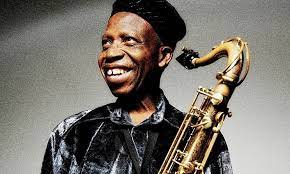

*Profile: ‘…A master’s glorious journey in beats,’ by Bolaji Alonge
‘Orlando Julius was an extremely generous and gentle soul. A pioneer of Afro-Highlife, a musical maestro & ambassador extraordinaire with a catalogue that cut across so many genres and styles, Orlando Julius was always pushing his musical ideas and constantly forging musical alliances be it on the continent, Europe or the Americans’ – Ade ‘Bantu’ Odukoya
LEGENDARY saxophonist, composer, arranger and afro-highlife exponent, Julius Orlando Ekemode, has stepped on into ancestor-hood. He died at age 79 early yesterday, April 14.
Tributes have started pouring in by his friends and associates from around the world, even as the family is yet to issue a formal statement on the passing of the composer of such classic songs as Ashiko, Igbehin Adara, Ololufemi’, ‘Colombia’, ‘Ope’, ‘Ise logun Ise, among others.
One of his very close friends and associates, Semoore Badejo, Managing Director of Concrete Communications, the parent company of Concrete Studios, where a song to celebrate him, rendered by a collection of artists, was produced and released during his 78th birthday, via a whatsapp broadcast today, wrote:
“OJ IS GONE! 😢” – LATOYA
“September 22 last year, we celebrated his 78th birthday.
“We wished he could be with us forever. We wished he would pick up his Sax someday, just one more time, and serenade us with his unique style of blowing that wind instrument. We wished he would sing his victory song again. But alas, God thought otherwise.
“He has taken him to rest.
“This text message l wished never came bounced in on my phone at exactly 11.49pm yesterday night from Latoya, “Oj is gone”. Short but powerful. Quick but jolting. Brief but affirmative. Few but real. I put up a call, and a video call of a woman in agony over the loss of the love of her life was too much for me to bear. Short of words, l kept saying “take heart” even when my own heart was bleeding. How do you console a woman who gave her life, her everything to OJ? How do you say “it is well” to a believer in OJ and all that he stood for; forsaking the allure of a more assuring place of birth, diving blindfolded into an uncertain terrain with faith?
“Now, fate has dealt a big blow on her. She’s not gonna see OJ physically again, but their souls will for ever connect.
“Latoya, thank you. Thank you for living that creed of “for better for worse”. Thank you for being faithful to OJ’s cause till the end. Your words still resonate in my mind during OJ’s weak moments: “Treat your woman well. In low moments, she will stand by you. OJ treated me well, l have no choice but to pay him back by standing by him in challenging times”. God bless you.
“For OJ, we will always celebrate him. We will celebrate him, big time. Because his works live after him, he will be heard forever.
“Rest now, OJ. Rest from thy labours. Rest”
Another of his associates, Ade Odukoya aka Bantu, leader of the BANTU Crew, and founder of the popular concert series, Afropolitan Vibes, writes:
“Another legend gone, another archive forever lost. Orlando Julius was an extremely generous and gentle soul. A pioneer of Afro-Highlife, a musical maestro & ambassador extraordinaire with a catalogue that cut across so many genres and styles, Orlando Julius was always pushing his musical ideas and constantly forging musical alliances be it on the continent, Europe or the Americans.
“Baba OJ mentored, trained and influenced countless musicians (the list is long and quite impressive). One of the things I loved about Orlando Julius was his openness to technology, he wasn’t stuck in the past. I recall the first time I met him (he must have been in his mid 60s) in Accra, Baba was busy editing and recording on Protools! It was fascinating to hear him talk about various studio gear with the excitement & the insight of a pro.
“Working with OJ was always fun and a masterclass in music. It was a joy to share the stage with OJ on the numerous occasions he performed at Afropolitan Vibes. His vibrant and youthful energy was infectious and the crowd adored him. Rest In Power Orlando Julius Aremu Olusanya Ekemode.”
BORN in 1943 in Ikole in the old Western province (in today’s Ekiti State) to a merchant family, according to Wikipedia, his first musical teacher was his mother, who would sing and dance while he played drums. He went to St. Peter’s Anglican School in Ikole and played in the school band. In 1957, after dropping out of school and the death of his father, he left for Ibadan to pursue a career as a musician. He worked at a bakery while playing the drums or flute with juju and konkoma bands.
The Wikipedia entry continues:
There was no music school in the area at the time, so the premier, Obafemi Awolowo, created one in his political party’s secretariat. He spent time trying to connect with highlife musician Jazz Romero, doing chores for him hoping to garner enough favor for music lessons. Romero invited him to play with his band at a hotel in Ondo, learning his first chords on the instrument that he would become best known for, the saxophone. When Romero got into a conflict with a nightclub owner and walked out on a gig, Julius stepped in as bandleader. Not long after, back in Ibadan, he joined Rex Williams’ highlife band. In lieu of formal lessons, he consumed as much music as possible, buying records of any horn-based music he could, but especially the highlife music out of Ghana which had become popular in Nigeria, too.
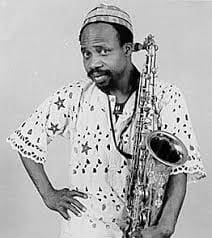
Career: In 1960, Eddie Okonta invited Julius to join his band. Okonta’s was one of the most popular highlife acts in Nigeria, and together they recorded several songs, performing many gigs, and even opened for Louis Armstrong. He recorded his first single, “Igbehin Adara”, with the Nigerian Broadcasting Corporation the same year. But by then Julius was less interested in playing highlife than “to put traditional [music] that I started with, and add a little bit of horns and guitar, and then do my own thing.” To that end he formed Modern Aces in the early 1960s and began incorporating American pop, R&B, and soul into the African music he grew up with. They played regularly at the Independence Hotel in Ibadan. Fela Kuti would attend Modern Aces performances, and Julius would sometimes bring him on stage to play. According to Julius, it was because of him that Kuti learned to play saxophone.
He had his first hit in 1965 with the song “Jagua Nana”, the name applying slang for Jaguar cars to a woman. On the success of that song they went on tour around west Africa. As new kinds of music became popular in the region, Julius formed new groups to keep up with trends, for example the Afro Sounders and the Evelyn Dance Band. According to AllMusic, his 1966 album Super Afro Soul was a “dramatic, highly melodic incorporation of soul, pop, and funk” which “made him a national celebrity in Nigeria” and influenced American music.
In the 1970s, in post-civil war Nigeria, Julius was disappointed by the state of the music industry. The civil war had a negative impact, but so did the influx of Western music. With a vague sense that something was missing, he decided to travel to better understand production. He traveled through Europe first, and then went to the United States in 1973, where he decided to stay. He took up residence in Washington, D.C., formed a band named Umoja, and played in local nightclubs. A break came when Hugh Masekela attended one of their rehearsals. Masekela had split with his band, Hedzolch Soundz, and formed a new group with Julius, including some members of both bands. They recorded the albums The Boy’s Doin’ It and Colonial Man and went on tour, opening for high-profile acts like Herbie Hancock, The Pointer Sisters, and Grover Washington Jr. Over time, he met and played with several prominent American musicians like Lamont Dozier, James Brown, and The Crusaders. He says they noticed his distinctive style of playing the saxophone in a minor key, owing to the Ijesha way of playing. Though they were successful, he left Masekela on troubled terms, both because he wanted to be a bandleader again and because of disputes over royalties.
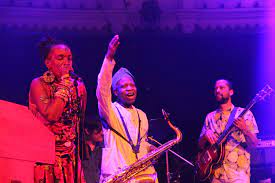
He spent time as a session musician in Los Angeles, even taking an acting role in Roots: The Second Generation, before moving to Oakland in 1978. He had always been interested in film production, and once in the Bay area attended film school. He did not stop playing music, however, and met up with others regularly at a small bar, Michael’s Den. Even while in the US, he released music on Nigerian labels, such as Disco Hi-Life in 1979, which John Doran called an “exquisitely balanced hybrid of languid disco and serotonin-drenched highlife“. He began teaching his style of playing to local musicians and formed Ashiko. Though it gained a following, he got tired of being in the teacher role, leading an African band that did not have other Africans, and returned to Nigeria in 1984. He quickly began recording tracks for the album Dance Afro-Beat, leading him to put together the 18-person Nigerian All Stars band. The group started to go on a US tour with the Lijadu Sisters, but it was canceled after just one show because of a misunderstanding that led to the Lijadus never arriving.
Despite his influence, he was not well known abroad until Strut re-released Super Afro Soul in 2000. It was followed by his 1972 album Orlando Julius and the Afro Sounders being reissued by Voodoo Funk in 2011. He began touring internationally and, in 2014, went to London to collaborate with The Heliocentrics. In the English music collective’s analog studio in North London, they recorded new music as well as new versions of older tracks. Together they released Jaiyede Afro in 2014, which charted at number 13 on the Billboard World Albums chart.
Legacy: Lopa Kothari of BBC Radio called Julius a “legend” and Robin Denselow of The Guardian wrote that he is “one of the heroes of Nigerian music”, a “master of the simple, stomping riff” with a significant influence on afrobeat music. Modern Ghana considered him “the last of Nigeria’s titans in the highlife music genre”. According to AllMusic, “few artists have been more crucial to the invention, development, and popularization of Afro-pop”.
*******
In 2020, a full bio-narrative was done by te photographer, documentarist, Bolaji Longe on his blog, www.eyesofalagosboy.com, which was also published in Naija Times. See below
Orlando Julius Ekemode: A master’s glorious journey in beats
Singer-songwriter and multi-instrumentalist, Orlando Julius Ekemode has graced the Nigerian music scene for six decades and is still going strong. OJ fuses traditional African rhythms, highlife with American soul, pop and R&B with captivating showmanship, keeping his audience on the dance floor.
BORN September 22, 1943 in Ikole-Ekiti, OJ – as he is fondly called — grew up between Ekiti and Ilesha in Osun State, where his father is from. He left for Ibadan at age 14 on his own. He started out on his musical journey in 1960 with the great trumpeter Eddy Okonta as well as the juju music maestro, IK Dairo. He left for the United States in 1974 and collaborated with artists including Ambrose Campbell, Hugh Masekela, Lamont Dozier and many others. His 1966 effort, Super Afro Soul, made him a national celebrity in Nigeria and even went as far as to influence music in the United States. Carlos Santana personally selected Orlando and his Nigerian All-Stars to accompany him to Hawaii to play at a festival in 1992.
By 2001, UK label Strut Records reissued the 1966 album ’Super Afro Soul’ before other labels including Soundway and Vampi Soul released his Afro Sounders recordings, all spreading the word on OJ’s pioneering influence. He recorded movie soundtracks for Wale Fanu’s ‘Owo Blow’, Tunde Kelani’s ‘Saworoide’ and Tunji Bamishigbin’s ‘Eku Ida’ among many others. Passionate about reviving highlife music, he recorded albums with Nigerian legends including Fatai Rolling Dollar and Alaba Pedro, Roy Chicago’s guitarist. Some of his evergreen classics are; ‘Adara’, ‘Ololufemi’, ‘Colombia’, ‘Ope’, ‘Ise logun ise’, ‘Jagua Nana’ amongst many others.
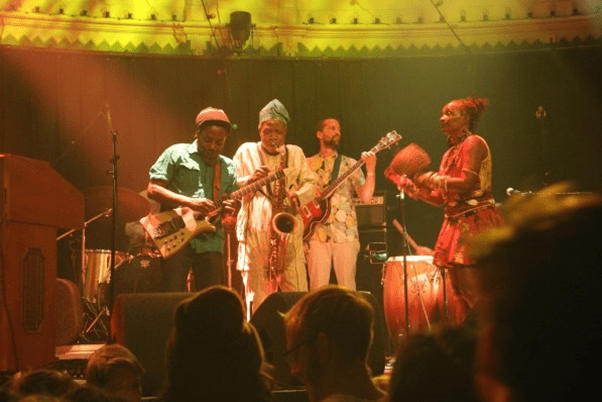
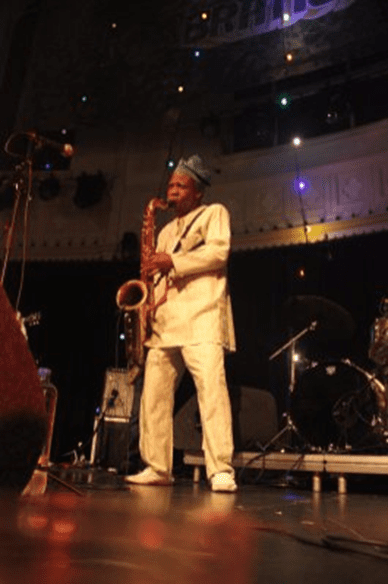
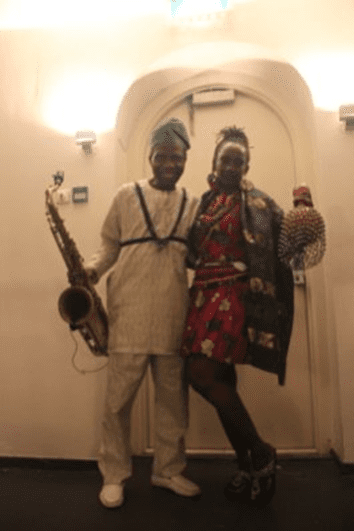
Orlando moved to Ghana in 2003 after playing a concert at Panafest (the long-running Pan-African Historical Theatre Project). He set up a studio in Accra and recorded his album, ’Longevity & Reclamation’. He moved back to Nigeria in 2008 and started touring the world with UK band Heliocentrics in 2013. Orlando Julius now lives in Ilesha, Osun State with his wife, dancer and back up singer, Latoya Aduke Ekemode.
Who is Orlando Julius Ekemode?
To me, he is still this young guy, a musician. I have been playing music for a long time and I have traveled to a lot of countries in the world. I am so glad that most of those shows were sold out.
How did you get into music?
My professional music journey started when I recorded my first single, ‘Igbehin Adara’ in 1960. I was already playing shows, travelling up and down South-West Nigeria. I loved playing music, singing and drumming from childhood. My mother was the one who really pushed me, she liked to sing as she worked on yarn – she produced Aso-Oke (a hand-woven cloth created by the Yoruba people ) and when she sang I got my sakara drums, sat with her and sang along. We both loved to sing together, sometimes she would walk with me as we sung all the way to my school gate before she went back home.
My mother gave me clothes to sell and my father had a shop in Ikole Ekiti, but I wasn’t interested in helping them to sell clothes. My father had two wives and my mother was the second wife, my mother is from Ekiti and I saw how they helped my father carry fabrics from Ikole Ekiti to Ijebu, about 285km. From when I was a child, I knew music was the way for me.
How many albums have you released?
I released 11 albums and have done several EPs and singles. Some I can’t even remember. My first music video, Adara, was recorded at the Osun shrine along with Ise Logun Ise and Dance AfroBeat. Tunde Kilani on camera was great, Wale Fanu on sound, an excellent production.
Do you remember your first show and when was it?
I was an apprentice with other big names, one of them was Eddy Okonta, a hero trumpeter. He started playing at Premier hotel in Ibadan where I visited regularly in 1960. I also played with the Flamingo Dandies because of my love for Afro soul and I had previously been playing highlife music too. I started with the saxophone in 1964. I played with IK Dairo, Tunde Nightingale, Chris Ajilo, Bola Johnson, St. Augustine, Ojoge Daniel, Dele Ojo — all of blessed memory.
When did you travel to the US?
My musical adventure led me to the US in 1974. I was fixated on playing and teaching music because I could play the saxophone, drums, maracas and the keyboard so well. I could play with any group unrehearsed and still do great music. People liked my music and they invited their friends to listen and dance, there was a high demand for Afrobeat, Afrosoul in the diaspora, from the 1970s till now. Life in the US was great. I co-produced an album with Hugh Masekela titled ‘The Boy is Doing It’ and one of my tracks ‘Asiko Lo Laye’ became a hit. My song ‘Isedale’ was also a hit in the US and it won a Grammy Award when it was sampled by Odyssey, ‘Going Back to My Roots’ in 1981.
You are touring the world with the band Heliocentrics for some years now, can you tell us about your cooperation?
Heliocentrics is a cosmic band, my music is organic, together we do great music. We met in 2013 when we did a show in France. Our friend and label owner, Quinton Scott, thought it would be a good combination. Julien LeBrun of Hot Casa Records invited us, he re-issued my song ‘Disco Hilife,’ a song I first recorded in 1975 at Ginger Baker’s studio in Lagos, with Dora Ifudu singing and Gboyega Adelaja on the keyboard. ‘Disco Hilife’ became the song every DJ plays every weekend since 1976.
He (LeBrun) invited me to perform with his Latin band Setenta, it was a great performance and Quinton suggested I try something with Heliocentrics. Our first show was great, like we already worked together for years. Professional musicians give me happiness in the studio and on stage. When on tour, we have become like a family.
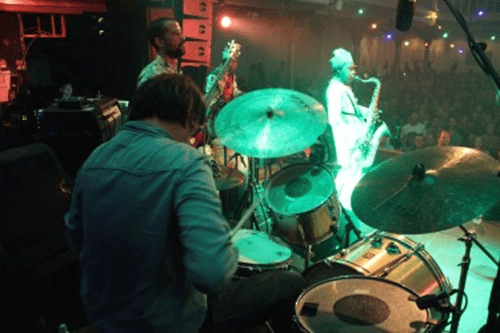
Our album, Jaiyede Afro, was released on K7 Records and got to number 13 on the World Charts. We have toured on that one album since 2014. We traveled most of the globe with Heliocentrics and additional musicians, great adventures, great music, great memories. No stress, mutual respect, no run-aways, no wahala. All I had to do is perform, no stress of logistics.
It’s been a tough year for artists because of the COVID-19 pandemic. Knowing you as a frequent feature at shows in Europe and the Americas, how have you been holding out?
Yes this virus has really turned every upside down. I was set to perform in New York in March, also to record a new album in the U.S and do a few more shows in Europe and South America, but all that did not happen. We lost a lot of income, just as other musicians and creatives. I have been taking things very easy, isolated, here in Ilesha. Fortunately, our royalties are keeping us afloat.
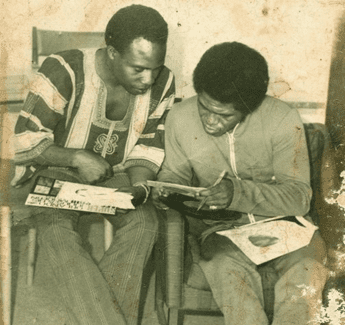
There is a classic picture of you and the Godfather of Soul, James Brown, in a deep conversation, what was that encounter like?
James Brown came to play in Ibadan in 1970, he had performed previously in Lagos but I didn’t see the show. I too was playing at Paradise Hotel in Ibadan around the same time and we had to rehearse. One of those nights some of Brown’s band members came to watch and that was how he heard about our music. He sent a message he wanted to meet me, I replied that I would also love to meet him. We had a great time together, Brown asked me about my art and we talked about everything, exchanged pleasantries, signed autographs and created a friendship, we went on to record ‘James Brown Ride On.’ From then on, it became the flagship song they played in clubs and parties, people would spray us with cash at performances.
What about your relationship with Fela Anikulapo Kuti?
When Fela came back home from the United Kingdom, I was already performing. I met him at Ibadan Independence Club, where my band, Modern Aces, performed around 1963/64. He was playing his trumpet with the mute (capped trumpet) off stage, I welcomed him on our stage to join us. The ladies loved him and my musicians as well. A few of them followed him to start his Koola Lobitos band, a very good band. I was told he asked one of my guys if I would join him and his band. Of course my band member told him that is not possible, and he would never ask me such. I can say we had mutual respect for each other, but our paths were different, we really did not spend time together, hang out or anything of that nature, besides, I left Nigeria for a while.
Do you think people today appreciate Afrobeat?
Nigerians love and appreciate Afrobeat, they are into it. It is really good to write and compose and see people from other countries dance even without understanding the language I speak. Fortunately, Afrobeat/highlife is still growing, many young people appreciate it and dance to it, even as they are coming up with different styles to modernize it.
What is next for Orlando Julius?
What’s next? Well, I am still working on music, I want to finish this album for my label. We are also completing our new house and venue, here in Osun State, Ijebu Ijesha to be precise. It will feature audio and visual studios and serve as a venue for shows and events. It has been a long quest to open the Ojahh Orlando Julius Afrohouse of Highlife. It is finally becoming a reality, with hard work. But I wish I had come to Osun State, to build on my land much sooner.
What is your advice to the young people of today’s Africa?
Young people around the world are different, but music remains the same and it has brought us closer together. Young African musicians should do music right, they should be able to take it beyond the continent and do more traditional music to show the world the deep roots of our culture.
How did you meet the flamboyant dancer – your wife Latoya Aduke Ekemode.
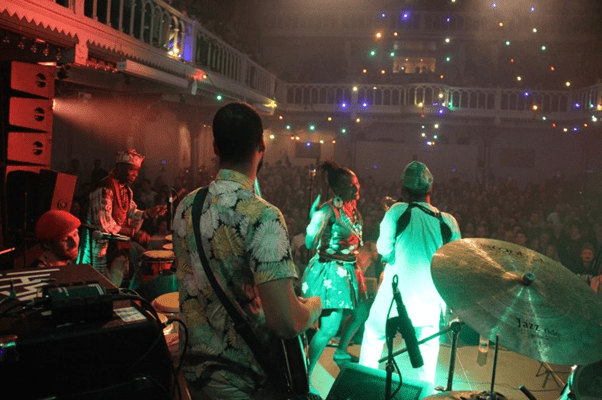
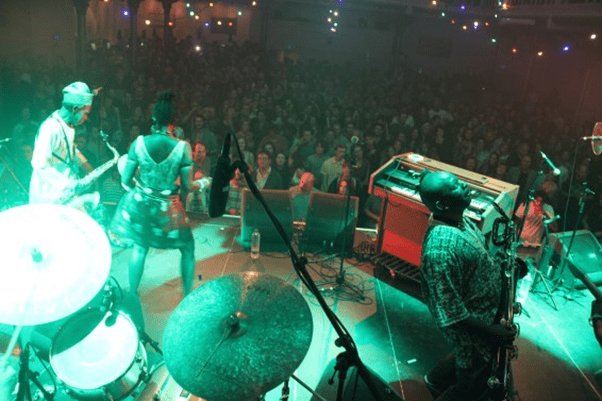
I met Latoya through the late Ambrose Campbell, who was a father figure to her. We became friends and her understanding of my music swept me off my feet. Naturally, she became a member of my band. We tour the world together. I am very happy she came along, so many good things have happened since she joined my band, my music has also grown.

We are in Ilesha where you live, about five hour away from Lagos. Why did you leave the bustling city life to settle in sleepy and beautiful Ilesha?
Ibadan is quite close. We decided to leave the go slow and overcrowded big city to settle here in Ilesha, to be closer to nature and sharpen our creativity. Remember I am also from here.
Adapted from: https://eyesofalagosboy.com/2020/06/27/interview-orlando-julius-ekemode-ba


2 comments
… [Trackback]
[…] Here you can find 85612 additional Info to that Topic: naijatimes.ng/orlando-julius-ekemode-a-masters-glorious-journey-in-beats/ […]
… [Trackback]
[…] Here you will find 61301 additional Information to that Topic: naijatimes.ng/orlando-julius-ekemode-a-masters-glorious-journey-in-beats/ […]
Comments are closed.