
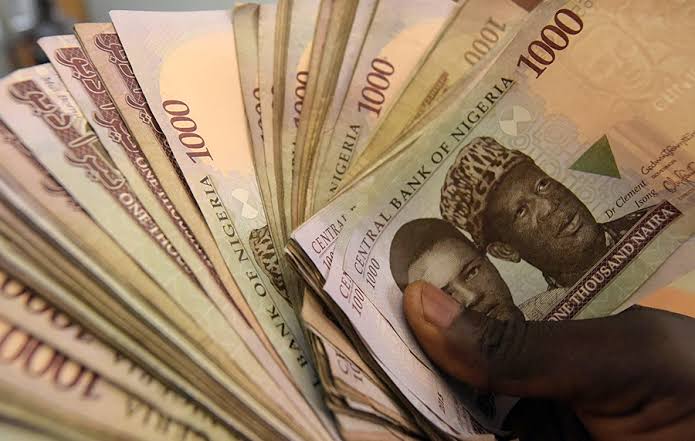

ACCORDING to trading statistics from the FMDQ Exchange platform, demand pressures impacted the value of the Nigerian naira in the foreign exchange markets last week, resulting in a decrease in the local currency purchasing power.
The Nigerian native currency, the naira, fell 0.23 percent to N418.50 against the US dollar in the official window this week, while the country’s external reserve increased.
Despite worsening economic conditions, the Naira has struggled to discover its actual value as the Central Bank of Nigeria (CBN) maintains its policy not to devalue the local currency.
However, in spite of the N65 refunds granted to exporters to trade through the channel, demand pressure in the foreign exchange window of investors and exporters has failed to nurture the local currency.
Nigeria’s foreign currency reserves fell for the first time in five weeks, falling by $160.32 million to $39.65 billion in the previous week. Despite this, external reserves increased by 0.3 percent in April compared to March.
In the past week, rising oil prices and limited market involvement have aided the country’s external reserve position.
Meanwhile, China’s prolonged lockdown in response to a rise of Covid-19 cases has helped to keep crude oil demand in check.
As a result, the average Brent crude oil price declined 10.9 percent from $117.25 in March to $104.44 per barrel today. However, the price of Bonny light climbed to $107.09 a barrel.
According to channel checks undertaken by MarketForces Africa, the local currency also lost value in the parallel market as the foreign exchange rate hit N590 per US dollar.
However, despite the CBN’s weekly injections of $210 million, the currency rate on the interbank foreign exchange market remained unchanged at N430.00/$. $100 million of the money injected in the previous week was set aside for Wholesale Secondary Market Intervention Sales (SMIS).
A total of $55 million was awarded to Small and Medium-Sized Enterprises, with another $55 million sold to Invisibles. In the meantime, the Naira-dollar exchange rate varied wildly across foreign exchange forward contracts.
Two-month, three-month, and 12-month contracts all gained 0.05 percent, 0.05 percent, and 0.18 percent, respectively, to settle at N420.92/$, N423.80/$, and N448.02/$. The one-month and six-month contracts, on the other hand, lost 00.11 percent and 0.01 percent, respectively, to close at N418.46/$ and N432.66/$.
It was revealed however by Afrinvest analysts that the Biden administration and members of the International Energy Agency (IEA) authorized the release of more crude from their individual strategic stockpiles to alleviate skyrocketing energy costs.
At the I&E window and parallel market, the naira also dropped by 0.2 percent to N419.00/$ and N590.00/$, respectively.
While the total turnover at the investors and exporters FX window grew by 44.3 percent from the beginning of the week to $866.38 million on April 28th, with deals completed within the N410.00 – N453.15/$ band.

