
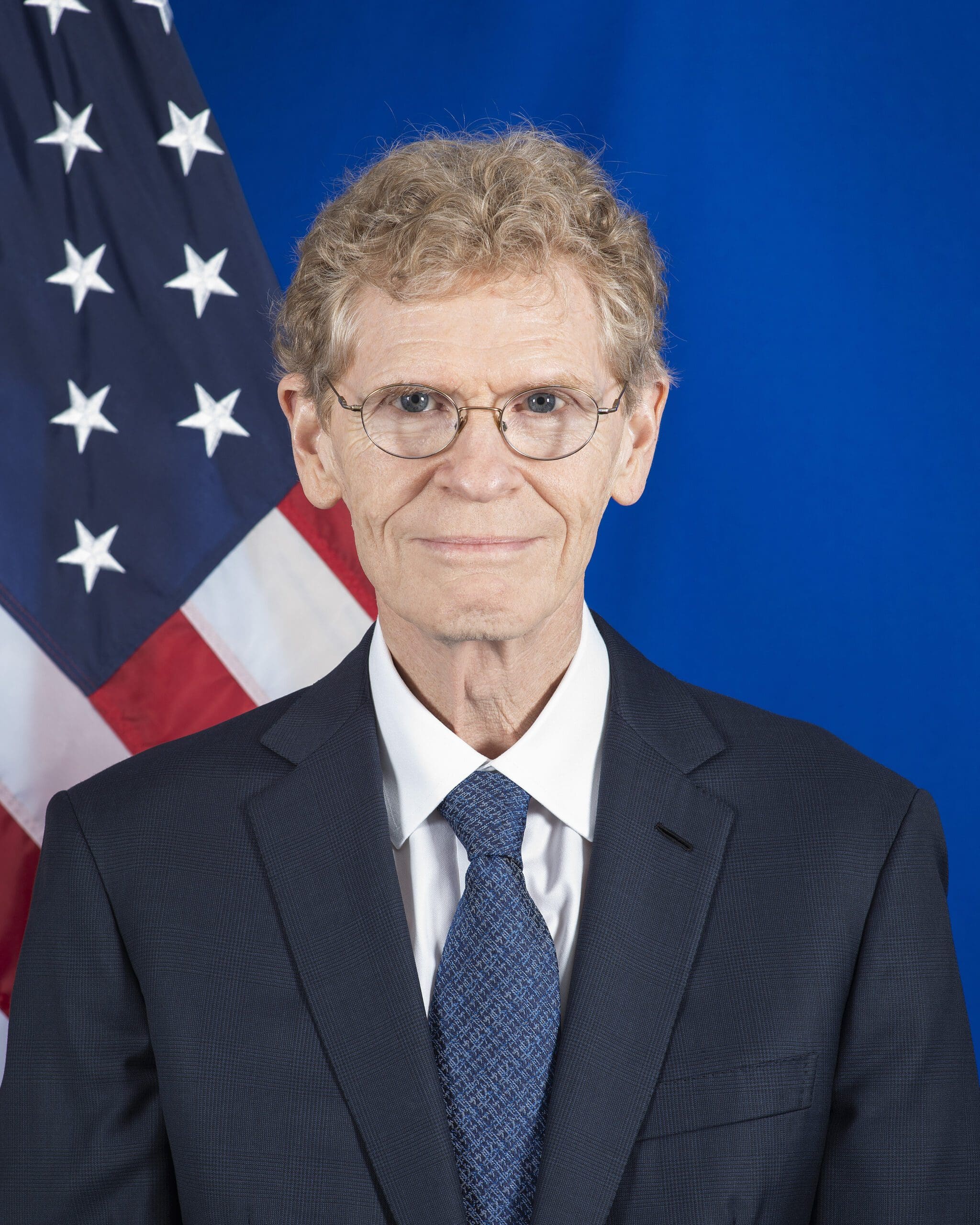

UNITED States Special Envoy for Global Food Security, Dr. Cary Fowler, in an online briefing, gives insight into the damage the Russian invasion of Ukraine has done to global food security. OLUKOREDE SADIQ YISHAU presents excerpts:
African food system, COVID-19 and food security
I’m Dr. Cary Fowler. I’m the new Special Envoy for Global Food Security here at the Department of State, in Washington. I certainly look forward to fielding your questions today, but in my day-to-day job I look forward even more to working with African countries and institutions, farming organisations, to try to build food security and resilience into African food systems.
I’ll just say at the outset that we were facing difficult times before the unprovoked war of aggression of Russia into Ukraine, and that situation has greatly exacerbated the global food crisis. We’ve faced food crises before, but this one is unique in many ways because it’s multicausal. We’re dealing with climate change, we’re dealing with conflict, and we’re dealing with COVID. The situation in the Ukraine has, by all estimates, pushed – is pushing about 40 million additional people into the ranks of the food-insecure, a totally unnecessary situation.
Africa before the war
Africa started out, prior to the Russian invasion of Ukraine, in probably the weakest position of any continent. It’s also experienced a number of calamities. We’ve had four straight years of drought in the Horn of Africa, and it simply had a long way to go to reach a position of food security.
But what’s happened in the current situation is that we see really from the Russia-Ukraine war how interdependent countries are with each other. The majority of countries in the world are net food importers, and in terms of Africa, probably 70 percent of the food that’s produced in Africa stays in Africa, and those two facts tell you two things. One is you really need trade to flow, you need food to flow between countries, and that any small disturbance in the global food system can cause ripple effects, and the ripple effects are felt – I’m sorry to say – most dramatically in Africa. So we certainly need to keep that open, as Ambassador O’Brien said.
The Ukraine produces enough grain to feed about 400 million people, and that’s sitting in silos right now in Ukraine, unable to get out. And in a highly interdependent world, this is going to cause food-price spikes, food-supply availability problems, and that’s going to have an impact on Africa first and foremost.
America’s role
The United States has certainly, since last year, devoted, invested quite a lot of funding into the Horn of Africa for humanitarian assistance. I think about $500 million, if I’m not incorrect. And I think you can look for more to be provided in the future.
One of the things we really must do, though, going forward is to help develop more productive and resilient food systems. We have a program at the United States Agency for International Development that we call Feed the Future. We’re in the process of expanding that program. We’re supporting a great deal of research around the globe in international agricultural research centers and even in some of our own universities in the United States – for example, to develop drought-tolerant maize. We have I think about 16 million acres of U.S.-supported drought-tolerant maize in Africa right now.
So while we’re in the midst of certainly an acute crisis at this very moment, we still have to have a longer-term vision because we cannot get out of this crisis simply by providing humanitarian aid, food assistance, et cetera. We have to develop our way out of this crisis. And part of that is through long-term development projects, like I just mentioned.
And another part of it, though more immediate, perhaps, is getting grain out of the Ukraine. We have – it strikes me, frankly, that the farmers in Ukraine, who are on the front lines of the war against hunger because Ukraine is such a breadbasket for the world and particularly for the Near East and Africa, shouldn’t have to be on the front lines of a war, defending their country from an invasion by a neighboring country. They should continue to be on the front lines of fighting hunger instead of fighting the real shooting war. That’s something that they can’t do right now, and as I mentioned, there are at least 20 million metric tons of grain sitting in the Ukraine which could be put into the world market, and historically and traditionally would be going primarily to Northern Africa – I mean the Near East and Africa.
Ukraine’s dilemma
There’s really nothing that’s stopping Russia itself from exporting its grain to Africa. What’s stopping the Ukraine from exporting its grain to Africa is, in fact, Russia. This year is the African Union “Year of Nutrition and Food Security.” We are working quite closely with African countries and have been for years and are laying plans for even stronger engagement in the future. We haven’t seen Russia on the ground doing this same kind of work. If they’re that concerned about food security in Africa, it’s a newfound concern.
The problem right now, however, is that we have an acute crisis caused by high levels of interdependence among nations, and the – essentially the blockade of one of the major exporters of wheat, corn, and sunflower oil, that being Ukraine. And that – those restrictions on the exports are causing not only supply problems but are jacking up the prices of a number of different commodities, not just the three that I mentioned, all around the world, particularly in Africa.
America and WFP
The United States has certainly stepped up substantially its contributions to the World Food Programme. So we’ve made great efforts to try to, in an emergency situation, to provide more humanitarian assistance, but we’ve also announced somewhat longer-term measures. I mentioned earlier that our – one of our flagship programs at the U.S. Agency for International Development is our Feed the Future program that involves quite a few countries around the world, but really focuses on – in a very intense way on about a dozen countries, I believe eight of which are in Africa. We expect that program to be expanded, an announcement to be made fairly soon, and I think you can anticipate that a number of the countries to be added will be African countries.
And again, we’re involved in so many other institutions that perhaps don’t carry the American flag, but are certainly supported by the U.S. Government. The Consultative Group on International Agricultural Research, which is the umbrella for a number of international agricultural research centers around the globe, is – I believe we are the largest funder of that consortium. They have research centers and development centers that work in partnership with African countries. They’re headquartered in Nigeria and Ethiopia and in Kenya, Tanzania. So we’re involved in a number of different areas to try to, as I’ve been mentioning, try to improve food security.
Russia not solely behind food crisis
I don’t think anyone in the United States with the U.S. Government is pushing a narrative that the food crisis in Africa is predominantly, mainly, exclusively caused by the war in Ukraine. There certainly is a narrative coming out of Russia that this problem could be solved if only the Ukraine would export its grain, if only the United States would drop its sanctions, and that’s certainly false.
We know that the causes of food crisis in Africa are multidimensional. You mentioned climate. Yes, we’re – we’ve had more than 400 consecutive months where the global average temperature for a particular month exceeded the 20th century average. You can simply look at the climate data from Africa and tell that we’re in the midst of climate change in Africa and we’re headed towards climates mid-century that have never before been experienced by agriculture, by our crops. Obviously, this is presenting a huge challenge not just for the future – right now. We also have water challenges because we’re drawing out – agriculture takes in Africa 80 percent of freshwater supplies already, so we’re not talking about a great deal of leeway in terms of adding more water into agricultural systems.
But what we could be doing and what the United States is working with African countries to do is to make water use more efficient; to breed and disseminate drought-tolerant varieties of the different major agricultural crops; and to begin to integrate into those vegetables and legumes to make a more resilient, robust, stronger food system in Africa.
So the questioner is right. This is not all to be laid on the situation in the Ukraine. It was a complex situation with, by the way, fairly low grain stocks when we went – on February 24th, when Russia invaded Ukraine. But given the nature of the interdependence of countries, people, markets in the food space, what we see is that while you can’t solve a food crisis overnight, you can certainly cause one. And that’s what President Putin has done, and exacerbated the situation all around the globe. You’re feeling it in Africa; people are feeling it all across the world.
Ukraine’s strategy
Historically, most of the grain has flowed out of Ukraine from the Port of Odessa, and that is totally off the charts right now. Grain is not flowing out of Odessa at all. In fact, one of the ships that was there to load up grain and to ship it out was bombed I think on the second or third day of the war.
So what’s happening now is that Ukrainians are trying as best they can to get that grain out into international markets through overland routes. But you can imagine when you’re thinking about – when you’re dealing with 20 million metric tons of grain that have to go through an infrastructure system that is itself under attack and is not the normal way to export grain, that this poses quite a few challenges. Moreover, farmers have planted the next crop, and in the fall and in September they’ll be – they’ll start to harvest corn, raising issues about where that corn is going to be stored if the grain sitting there now that ought to go into international markets is still in storage in the Ukraine because it can’t get out because of the Russian actions.
So can we solve, can we avert a global food crisis? Well, frankly, we’re in a global food crisis. And the – what’s making it worse, immeasurably, is this war in Ukraine. What we can do and what we are doing is to provide more and more humanitarian assistance and to engage more seriously in the long-term efforts that will boost food production in developing countries, and particularly in Africa. But until we can get the situation in Ukraine resolved, we will be facing higher prices for food, for fertilizer, et cetera. And I’d just underscore – and if you hear the frustration in my voice, it’s there – that this is an unnecessary situation that we’re in simply because of a very unprovoked, immoral, and illegal invasion of a sovereign country by Russia.

