

U.S. Department of State has restated its commitment against child labour.
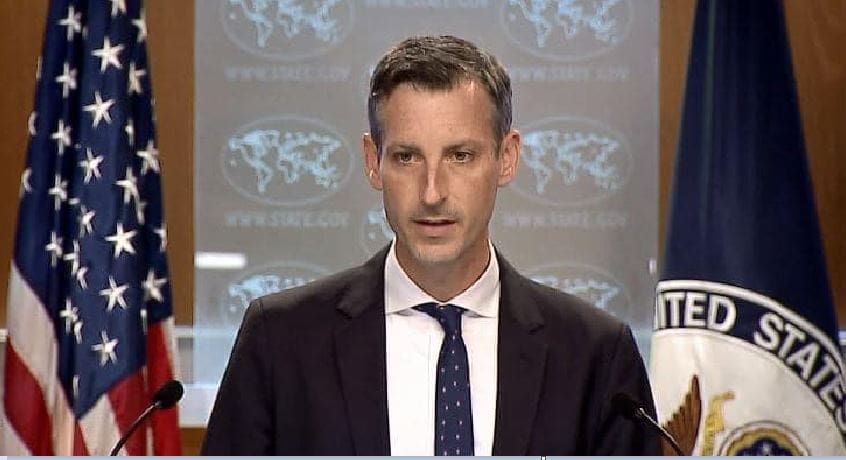
A statement by the department’s spokesperson, Ned Price, to mark the World Day Against Child Labour, said America would always support efforts to combat child labour and protect children.
The statement said the United States was one of the first countries to sign the international treaty against child labour.
“When President Clinton signed what is known as the Worst Forms of Child Labour Convention in 1999, he recognised that to address child labor, governments, companies, and workers must promote core labour standards and workers’ rights to raise living standards around the world,” it said.
The statement added that since America signed the law, many countries have made progress to eliminate child labour. It regretted that school closures and worsening health and economic conditions during the COVID-19 pandemic forced more children back to work. “Many are still not in school. It is up to us to stand up for them.
“That is why World Day Against Child Labor and our continued collaboration with global partners like the ILO are so important. This cooperation includes new commitments made at the 5th Global Conference on the Elimination of Child Labor in South Africa last month, which the United States fully supports.
“For our part, the U.S. Department of State’s Office to Monitor and Combat Trafficking in Persons combats child trafficking, including forced child labor, through the We also do so through the Child Protection Compact Partnerships with governments which strengthen our partners’ efforts to prevent child trafficking in all forms, effectively prosecute and convict child traffickers, and provide trauma-informed care and services for victims and survivors,” U.S. said.
It said the U.S. government is working to end child labour by funding projects across the globe to eliminate child labour, provide technical assistance to governments, address child labour in trade policy, and engage with companies and trade associations to keep child labour out of U.S. supply chains.
“We will not stop, because these investments in our children create better futures for everyone,” it added.

