
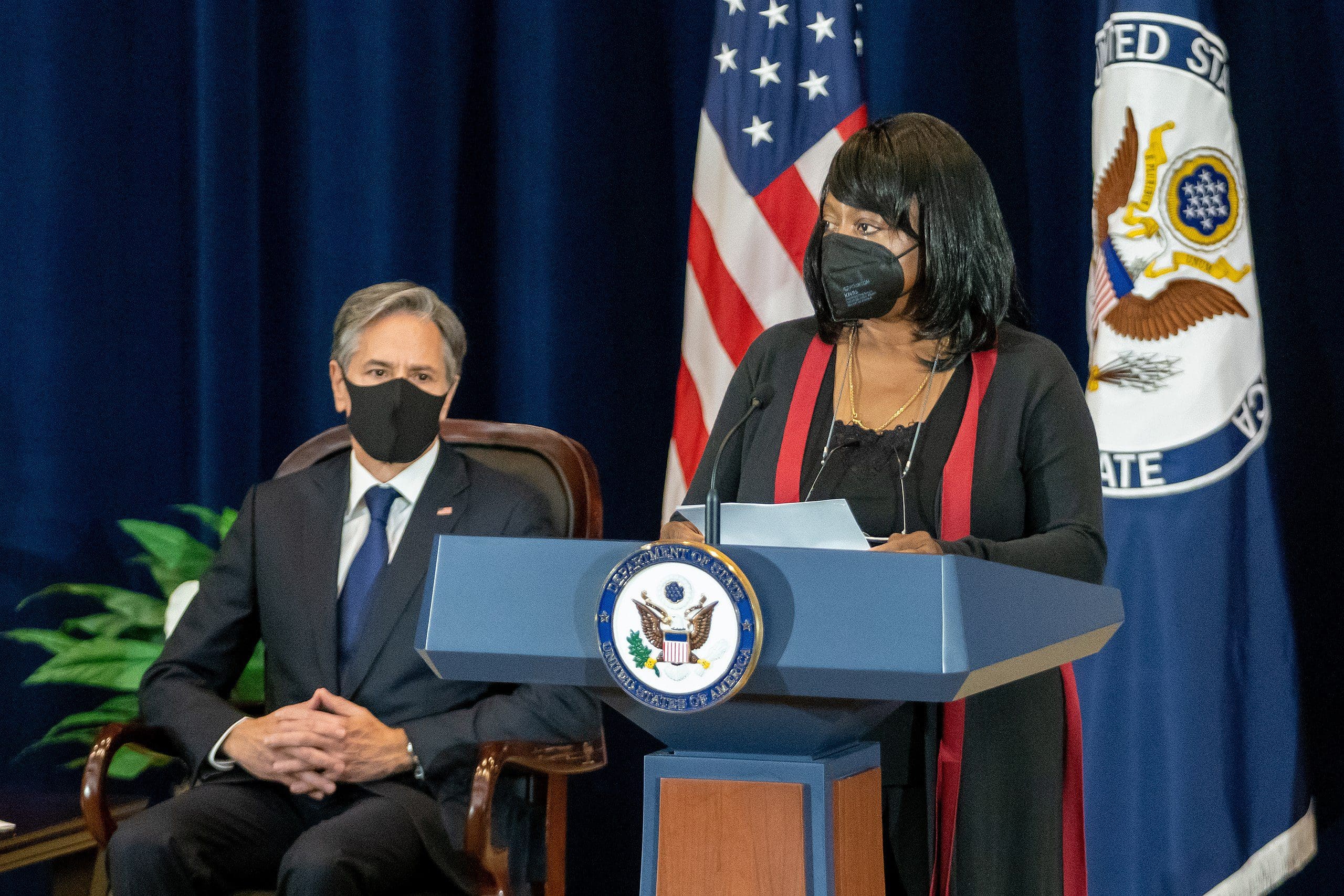

UNDER Secretary for Arms Control and International Security Bonnie D. Jenkins And Bureau of Political-Military Affairs Principal Deputy Assistant Secretary Stanley L. Brown spoke via a teleconference on Tuesday on the United States’ Updated Anti-Personnel Landmine Policy. Sadiq Yishau reports that the two officials emphasised the need to curtail the use of landmines because of its long term effects as well as the need for a peaceful world. Excerpts:
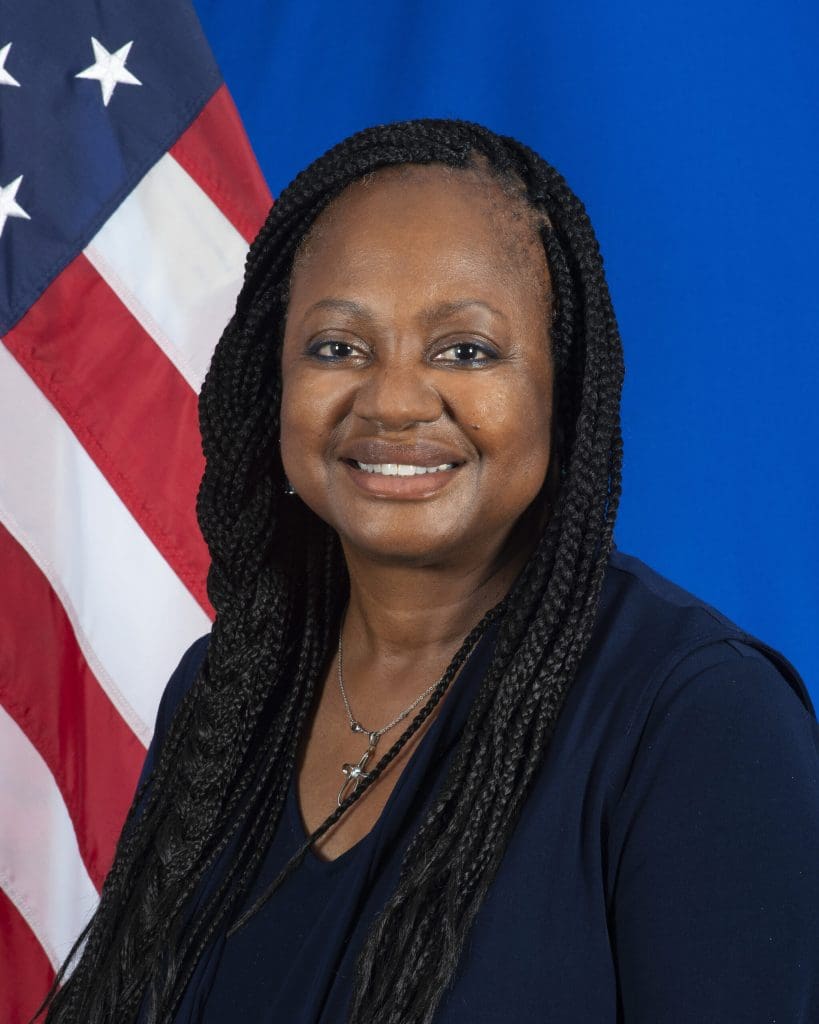
Curtailing the use of landmines worldwide was a commitment that President Biden made as a candidate, and I’m extremely pleased to highlight the White House’s announcement today regarding the new anti-personnel landmine policy that achieves just what President Biden had promised.
The United States new policy on anti-personnel landmines is centered on people, the communities and the individuals around the world who seek peace and security. It is a tenet of our humanitarian demining activities. Our annual report, To Walk the Earth in Safety, which I rolled out in April, is a great reminder of the United States’ global leadership, and I strongly encourage you to read it if you have not yet done so.
I know that you have a lot of questions about today’s White House announcement, so I will ask my colleague Stan Brown, Principal Deputy Assistant Secretary at the Bureau of Political-Military Affairs, to speak more about it.
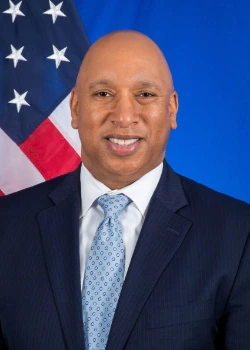
I just want to take a moment to echo Under Secretary Jenkins’s comments and reiterate the importance of today’s announcement, which follows through on President Biden’s commitment to curtail the use of landmines worldwide.
After conducting a comprehensive policy review, the administration has announced a new U.S. policy to limit the use of anti-personnel landmines and align the United States’ policy and practice with key provisions of the Ottawa Convention for all activities outside the context of the Korean Peninsula.
As a result of the decision, the United States will not develop, produce, or acquire anti-personnel landmines, not export or transfer anti-personnel landmines except when necessary for activities related to mine destruction or removal and for the purpose of destruction. They will not use anti-personnel landmines outside the Korean Peninsula, they will not assist, encourage, or induce anyone outside the context of the Korean Peninsula to engage in activity that would be prohibited by the Ottawa Convention, and undertake to destroy anti-personnel landmines and their stockpiles not required for the defense of the Korean Peninsula.
We will continue to pursue materiel and operational solutions that would be compliant with and ultimately allow the United States to accede to the Ottawa Convention, while we at the same ensure our ability to meet our alliance commitments.
The administration’s actions today are in a sharp contrast to Russia’s actions in Ukraine, where there’s compelling evidence that Russian forces are using explosive munitions, including landmines, in an irresponsible manner which is causing extensive harm to civilians and damage to vital civilian infrastructure there.
Lastly, just in a – here at – the United States is proud to lead the world in conventional weapons destruction. We’ve invested more than 4.2 billion in more than 100 countries since 1993 to promote international peace and security through our conventional weapons destruction programs. We’ll continue this important work and remain committed to continuing partnerships to address the humanitarian impacts of anti-personnel landmines.
So first of all, to address the Korea exception, that’s owing to our specific defense responsibilities there and our defense partnership. The – first of all, the United States does not maintain any minefields in Korea or on the DMZ. They’re all owned by the Republic of Korea. We have a responsibility for defense of South Korea. With the requirements of the Ottawa Convention, where we can’t assist, encourage, or induce anyone to use landmines, we cannot meet the treaty obligations there due to those defense requirements. So in that regard, we are basically falling back to the Obama administration policies to make sure that we can meet our requirements with Korea in that regard.
In the – in regards to the requirements of the convention, we are basically aligning ourselves with – basically it’s with Article 1 of the Ottawa Convention and the principles that have been laid out in the fact sheets and kind of the discussion points that we’ve laid out here. We will be meeting those requirements as – everywhere in the world except for on the Korean Peninsula.
So part of the – so as the policy is being put in place, basically we’re not going to develop or produce or acquire anti-personnel landmines; we’re not going to export or transfer anti-personnel landmines; we’re not going to use them outside the Korean Peninsula. We would – part of the policy is also to undertake to destroy all anti-personnel stockpiles not required for the defense of Korea, Republic of Korea. And again, we would not assist, encourage, or induce anyone outside the context of the Korean Peninsula to engage in any activity that would be prohibited by the convention.
The estimate of landmines in the stockpile is approximately three million. In that regard, we – I would defer to DOD for what their operational requirements would be for what would be needed for defense of Korea. And again, the policy states to basically look to undertake to destroy all anti-personnel landmines not needed for the defense of the Republic of Korea.
The United States last used anti-personnel landmines in 1991 during the Gulf War. There was one single incident of one munition being used in the 2002 timeframe in Afghanistan. But otherwise, the United States has not used landmines in – anti-personnel landmines in any significant way since 1991.
Ukraine is a – actually a party to the Ottawa Convention, and cannot use landmines that are not – do not comply with the convention themselves. So in itself, Ukraine is not using landmines, and we have not provided landmines to Ukraine that aren’t compliant with the Ottawa Convention.

