
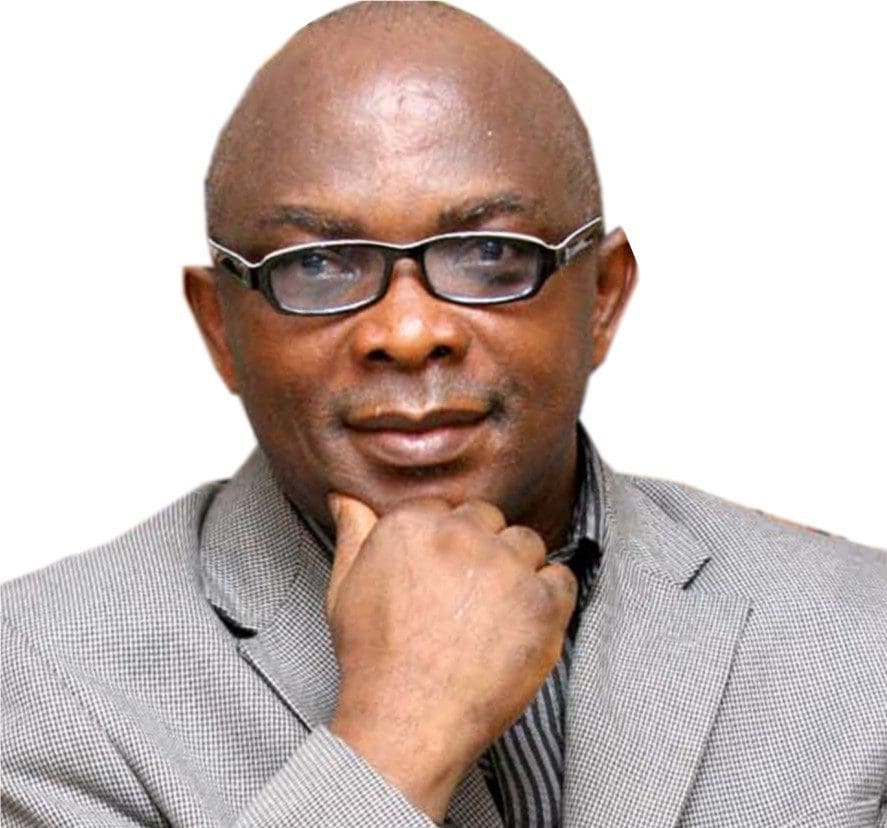

This ‘is a tribute to one of the greatest star figures of Nigerian journalism, a profession which should, due to its stalwart provenance, have gone from strength to strength matching and even surpassing the media culture of any other sphere. But alas, it has, as with all which once gave Nigeria distinction, eclipsed into the dark sea in broad daylight’
I AM amazed, stupefied almost, by how fast the years have worn. And when I am reminded that my own frontrunner in the profession and senior brother from “ile”, Mike Awoyinfa is about to breast the tape of seventy years, I cannot but ask where all the years have gone.
I am awash with memories of those few years back when he was the young and dashing, brilliant and resourceful editor/reporter from The Concord stable. He brought a fresh breath of magazine-style features to the newspaper medium. Every Sunday there was the Sunday Concord Magazine pullout in which he wrote the majority of the lead articles on culture and the society, the arts in particular which he often centred on the people who powered it.
It was pure innovation, a pioneering work in arts reporting which was previously unknown in the newspaper industry. What you could compare it with was perhaps the kind of coverage Peter Enahoro of Africa Now gave African arts on the international stage in London.
The writing style was lucid and creative, paired with the appropriate page design and illustrated with photographs by Yetunde Aboaba. It was in that early 1980s era that the lifelong camaraderie with Dimgba Igwe another of the sterling writers of the time and Awoyinfa’s deputy flowered.
I recall vividly that in 1984, Mike Awoyinfa visited the Ife University Traveling Theatre and reported on its rehearsals at Oduduwa Hall. The theatre was rehearsing a number of political revues or satirical sketches which Professor Wole Soyinka its director was preparing to run on the streets of Ile-Ife. The theatre had taken its previous performances to the road on campus during the convocation and other important public ceremonies. Awoyinfa joined Soyinka’s evening rehearsal and wrote the most captivating review I ever saw.
The Ife campus was reputed to be Africa’s finest and this period served as its peak in terms of personnel and structural landmark. It seemed that in less than a decade following this, the sun set over the landscape and things began to ebb.
Great events occurred in Ife during the 1984-1985 window. I appointed myself as Broda Mike’s reportorial assistant on his important event coverages in Ife and so accompanied him everywhere. It was my final year at the University of Ibadan and I was restless with headstrong literary ideas. I was about to publish my single edition literary magazine at this time named The River Prawn and the printer was in Ile-Ife.
We roamed the campus together during the annual Ife International Book Fair, a most reputable event which was second to none in all of Africa. By the time he was coming to cover the 1985 edition, he appeared in a brand new Volkswagon Jetta saloon car which elevated journalism to the very zenith occupations in my estimation. It was my duty to operate the midget, a novel electronic recording device with mini cassette tapes which took the voice of those he interviewed even as he scribbled in a notebook.
I was witness to his interviews with Flora Nwanpa and Molara Ogundipe-Leslie, if I remember well, at the sedate and beautiful University Guest House. 1984 was also the year of Soyinka’s 50th Birthday. Awoyinfa was the star reporter at the conferences and parties, some of which held at Soyinka’s official residence on the campus. Soyinka issued a paper containing his famous treatise describing his as the “wasted generation” on this occasion.
Awoyinfa would spring surprising questions, like asking Soyinka if he played lawn tennis because of his athletic build.
He is the master of the human angle review. He sees the unusual, is able to ask the startling, amusing questions. Sunday Concord was the dress rehearsal for the founding of his human interest Saturday newspaper, The Weekend Concord. It was entirely Nigerian-styled, not a mere clone of pry and tell tabloids from the British Isles as you would expect. You could not produce that brand of journalism without the kind of intrinsic talent Mike Awoyinfa exhibited. From the creative features to the casting of the headlines. And to his credit he found, trained and moulded many younger writers.
THIS article is a tribute to one of the greatest star figures of Nigerian journalism, a profession which should, due to its stalwart provenance, have gone from strength to strength matching and even surpassing the media culture of any other sphere. But alas, it has, as with all which once gave Nigeria distinction, eclipsed into the dark sea in broad daylight.
It agonises to this day that the stupendous photo archive and library of the erstwhile Concord organiaation was flushed without one scrap preserved. The same goes for other deceased national behemoths such as the Daily Times, Daily Sketch, Newswatch, West Africa, The Herald, Nigerian Observer etc.etc. Generations unborn will ask what happened to us as a people. Or to borrow from our doyen of letters Chinua Achebe, where the rain began to beat us. Something went miserably wrong. And whatever it was happened in us before they began to happen to us. The hall of fame for Nigerian journalism is crowded even if we never built one. But why was one never built? I said something happens in someone before it happens to them because such a fame gallery will mean nothing to the people in our present time including those bemoaning the tragic decease of Dele Giwa. We kill Dele Giwa everyday in Nigeria because any museum built to honour such numerous greats as Babatunde Jose, Alade Odunewu, Josy Ajiboye, Tola Adeniyi, Ray Ekpu, Yemi Ogunbiyi, Lade Bonuola, Doyin Aboaba-Abiola, Dimgba Igwe, Dare Babarinsa, Ayo Akinkuotu, Dele Olojede, Onukaba Adinoyi-Ojo, to name but a sprinkle in a vast ocean, will rot out of a lack of patronage and visitation from a misguided and misprimed public. So it begs asking, who and what will inspire the future?
It is the circumstances created by that social and psychological incubus that forced core professionals like Mike Awoyinfa to veer into media entrepreneurship. Something they had to do to clear a space to continue to practice. In my view a pure distraction, even though in his own case, he proved his mettle there as well, out of sheer strong-will, defying the fact that business is nigh impossible in Nigeria to the pure in spirit. They scar and taint you unless you are willing to roll in the mud or in fact belong in the mud.
I WRITE this story because I celebrate one of brightest, prodigiously talented minds of our time. I write because in a very little measure I was a part of the story. From the Awoyinfa family compound in Odo-oja, Ijebu-jesa (he is a remarkable resemblance of his late father) to – should I also reveal that Broda Mike was my forebear at IJGS, Ijebu-jesa Grammar School, where he prepared for and took his A-Levels upon his return from Ghana? – to the spectacular enclave of the University of Lagos which he attended and where the road to journalism was paved.
*Adeniyi, former Literary Editor of Daily Times and Editor of Glendora Review, is Publisher/Editor-in-Chief of Position Magazine.

