
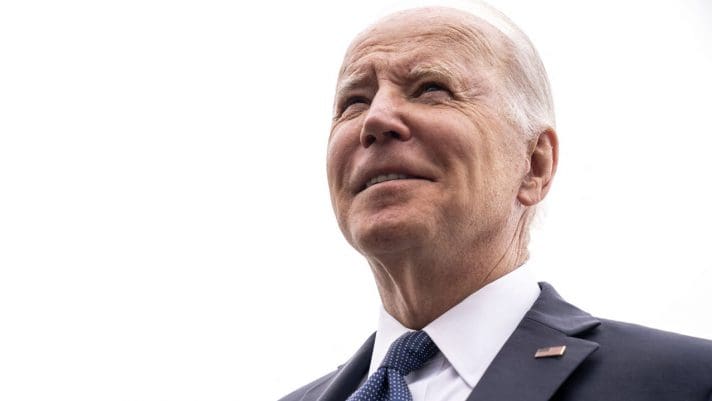

U.S. Department of State Spokesperson Ned Price, at a briefing in Washington, D.C. on Tuesday, spoke about what to expect from America this year. Excerpts:
Overview
A couple things at the top and then we’ll move to your questions. First, as we do welcome the new year, we also reflect on the events of the past year. Since Russia’s full-scale invasion of Ukraine on February 24th of last year, thousands of Ukrainian civilians have been killed, maimed, and wounded, and many have been victims of war crimes and other atrocities committed by Russia and Russian-backed forces in Putin’s unprovoked, needless, and brutal war.
President Putin’s war has also displaced millions; there are now more than 5.9 million internally displaced people in Ukraine, and more than 7.8 million refugees from Ukraine have fled the country. The Kremlin has furthermore made life harder for families around the world by stymying essential food shipments from reaching developing countries and exacerbating volatility in the energy markets, which has affected supply chains and compounded inflation.
The Kremlin’s plans to splinter transatlantic unity have had the opposite effect. We look forward to Finland and Sweden joining an expanded NATO Alliance, which is stronger and more purposeful than ever. EU and NATO member states remain fully committed to standing with and supporting Ukraine. On December 29th, President Biden signed the Additional Ukraine Supplemental Appropriations Act that will provide $44.9 billion in emergency funds to support Ukraine and other partners, and to address the global impacts of the war.
While traditionally the holidays are a time of celebration and peace, Russia chose to ramp up its campaign to weaponize winter, subjecting the people of Ukraine to a barrage of missile and drone attacks on cities and critical infrastructure. But the Kremlin’s attempts to instill fear and hopelessness in the hearts of Ukrainians are failing. Amid the sounds of warning sirens and the uncertainty of daily life, the people of Ukraine honored their heroes and celebrated their successes on the battlefield. We will stand with Ukraine for as long as it takes. As we have said, President Putin can choose to end this war today. We call on Russia to stop its attacks, to withdraw its troops from Ukraine, and to commit to peace in 2023.
Next and finally, we are pleased to announce that the Office of the Special Envoy for Critical and Emerging Technology begins operations today. Technology is increasingly central to geopolitical competition and to the future of national security, economic prosperity, and democracy. This administration has made historic investments in the industries of the future, as well as the infrastructure and supply chains that support them – from the CHIPS Act to the Biotechnology & Biomanufacturing Executive Order to the Inflation Reduction Act.
As part of our modernization agenda, the Secretary has established the envoy’s office because technology is an integral part of the conduct of U.S. foreign policy and diplomacy. The department needs to bring additional technology policy experience, diplomatic leadership, and strategic direction to international technology competition. The office will provide a center of expertise to develop and coordinate international technology policy, and to engage foreign partners on emerging technologies that will be transformative to our societies and our economies – including biotechnology, advanced computing, artificial intelligence, and quantum information technology.
Office of Special Envoy
The Office of the Special Envoy will help the department fulfill its mission of working with allies and partners to ensure that technology is developed and used in ways that protect our common interests and uphold our shared values. It will work in close coordination with the various bureaus and offices across the department that are engaging on these and other technology topics that are central to our foreign policy.
Starting today, Dr. Seth Center will serve as the deputy envoy. He and the team will stand up and build out the office. Dr. Center has extensive experience working at the intersection of national security and technology policy in and out of government. As we work to bring a special envoy on board, the Office of the Special Envoy will report to Deputy Secretary Sherman through Ambassador at Large for Cyberspace and Digital Policy Nate Fick. Ambassador Fick will oversee the office and will provide ambassador-level representation on critical and emerging technology issues.
Approach to Ukraine
We are absolutely confident that our approach to Ukraine will continue to enjoy bipartisan support. We’ve seen illustrations of that time and again; we most recently saw it last month when Congress passed and the President signed into law the more than $44 billion in emergency supplemental funding that will go to Ukraine’s security assistance, to humanitarian assistance, to economic assistance, to helping Ukrainians who have been forced to flee their country, and to helping countries in the region who have been in a position to help those Ukrainians who have had to flee.
We have heard both from Democrats and Republicans in our engagements with the Hill that they see the imperative, they understand the imperative, of continuing to support the Ukrainian people both because of what is represents in the context of Russia and Ukraine but, as we’ve said, as we’ve heard from members on the Hill as well, this is in some ways even bigger than one country – important as Ukraine is and what it represents is. This is about the rules of the road, the principles of the global international order that have undergirded some eight decades of unprecedented levels of stability, of security, of prosperity the world over. If Russia is allowed to aggress against its peaceful neighbor in an unprovoked, unjustified, illegal way, not only will Russia believe that it has carte blanche to do so going forward, but countries around the world may come away with that same misimpression.
So it’s important to us, it’s important to Congress, that we continue to take this approach. Secretary Blinken last month had an opportunity to brief both houses of Congress along with some of his counterparts from the Defense Department, from the Intelligence Community and elsewhere. We provided an opportunity for all members, all senators, all House members, to hear about our approach. What we heard in turn was broad bipartisan support for that approach.
Venezuela
We continue to recognize what is the only remaining democratically elected institution in Venezuela today, and that’s the 2015 National Assembly. We and the region’s democracies will continue to support the efforts of the 2015 National Assembly and others to return democracy to Venezuela. Members of the National Assembly have the democratic aspirations of the Venezuelan people at heart. That has been at the heart of our approach as well. We support the Venezuelan people in their desire for a peaceful restoration of democracy through free and fair elections. We applaud efforts of the democratic opposition to restore democratic institutions and bring an end to Venezuela’s humanitarian crisis even in the face of the Maduro regime’s continued repression, and we’ll continue to work with the international community to help address the Venezuelan crisis and to press for free and fair elections in Venezuela consistent with the wishes and desires of the Venezuelan people.
The Venezuelan people need – they want – a clear timeline for free and fair presidential and legislative elections. In that vein, we support the efforts of the Unitary Platform and the Venezuelan-led negotiation process as key drivers to – key drivers in the broader push to restore democracy, prosperity, and the rule of law in Venezuela.
When it comes to the assets that you referenced, our overall Venezuela-related sanctions and related restrictions remain in place. I understand that members of the National Assembly are discussing amongst themselves how they will oversee these overseas assets. We’re going to continue to have discussions with them on that front.
In terms of our approach to Nicolás Maduro, our approach has not changed. He is illegitimate. We support the 2015 National Assembly as the only remaining vestige of democracy in Venezuela.
Well, there is an institution in the form of the 2015 National Assembly. Now, the 2015 National Assembly is going to have discussions amongst its members to determine precisely what that entity looks like. If there is one individual who personifies the 2015 National Assembly, who represents the 2015 National Assembly, whether that’s some sort of consultative body, whether it’s a group of people, these are discussions that the 2015 National Assembly will need to make, and we’ll remain in close contact with them as they make those decisions.
We will continue to enforce our sanctions program against the Maduro regime. We will calibrate that sanctions program, as we’ve said before, based upon what we see from the Maduro regime in terms of advancing the prospect for the Venezuelan people achieving their democratic aspirations. There was positive movement late last year, as the unitary platform and the regime met in Mexico City. We, of course, we would like to see additional progress, because it would represent additional progress for the Venezuelan people as they seek to realize those aspirations.
Well, Juan Guaidó remains a member of the 2015 National Assembly, which we recognize – the 2015 National Assembly – because it is the last democratically elected institution in the country. We’ll coordinate – we’ll continue to coordinate with him as a member of the 2015 National Assembly and with other like-minded democratic actors in Venezuela to support the Venezuelan people in their aspirations of democracy, rule of law, and prosperity in their country.
Palestinia
So let me say broadly on the first question that the United States stands firmly for preservation of the historic status quo with respect to the holy sites in Jerusalem. We oppose any unilateral actions that undercut the historic status quo. They are unacceptable. The President has previously underscored the need to preserve that historic status quo at the Haram al-Sharif/Temple Mount, as has the Secretary. We have done so repeatedly with our Israeli partners; we have done so repeatedly with our Jordanian partners, whose special role as custodian of Muslim holy places in Jerusalem we deeply appreciate. That is a message we will continue to reinforce.
We are going to take actions and we are going to use our voice in a way that serves to de-escalate tensions. That ultimately is what we want to see happen, a de-escalation of tensions. We all know that tensions within Israel, within the West Bank, have become inflamed, not only over recent days but of course in recent months. And we’ve pointed to that for many months now, including the unprecedented levels of violence that have claimed far too many lives, including those of children.
As I said before regarding this visit, we’re deeply concerned by any unilateral actions that have the potential to exacerbate tensions, precisely because we want to see the opposite happen. We want to see tensions reduced; we want to see tensions diminished. The – we know that the exceedingly rare instances of previous high-profile visits to Haram al-Sharif/Temple Mount have only exacerbated tensions. This is not an academic question. We have seen what has transpired in the past, and we continue, as I said before, to strongly support the longstanding, historic status quo at the site.
By the way, we also know and we took note of the fact that Prime Minister Netanyahu’s governing platform calls for preservation of the historic status quo with relation to the holy places. We expect him to follow through on that commitment. The Secretary has said very clearly before that it’s absolutely critical that all sides exercise restraint, refrain from provocative actions and rhetoric, and preserve that historic status quo at Haram al-Sharif/Temple Mount, both in word and in practice. That’s what we’ll be watching for; that’s what we’ll be using our words to encourage.
Netanyahu
Prime Minister Netanyahu has said repeatedly that he is setting the policy of this government. We will be dealing directly with Prime Minister Netanyahu. We already have been dealing directly with senior representatives of the prime minister.
But your point is precisely the one I alluded to just a moment ago. This is not an academic question. We know the historic – historical analogies, the historical corollaries. And that’s why we’re deeply concerned. We’re deeply concerned by any unilateral actions because – precisely because they have the potential to exacerbate tensions, or worse. And that’s why we can look back to 2000, we can look back to previous instances. It’s also why we call for the preservation of the historic status quo. It is a point we’ve made to our Israeli partners; it’s a point we’ve made to them as recently as recent hours. It’s a point they’ve also heard from their Arab neighbors, including the Hashemite Kingdom of Jordan, again, whose special role as custodian of Jerusalem’s holy sites we deeply appreciate.
So this is a question we’ll continue to discuss with our Israeli partners, with other Arab partners, as well as part of a broader effort to de-escalate tensions that, unfortunately, have only sharpened in recent months.
Afghanistan
As you mentioned, unfortunately we didn’t celebrate it because of Afghan girl and Afghan women in Afghanistan. They are crying. Even if you watch the TV – now we are living in globalization, immediately we get news. Any update to bring or influence, as of course you guys have influences to Taliban? Any change? Because still the Taliban keep the commitment; they say this is Sharia law, they are not going to open the schools.
And number two, the second question: Pakistan announced that they are attack to Afghanistan because they said that Afghan Taliban encourage Pakistani Taliban to do something in their country. I don’t know if they attack in Afghanistan in this situation. It’s really crisis in Afghanistan.
We are committed to helping to alleviate the suffering of the Afghan people, who are the victims of the Taliban’s own harmful policies, and we are looking at what specific consequences can be labeled – can be levied against the Taliban to register our condemnation – again, doing so in coordination with allies and partners.
We are discussing those very specific consequences both internally and with allies and partners. We have said repeatedly that there will be a response from the United States. We’re going to continue to coordinate closely. We’ll share additional details on that when we have.
To your – to the broader point of your question, the Taliban have made commitments to the international community. But more importantly, they have made commitments to the Afghan people. Those are the commitments we care most about. Among the commitments the Taliban have made but have repeatedly broken when it comes to their own people is an emphasis on human rights, is an emphasis on forming a government that represents the people of Afghanistan, and a number of other steps that the Taliban have been unable or unwilling to fulfill.
As long as the Taliban is not able to fulfill these commitments, we will respond in a way that registers our strong condemnation while continuing to support the Afghan people. And we’re going to be very careful not to do anything that could further imperil the humanitarian well-being of the Afghan people.
When it comes to your first question, or your second question, on Pakistan, we’re aware of the recent statement by the Pakistani National Security Committee. The Pakistani people have suffered tremendously from terrorist attacks. Pakistan has a right to defend itself from terrorism.
And meanwhile, we continue, just as I said a moment ago, to call on the Taliban to uphold the very commitment they have made to see to it that Afghan soil is never again used as a launchpad for international terrorist attacks. These are among the very commitments that the Taliban have been unable or unwilling to fulfill to date.
North Korea issues
So in terms of extended deterrence, we are fully committed to our alliance with the ROK and providing extended deterrence through the full range of U.S. defense capabilities. The two presidents, President Yoon and President Biden, discussed this at their meeting in Cambodia late last year. They tasked their teams to plan for an effective coordinated response to a range of scenarios, including nuclear weapons use by the DPRK.
We take extended deterrence very seriously. There was a meeting of the Extended Deterrence Working Group between senior officials at the State Department. Some of our partners in the interagency with our ROK counterparts late last year were continuing to have discussions to see to it that extended deterrence is meaningful and that we can demonstrate both in word and in deed that our commitment to the security of the ROK and Japan as our treaty allies is ironclad.
Differences between U.S. and South Korea
I’m not aware that there are differences. I would refer you to our allies in the ROK to speak to their perspective on this. But when it comes to extended deterrence, we are on precisely the same page. That was very clear in the successful meeting of the Extended Deterrence Working Group that we had last September.
Our commitment to the ROK’s security, to the security of Japan as well, has been front and center in every one of our bilateral and trilateral engagements with our South Korean and Japanese allies, and that will continue to be the case.
Kim Jong-un
This is a better question for the DPRK. You are right in the sense that the DPRK regime has repeatedly appeared to embrace provocation over dialogue and diplomacy. We think that’s unfortunate. We think that is unwarranted. We think that is ultimately unwise for the DPRK.
We have made repeatedly clear that we harbor no hostile intent towards the DPRK. We are prepared to engage in constructive, good-faith, principled dialogue towards what is our ultimate goal. That is the complete denuclearization of the Korean Peninsula.
Now, of course I referred you to the DPRK on this question because they are the ones who have repeatedly refused to engage in that. Until and unless the DPRK’s approach changes, our approach will continue apace. We will continue to maintain pressure, to add additional pressure as warranted on the DPRK, and to signal both in word and in deed our commitment to the security of our treaty allies in the Indo-Pacific.
Secretary Blinken’s phone call with Chinese Foreign Minister Qin Gang
So this was a phone call that the two had over the weekend. This was a phone call that primarily was to bid adieu to the outgoing ambassador, and to the new foreign minister it was a phone call really to set the stage for what will be their relationship going forward as counterparts. Secretary Blinken did have an opportunity to have a meeting with Qin Gang in his role as PRC ambassador to the United States last month, in December. Going forward, their relationship will be one of counterparts. And I – and we fully expect that Secretary Blinken will have a number of opportunities in the coming weeks and months to speak to Qin Gang as foreign minister, to see Qin Gang, we expect, in the PRC in the coming weeks as well.
They’ve had multiple opportunities to see one another in Washington here at the Department of State. Qin Gang is someone who has been to this building a number of times, he’s had a number of meetings with our deputy secretary, but he’s also had multiple meetings with the Secretary in addition to his meetings with White House and other officials here in Washington.
Our approach to the PRC is predicated on our interests, and it is predicated on the knowledge that this is a relationship that is dominated by competition, a relationship where there will be and must be areas for constructive collaboration, but also one in which there will be profound disagreements and even areas that are more adversarial than not.
So rather than focus on who is in any particular position, we are focused on how we can manage this broad bilateral relationship – arguably the most consequential bilateral relationship in the world – constructively and responsively. It’s not only what is in our interest, but it is something that the rest of the world expects of us as well.
Restrictions on people traveling from China to the U.S.This was and this is an approach that is based solely and exclusively on science. Ever since the earliest days of this administration, we have based these types of decisions – that are made, by the way, by the CDC in close consultation with this Department of State and others – but that are based on science, that are based on epidemiology, that are based on the very public health concerns that undergird them.
In this case, due to the surge of COVID-19 cases in the PRC, and the lack of adequate and transparent epidemiological and viral genomic sequence data being reported from the PRC, we’re taking deliberate, proactive steps to slow the spread of COVID-19, and to be on alert for any potential COVID-19 variants emerging. These data are critical to monitor the case surge effectively and to decrease the chance for the entry of a novel variant of concern.
Other countries have been driven by the same concerns and have applied similar measures during the current surge of COVID cases in the PRC. As we’ve said, and Secretary Blinken said the last time he was here, we have offered the PRC vaccines and other COVID-19 support. The PRC has indicated publicly that it appreciates the offer, but doesn’t need the support. We continue to stand by that offer.

