
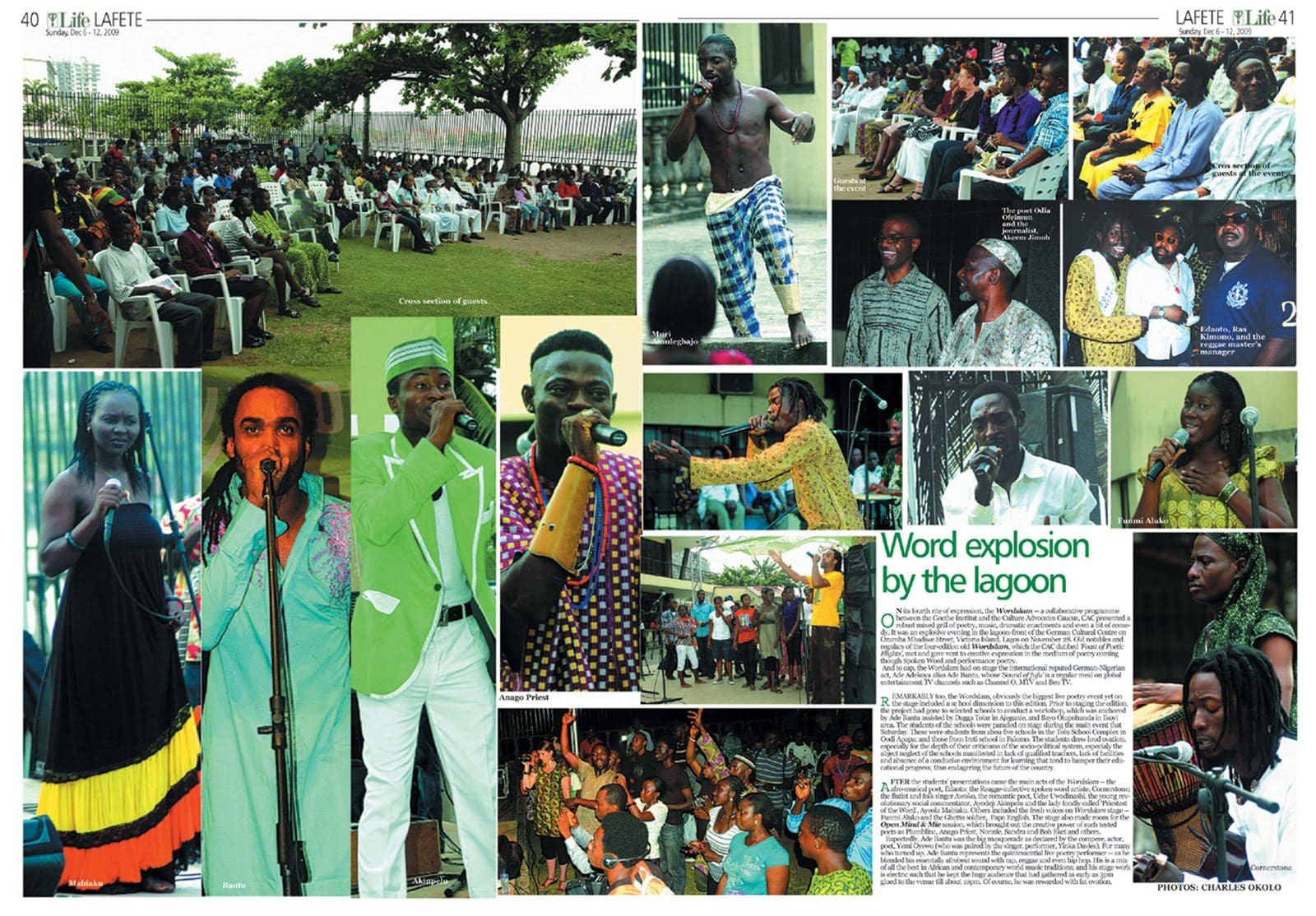

Photo: A collage of images from Wordslam.. Feast of Poetic Flights… one of the precursors of teh current rave of Spoken Word and Performance Poetry projects, staged by the Culture Advocates Caucus at the Goethe Institut, Victoria Island, Lagos… in 1999
SPOKEN word and performance poetry are forms of artistic expression that have gained popularity in recent years. The terms “spoken word” and “performance poetry” are often used interchangeably, but they refer to slightly different things. Spoken Word refers to the act of speaking or reciting poetry in front of an audience, while performance poetry refers to the performance aspect of the poetry, which often involves elements of theater and stagecraft.
Spoken Word poetry is often characterised by its emphasis on the spoken rather than the written text. It is often performed in front of a live audience, and the poet often interacts with the audience in some way. This can include anything from asking for audience participation to incorporating elements of theatre and stagecraft into the performance. It is often characterised by its use of performance techniques, such as movement, gesture, and costumes, to enhance the delivery of the poetry.
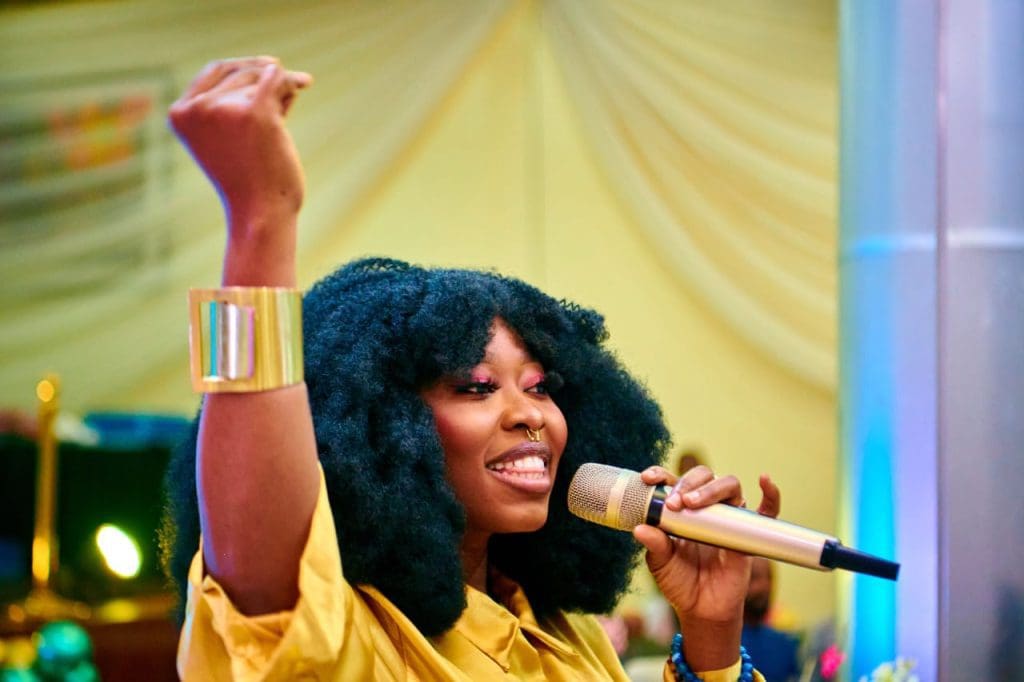
Despite their popularity, spoken word and performance poetry have faced criticism from some traditional poets, who argue that the emphasis on performance detracts from the poetry itself. However, many spoken word and performance poets argue that the performance aspect of poetry is an important part of the art form and that it allows for a more dynamic and engaging experience for the audience.
Nigeria has a rich tradition of spoken word and performance poetry, with a vibrant and dynamic spoken word scene, that has become an industry, and with the ability to replicate itself effortlessly, judging by the rate at which spoken word artists are produced in Nigeria, almost on a daily basis.
The Nigerian spoken word industry has significant economic value. Spoken word artists and poetry events provide income for the performers and organisers. Many poets also earn income from merchandising and publishing their works. Some poets even get paid to the tune of a million Naira, to perform at corporate events, government functions, and other private events. The industry also employs many other people such as event organisers, stage managers, technicians, and others.
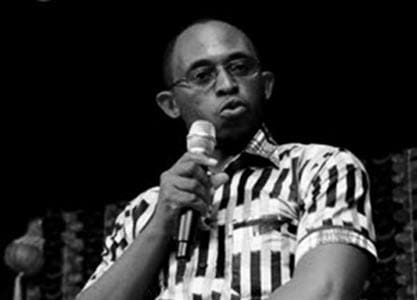
In addition to the direct economic benefits, the spoken word ‘industry’ also has a positive impact on the wider economy by promoting cultural awareness and tourism. For example, there are many spoken word and poetry festivals that take place in Nigeria, like the “Nigeria International Poetry Festival”, “Lagos International Poetry Festival”, “The Poets Lounge”, “Poetry Africa”, and the “Call of the Muse”, among others, like the several editions of “Night of Spoken Word”, staged regularly in Abuja, by Dike Chukwumerije.
These festivals and poetry events provide opportunities for poets to showcase their works and to connect with other poets and poetry enthusiasts. They help to promote the spoken word and poetry culture in Nigeria and also to provide a platform for poets to share their work and to connect with others in the poetry community.
Beyond the economic value, the Nigerian spoken word industry also has a significant impact on the society. Spoken word poetry provides a platform for poets to express their thoughts, feelings, and ideas about important social issues. This can be used to create awareness and to drive change in society. The powerful and evocative nature of spoken word poetry can inspire people to think differently about social issues and to take action to effect change. Many poets use their platform to address societal issues such as poverty, corruption, inequality, and the rights of marginalized groups.
Additionally, the industry also helps to promote literacy and the love for literature, spoken word poetry events often feature poetry workshops, book readings, and other activities that encourage reading and writing, hence promoting literacy.
Today, there are many artists who have made a name for themselves in the spoken word and performance poetry genre.
Efe Paul Azino: Efe Paul Azino is one of Nigeria’s most renowned spoken word artists. He is also a poet, playwright, and fiction writer. He has performed his poetry across the country and internationally. His works often center around social issues and he uses his poetry as a tool for activism and to create awareness. He is the founder and director of the popular Lagos International Poetry Festival, LIPF.
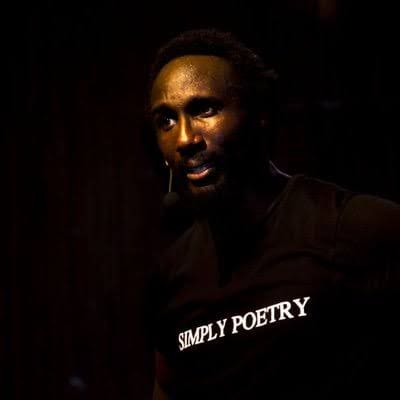
Dike Chukwumerije: You cannot talk about the spoken word movement in Nigeria today without the name, Dike Chukwumerije springing up. He remains one of the biggest exponents of that genre. He is a lawyer, spoken word artist, and writer who is known for his powerful performances and his ability to convey deep emotions through his poetry. He is also known for his thought-provoking work, which often explores themes of identity, culture, and history. Dike combines both the element of spoken word and performance poetry, and has created one of the most travelled pieces in the history of poetry in Nigeria, called Made in Nigeria.
Iquo Diana Abasi: Iquo Diana Abasi is a Nigerian spoken word artist who is known for her powerful performances and her ability to convey deeply personal and emotional themes through her poetry. Her works often center around self-discovery, resilience, and the struggles of growing up as a woman in Nigeria.
Pemi Aguda is a spoken word artist and activist who uses her poetry as a tool for social change and to raise awareness about important issues in society. Her works often center around themes of race, gender, and the intersectionality of these issues.
Bash Amuneni is another name that will always ring a bell. He is one of the very best and is best known for his unique voice, and of course one of his most sought-after poem is ‘There is a Lunatic in Every Home’.
The list is endless. It includes the likes of Iyanu Adebiyi, Loveth Liberty, Pariolodo, Omo Awe, Elizabeth Olude, Wana Wana, Bassey Ikpi, Jumoke Verrisimo, Titilope Sonuga, Peace Andrew, Omolara Omolara, 78th Psalmist, Solutionist Clenentina, Jeremiah Priest, Roland Keesh (Kpakod Poet), and the latest sensation in the spoken word world, the 21 years old, Hafsat Abdullahi among numerous others still searching for fame from across the country.
These are some of the many talented spoken word artists working in Nigeria today. The spoken word scene in Nigeria continues to grow, and these artists are at the forefront of that growth, using their poetry to create awareness, provoke thoughts and drive change in the society.
Here is how Eriata Oribhabor, writer, poet, and president, Poets in Nigeria Initiative felt about this emerging industry “considering the fact that performers are now being recognised and in some instances invited to present their works for a fee, more than ever before, it is only right to state that, an industry of economic sense is emerging to properly stand out for the economic survival of poet performers. I am particularly pleased by what Dike Chukwumerije’s Simply Poetry is doing for poetry as performed on stage, which gives a brighter future for the economics of the craft of poetry performance.”
On her part, Dr. Lizzy Ben-Iheanacho, scholar, award-winning author and director, research and documentation at the National Council for Arts and Culture, says: “Like every rave of the moment, every artist tend to jump into whatever they thought is trending that could give them platform for self-expression, visibility, and gratification. Sometimes, without the requisite competence for that peculiar terrain. The spoken word ‘industry’ suggests that general menace where we have wonderful poets in the right but do not have the theatrical competence to deliver their fantastic lines. In all of these, Dike Chukwumerije stands out because he’s been able to build the spoken word into a full performance entity that attracts patronage across cultures and social class.
With its emphasis on the spoken word, performance techniques, and audience engagement, spoken word and performance poetry have become a vital and exciting art form that continues to evolve and inspire.

