
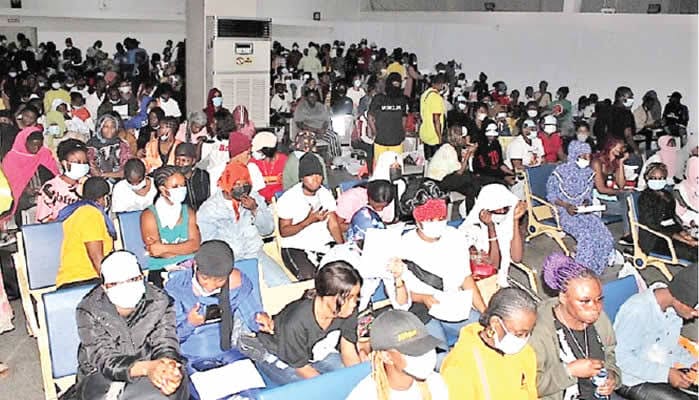

THE Federal Government and the International Organization for Migration has in the first three months of 2023, evacuated no fewer than 429 stranded Nigerians.
The time frame under consideration was January through March 2023.
The government and the IOM also evacuated 144 Nigerians who were stuck in Niger Republic on April 4.
The National Emergency Management Agency, IOM, and media reports all contributed to the findings.
According to the findings, 279 stranded Nigerians were evacuated from Libya, and 150 from the Niger Republic.
According to NEMA on February 14, it was revealed that 150 distressed Nigerians had arrived from Niamey, Niger Republic.
According to the returnees’ profiles, there were 98 adult males, 11 male children, and 2 male infants.
While there were 24 female adults, there were also two female infants and 13 female children.
The Federal Government, working with the IOM, evacuated 151 stranded Nigerians from Benghazi, Libya, on March 28, as the government was resuming its voluntary evacuation in Libya.
On March 29, 128 more Nigerian migrants who were illegally residing in Libya were evacuated to Nigeria within a 24-hour period as part of the voluntary evacuation exercise.
The United Nations went on to say that irregular migration presents numerous difficulties for migrants’ home countries, transit countries, and final destinations.
Adding that migrants who are living irregularly are especially susceptible to abuse, exploitation, and discrimination.
Ogbole Amedu-Ode, a retired ambassador to Mexico, blamed high irregular migration on unemployment and an unfavorable political climate in an interview with our correspondent today.
Amedu-Ode added, “The unemployment rate for Nigeria stands at 33 per cent (2022 figure). Added to that, is an inconducive political atmosphere.
“This mix is responsible for Nigerians voting with their feet. Those who can afford it do so through legal or legitimate migration channels and those who cannot take the perilous trans-Sahara and trans-Mediterranean route.”
Also, a retired ambassador to Algeria, Mohammed Mabdul, explained that Nigerians were generally restless and keen to travel abroad for the so-called “greener pasture”.

