
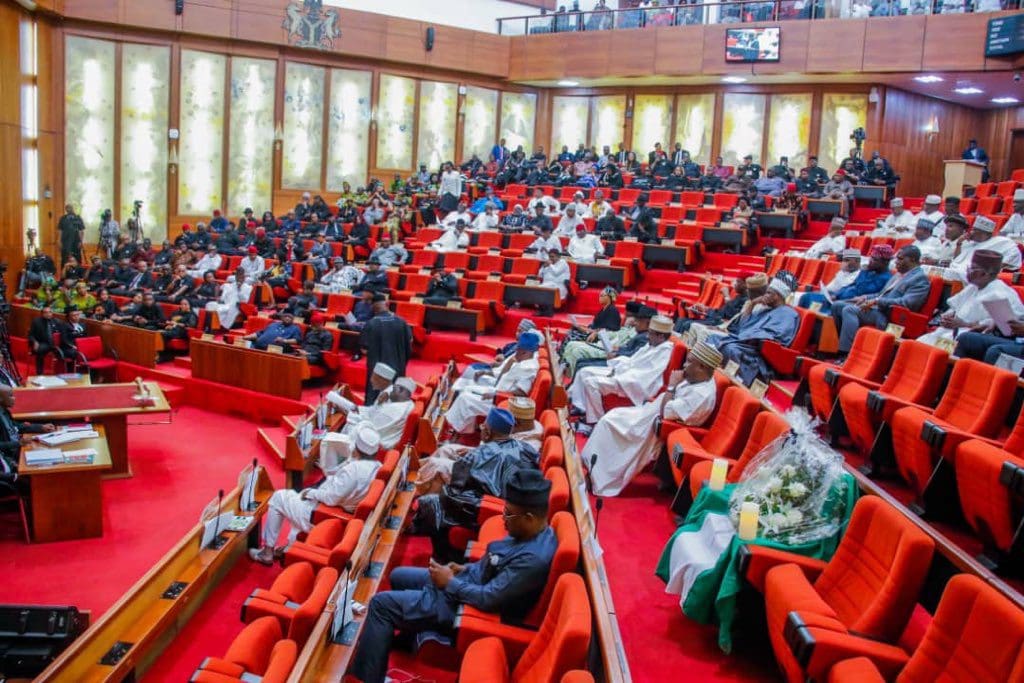

WITH the election of the 109 Senators of the 10th Senate practically complete, political attention has gradually shifted to the contest for the Senate presidency and other crucial positions in the Red Chamber.
As MPs compete for these important seats, political analysts and the general public are expected to keep a close eye on the proceedings.
The outcome of this contest will likely have significant implications for the political and legislative agenda of the Senate in the coming years, some experts have however argued.
The Senator Ahmad Lawan-led 9th Senate will cease to exist on June 10 and the 10th Senate will be inaugurated on June 13, 2023. Who succeeds Sen. Ahmed Lawan as President of the 10th Senate? This is the question agitating the minds of many Nigerians.
Currently, 101 Senate slots have been filled, with the ruling All Progressives Congress (APC) having 56; the Peoples Democratic Party, (PDP) having 27; the Labour Party (LP) 5; the New Nigerian Peoples Party (NNPP) has two; Social Democratic Party (SDP) has two; All Progressives Grand Alliance (APGA) one; and the Young Progressives Party (YPP) has one seat.
Among the 101 senators-elect, 30 are currently serving in the 9th Senate. Ahead of the inauguration of the 10th Senate, some of the senators-elect and ranking senators from the APC, have their eyes fixed on the throne of the 10th Senate President.
Section 50(1a and b) of the 1999 Constitution as amended read: “There shall be: (a) a President and a Deputy President of the Senate, who shall be elected by the members of that House from among themselves”.
Also, in determining who becomes the presiding officer, the Senate Rule allows only a ranking senator to be selected for this purpose and according to the Standing Orders, “Nomination of senators to serve as presiding officers and appointments of principal officers and other officers of the Senate or on any parliamentary delegations shall be in accordance with the ranking of Senators.
“In determining the ranking, the following order shall apply – Senators returning based on a number of times re-elected; Senators who had been members of the House of Representatives.”
While the Senate President and his deputy must be elected at the hallowed chamber on the day of the inauguration, other positions to be filled that day or thereafter are the Majority Leader; Deputy Majority Leader; Chief Whip; Deputy Whip; Minority Leader, Deputy Minority Leader; Minority Whip, and Deputy Minority Whip, shall be the prerogative of the political parties, the majority party and the minority parties.
As the race for the senate presidency heats up, several lawmakers are emerging as the front runners in the race. These individuals are expected to wield significant influence over the direction of the Senate, and their campaigns have been marked by intense lobbying, horse trading, and strategic alliances.
Among the leading contenders for the position are Senator Orji Uzor Kalu (South East), Godswill Akpabio (South-South), Senator Bara’u Jibrin (North West), David Umahi (South East) and Muhammad Sani Musa (North Central), who are seasoned lawmakers with a wealth of political experience.
These individuals are known for their political savvy, legislative prowess, and ability to navigate the complex terrain of Nigerian politics.
As the jostling for these positions continues, analysts are closely watching for signs of shifting alliances and unexpected alliances. The outcome of these contests will likely have far-reaching implications for the balance of power within the Senate, and the political fortunes of the parties and individuals involved.

