
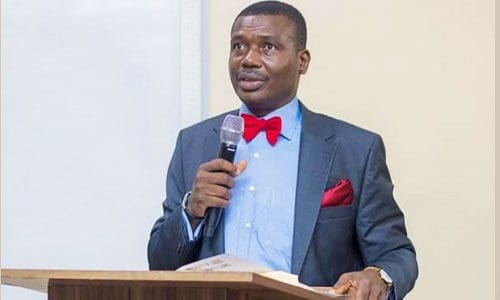

On May 19, 2023, I was in the midst of lecturers and the creme of the academic community in far-away Jos, Plateau State, to share my thoughts on the above topic. It was very engaging and I seek to share it with you.
INTRODUCTION
IN the preamble to the 1999 Constitution of the Federal Republic of Nigeria (as amended) (‘the 1999 CFRN’) the foundation of the existence of the entity called ‘Federal Republic Nigeria’ is captured as follows:
“WE THE PEOPLE of the Federal Republic of Nigeria: having firmly and solemnly resolved: TO LIVE in unity and harmony as one indivisible and indissoluble Sovereign Nation under God dedicated to the promotion of inter-African solidarity, world peace, international cooperation and understanding: AND TO PROVIDE for a Constitution for the purpose of promoting the good government and welfare of all persons in our country on the principles of Freedom, Equality and Justice, and for the purpose of consolidating the Unity of our people: DO HEREBY MAKE, ENACT AND GIVE TO OURSELVES the following Constitution.”
The aforesaid preamble is a typical reflection of the social contract theory in its most basic form – whereby people live together in society, in accordance with an agreement that establishes moral, political and legal rules of behavior. Philosophers like the prominent Thomas Hobbes, John Locke and Jean-Jacques Rousseau adopted the social contract theory as the main emergence/ origin of a State. It was assumed that due to the existence of a primitive, pre-civil condition of humanity, where there was no such things as right or wrong, no justice or injustice but a default state of mankind where life was nasty, brutish and short, there was need to escape from this default state by using a contract, pact, or covenant (express or implied) between each individual and his fellows, by which each surrendered his natural right to do as he pleased and received in exchange civil rights, that is, rights created and protected by the State.
CONCEPTUAL CLARIFICATIONS
In doing justice to this discourse one must endeavor to address the main key terms in this topic for proper perspective – which are ‘Crisis’, ‘State’ and ‘Development’.
Crisis
The term ‘crisis’ generally used in a loose way covers a variety of meanings. In lay language, a crisis is usually equated with disaster, an environmental event which poses an external threat. The Britannica (online) Dictionary defines crisis as a difficult situation that needs serious attention. The Collins Dictionary describes a crisis as a situation in which someone or something is affected by one or more very serious problems. The Oxford Learners’ Dictionary defines it as a time of great danger, difficulty, or confusion when problems must be solved or important decisions must be made. In the simplest term, crisis means ‘an upset in a steady state’. No other time has our nation witnessed a crisis of monumental dimensions than the present situation foisted upon us by the greedy political elite. And it is a major crisis of leadership. As the saying goes, the fish rots from the head, so once the leadership is barren and empty, it will trickle down to all other sectors of our national life.
State
The word “State” conveys different meanings in different circumstances. In international law and the present context, it means a nation with full status of Statehood, as a sovereign entity. A STATE is a community of persons, more or less numerous, occupying a definite territory, bound by their laws, possessing an organized and legitimate government; and enjoying independence from external control. The four elements of a state are therefore (i) People, (ii) Defined Territory, (iii) Government and (iv) Sovereignty. Nigeria is thus a State in this context recognized by other State-actors at the international scene.
Development
Development is a relative concept. It is however possible to arrive at some specific indicators of development that are widely acceptable. In every society, there are minimum expectations which all members share. These include access to functional health facilities, access to safe drinking water, universal qualitative education, and equal opportunity for all members in public affairs where competition based on merit is upheld over and above other considerations. All these are universal values that transcend cultural and political boundaries. Applied to human societies, development refers to a state, condition or stage, which entails positive transformation in both quantity and quality of life for all members of a particular society. Where there is corresponding decline or retrogression in the quality of life for a significant portion of the population, it is described as the state of under-development. One can therefore observe that development in this discourse means “quantitative growth, qualitative improvement, and expansion in the capabilities, capacities, and choices of individuals, groups or states”.
Some fundamental socio-economic and political questions are used as indices in measuring development in a State. The questions one must ask about a country in measuring its development include: What has been happening to poverty? What has been happening to unemployment? What has been happening to inequality and rule of law? If all three of these have declined from higher rates/ levels, then beyond doubt this has been a period of development for the country concerned. On the other hand, where these problems have been growing worse, especially if all three have, it would be strange to call the result “development”.
From the above, it is not rocket science to place where we lie as a country on measurement of our development. As found in the World Bank report “A Better Future for All Nigerians: Nigeria Poverty Assessment 2022”, ravaging inflation, sluggish economic growth, low human capital, labor market weaknesses, and exposure to shocks are holding Nigeria’s poverty reduction back. It says as many as 4 out of 10 Nigerians live below the National poverty line. Meanwhile, according to the National Bureau of Statistics (NBC) as of November 2022 the unemployment index rate had increased from 29.7% to 34.9%.
THE BASIS OF THE CRISIS IN THE NIGERIAN STATE
This being a gathering of foremost intellectuals in the land, permits me to delve a little into the area of education. Even the Bible is clear when it states in Hosea 4:6 that the absence of knowledge leads to destruction, which I am sure is also replicated in other faith books and doctrines. Education is key to development and in discussing the crisis of development, we must situate it within development in education.
‘Education’ and ‘Educational Development’
The term ‘education’ is a very familiar term to us. According to Merriam Webster dictionary, education is the action or process of educating or of being educated or it is the knowledge and development resulting from the process of being educated. Cambridge dictionary sees education as the process of teaching or learning, especially in a school or college, or the knowledge that you get from this. Wikipedia however has a broader definition: “Education is a purposeful activity directed at achieving certain aims, such as transmitting knowledge or fostering skills and character traits.” Education can thus be referred to as a process by which an individual acquires any physical and social capability demanded by the society in which he or she is born or functions. In another word, education is the acquisition of knowledge and skills by those who pursue it to become capable people ready and able to contribute to the welfare of their families, communities and country. Education is therefore not an end in itself but a means to an end.
‘Stakeholder’ in Educational Development
In general terms, stakeholders are any group or individual who can affect or are/is affected by the achievement or loss of any process or project. They can also be referred to as those groups who are vital to the survival or success of any given assignment. So, in terms of education, a stakeholder is someone who has a vested interest in the success and welfare of a school or education system. This includes all parties that are directly affected by the success or failure of an educational system, as well as those indirectly affected. Having the aforesaid background, the list of stakeholders in educational development is non-exhaustive. Stakeholders in this regard include and not limited to the following:
(1) The Government, (2) School/ Learning Institutions
(3) Parents/ Guardians, (4) The Students
(5) Political Parties and Pressure Groups, (6) Trade Unions
(7) Non-Governmental Organizations, (8) Alumni-associations
(9) Private Sector/ Employer of Labour, (10) Religious bodies
(11) Local, Regional and International development agencies
(12) The Community/ Society.
II
Stakeholders’ Responsibilities in Educational Development
Attainment of quality education in Nigeria requires continuous and all-round improvement which informs the collaboration of all stakeholders in the education sector. As such, governments at all levels, teachers/ school-administrators, students, parents, as well as international agencies and pressure groups, have their respective roles to play in educational development. We shall therefore be highlighting the roles and responsibilities of some critical stakeholders in educational development.
The Government
By the social contract principle, the sole essence of a government is to serve the will of the people who are the source of all political power of a State (by State we mean a country). Whereas the citizens have a reciprocal duty to obey the law and submit to a sovereign authority, the sovereign (which is the Government) on the other hand is committed to the good and wellbeing of its citizens. As shown from the preamble of the 1999 Constitution of the Federal Republic of Nigeria, the basis for the existence of the geo-political entity called Nigeria is for the promotion of good government and welfare of all persons in Nigeria on the principles of Freedom, Equality and Justice. The 1999 Constitution provides the basic legal framework for all the three tiers of government: Federal, State and Local to participate in the management and provision of education. Chapter II of the 1999 Constitution encapsulates the fundamental objectives and state policy on education to which the Nigerian Government is obligated to pursue. Specifically, Section 18 of the 1999 Constitution gives an insight into the Government’s goals and blueprint for education in Nigeria. It states as follows:
i. Government shall direct its policy towards ensuring that there are equal and adequate educational opportunities at all levels.
ii. Government shall promote science and technology.
iii. Government shall strive to eradicate illiteracy; and to this end Government shall as and when practicable provide –
(a) Free, compulsory and universal primary education
(b) Free university education and
(c) Free adult literacy programme.
From the aforementioned educational objectives the roles and responsibilities of the Government is not far-fetched. The Government (both Federal and State) is obligated to provide and guarantee free education to every Nigerian citizen up to university level. In essence, by the provisions of Chapter II of the 1999 Constitution, every Nigerian citizen is entitled to the provisions of equal and adequate education at all levels. It is in partial fulfillment of its duty to provide education for all citizens that the Federal Government issued a National Policy on Education, 6th edition (NPE). Under the NPE, the specific goals of education in Nigeria are to:
a. Ensure and sustain unfettered access and equity to education for the total development of the individual:
b. Ensure the quality of education delivery at all levels;
c. Promote functional education for skill acquisition, job creation and poverty reduction;
d. Ensure periodic review, effectiveness and relevance of the curriculum at all levels to meet the needs of society and the world of work;
e. Collaborate with development partners, the private sector, Non-Governmental Organizations and local communities to support and fund education; and
f. Promote information technology capability at all levels.
It is therefore no gainsaying that the Government remains the central force in the development of the educational sector of any nation to which Nigeria is not an exception. The Federal and State Governments are saddled with the critical role to ensure that no person suffers any form of disenfranchisement in basic and quality education regardless of the status, financial background or location in Nigeria. The Government is therefore mandated to cause the proper distribution and deployment of funds and facilities to enable an educational environment for all citizens of Nigeria. The four key areas to which the Government must not be found wanting are: (i) Availability of functional educational institutions and programmes with trained and efficient teachers. This involves capital funding on the annual budget for education. In a recent report culled from the archives of the Federal Ministry of Education, it shows that at present, the Federal Government takes around 80% responsibility while the private and non-state actors account for over 20% of total expenditure on education. Evidently, the present funding of the educational sector is still below the recommended percent of the total budget of the Federal Government. While the United Nations Education, Scientific and Cultural Organization (UNESCO) recommends that governments should invest about 26% of their annual budgets on education, in Nigeria we spend an average of 7% of the annual budget on education. (ii) Accessibility to educational institutions and programmes by everyone without discrimination. The Government must ensure education is accessible to all, especially the most vulnerable groups without discrimination on any of the prohibited grounds. Hence, the quota policy to which some members of the society are excluded from equal and adequate educational opportunities are wrong and unlawful. The issue of legality of quota policy was finally decided by the Court on December 17, 2014 in Olisa Agbakoba v Minister of Education(unreported) Suit No: FHC/L/CS/898/2013 wherein the Federal High Court in a well-considered decision held that quota policy or disparity in admission requirement into federal government colleges was a violation of section 42 (1) of the Constitution. Consequently, the Court ordered the Federal Government to apply uniform admission requirements, especially cut off marks to all candidates seeking admission into unity schools across the country. Furthermore, education has to be within safe physical reach either by attendance at some reasonably convenient location or via modern technology e.g. online learning programme. (iii) Acceptable form and substance of education including curricula and up to date teaching methods upon which students receive equality training and teaching, Government must ensure that relevant curriculum is implemented in schools and also see to it that such curriculum is constantly reviewed in line with market demands; and (iv) Adaptability – education has to be flexible so it can adapt to the needs of changing and evolving societies and respond to the needs of students with diverse social and cultural settings. The Government must always have the interest of the students at heart in drawing up regulations and policies affecting education.
POLITICAL PARTIES AND PRESSURE GROUPS
There is always a certain motive to be achieved when a group of people come together. Indeed, this has been particularly helpful because it gives room for unity of purpose. Be that as it may, a pressure group is formed to influence the government while political parties constitute a voluntary organized group of individuals dedicated to similar political ideology. Whereas political parties nominate candidates, contest elections and form government to rule over the citizens, pressure groups are organized with a view to lobbying the government so as to enjoy certain benefits. Pressure Groups are not in alignment with any political party, but they have the power to influence government decisions. These are formed to express the shared values and beliefs of a large group, as well as to effect change within the government. Indeed, these give an opportunity and a voice to that class of people who remain underprivileged. Consequently, the democratic process is strengthened. Pressure Groups take resort to agitational measures to achieve their objectives, which include marches, petitions, processions, demonstrations, fasts, strikes, and even boycotts. The importance of a political party in any country cannot be underestimated. They are the force of movements behind any political decision of the country. If there is a party in the country, then it implies the elective nature of the government. Political parties through elected representatives in the Legislature and Executive formulate, adopt and implement public policies which affect the citizens and the governed in Nigeria. As such all, Government policies, systems and regulations flow from the political will as dictated by the respective political parties in power.
As stipulated under Section 224 of the 1999 Constitution, all programmes, aims and objects of a political party in Nigeria must conform with the provisions of Chapter II of the 1999 Constitution. Invariably, political parties are mandated to formulate their policies and manifestoes in line with the Fundamental Objectives and policies on Education as stipulated in Section 18 of the 1999 Constitution. As such political parties are obligated to use their influence in directing the provision of free, equal and adequate education to every Nigerian citizen up to university level. The prominent role played by political parties and pressure groups in the 1950s- 1970s in Nigeria, particularly in the Western Region has remained an invaluable contribution to the development of education in most western states in Nigeria. Under the leadership of Chief Obafemi Awolowo, the Action Group birthed their Democratic Socialism ideology on the need to guarantee potential equality through equal opportunity for all. Upon winning the first election to the Western House of Assembly in 1952, the Action Group made it clear to the parliament that its government would give priority to education amongst others. As such by 1955 the Universal Free Primary Education scheme was introduced in the whole of Western Region in Nigeria whereby Free Primary Education was made compulsory for all children between 5 – 13 years of age.
The launching of this scheme heralded the positive change in the educational history of Nigeria whereby there was rapid numerical growth of schools at all levels: primary, secondary (modern and grammar), expansion of teacher training institutions and most of all rapid growth in the school population at all levels. It was due to the political will and policy of the Action-Group led government in the Western Region that the budgetary allocation to education was given top most priority. For instance, an average of 35% of the total recurrent budget each year between 1954 and 1959 was allocated to education. Education attracted the largest share of the Western Region’s recurrent budget, which varied between 28.9% and 41.2% during the period.

