
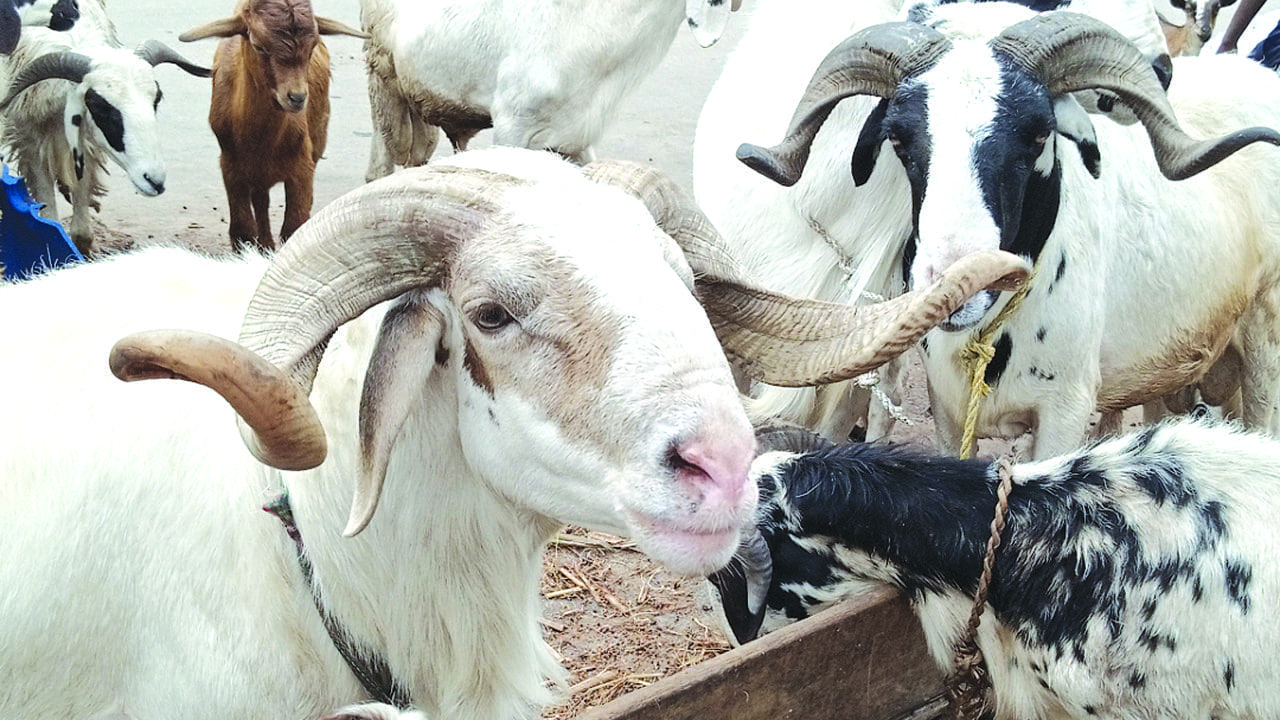

MUSLIM faithful in the country mark this year’s Eid-el-Kabir celebrations in low-key fashion due to the hike in prices of ram, cow, tomatoes, pepper and other condiments usually used to celebrate the festival.
Many blamed the bleakness on the increase in the pump price of petroleum products following President Bola Ahed Tinubu’s pronouncement of subsidy removal on May 29, during his swearing-in ceremony at Eagle Square, Abuja.
For many, the celebration looks elusive as they try to grapple with rising inflation and low purchasing power, which have deprived them of basic needs for the festival celebration. They complain that while economic hardship has reduced their earnings, the falling purchasing power due to rising prices of commodities made a mess of their budgets, even as some resorted to borrowing or begging to take care of their responsibilities.
NaijaTimes checks across the country revealed that prices of the commodities had recorded a 100 percent increment. The unending insurgency in the northern part of the country and the recent fuel subsidy removal, which has increased the cost of commuting by over 100 per cent in some cities, has worsened the price crisis.
While the consumers recount how the economic pressure has forced them to cut down on their purchases for the celebration, the vendors decry low patronage due to the rise in the cost of items.
When our correspondent visited some ram markets in Lagos yesterday, the price of rams ranged from N300,000 to N150,000 for a moderate-sized ram, while the smallest or cheapest priced ram was N50,000. The cost of a cow ranged from N300,000 to N1.3 million, depending on the size.
Speaking with our correspondent, Mallam Ibrahim Nguru, a ram seller at College Bus Stop Ram Market on Igando-Ikotun Road, in Igando area of Lagos State, attributed the hike in prices of cows and rams to the high cost of transportation occasioned by subsidy removal on Premium Motor Spirit (PMS) also known as petrol or fuel and insecurity in the north.
According to him, the cost of transporting the animals from his village in Kebbi State to Lagos skyrocketed when compared to last year.
He said, “I brought them from my village. Diesel is expensive; bringing them here takes a lot of money. Before it cost about N900,000 to bring a trailer load of cattle to Lagos but now we pay about N1.3 million.
“Also, the animal feed is expensive due to the security challenge in the north. Sometimes, these animals fall sick, and we have to treat them. I get a doctor to come here and give them injections.”
Nguru noted that patronage was impressive, unlike last year’s Sallah celebration where the prices of the animals were relatively high. He added that some customers paid for rams before the celebration and came to pick them up a day before.
“This year, everything is expensive; people don’t have money to buy rams. Even those who come to market are pricing below the cost price,” he lamented.
Corroborating Nguru’s assertion, butchers at the abattoir on Governor’s Road by Odo-Eran/Hotel bus stop along Isheri-Igando-Lasu road linked the challenge to harsh economic conditions and poor purchasing power of the consumers, noting that sales were a lot better last year.
One of the butchers who identified himself as Kehinde Oyewole said, “Before now the subsidy removal it was insecurity that affected the prices of cows, but now subsidy removal has worsened it because formerly, a trailer cost between N800,000 and N1.2million, but it’s now between N1.5million and N2 million. And as you know, we will deduct these costs and other ancillary costs from our sales. So this led to the increase in prices of meat,” he said.
“By this time last year, most people had bought the things they needed for the celebration. People who were travelling came to buy meat. The market was filled up. But this time, it is different,” Oyewole added.
NaijaTimes checks for the average price of a cow in the market across the country showed that small-sized (calf) goes for N85,000 – N120,000, medium-size (150kg – 200kg) N150,000 – N250,000, big-size (220kg – 250kg) N250,000 – N300,000, very large (300kg – 350kg) N350,000 – N500,000, while giant-sized (400kg – 550kg) sells between N500,000 – N800,000.
When our correspondent also checked for prices of foodstuffs, Chinedu Nwaeze, a foodstuff seller at Iyana-Iba Market said that the price of commodities have changed remarkably following the subsidy removal. He noted that a 50kg bag of rice which sold between N28,000 and N30,000 before the subsidy removal now sells for N35,000 and is expected to still increase.
He added that a custard bucket of Garri (yellow and white) which sold for N1000 and N500 respectively now goes for N1.200 and N600, while a bag of the commodity, which sold for N18,000 and N15,000 now goes for N21,000 and N18,000.
For Doyinsade Ajekigbe, a frozen food seller at Igando Market, a kilo of frozen chicken has increased from N2,200 to N2,400, just as a kilo of Turkey which was N3,400 now sells at N3,800. For frozen fish, a kilo of Titus fish, which was N2,200 is now N2,400, while Kote rose from N1,500 to N1,800.
The preparation, lamentation
Meanwhile, some consumers have expressed their anger and frustration over the increased price of commodities, stating that the removal of fuel subsidies by the government has affected every aspect of life, including the cost of living, transportation, and now the Sallah celebration.
They averred that the harsh effect of economic realities has complicated their decision on whether or not they would be able to afford rams or cattle for the festival of sacrifice. According to them, they have to weigh their decision against other pressing issues demanding equal attention.
Saheed Oyekanmi, an auto mechanic in Isuti-Egan, Igando area of Lagos said: “The high cost of rams and cows has put undue financial stress on many families. There is no money, everywhere is tight.”
“Sallah will always be celebrated no matter the economic situation. However, it’s important for us to remember the true meaning of the celebration and ensure that everyone can participate without being burdened by costs. As for me, I’m celebrating the Sallah according to my capacity,” he added.
Oyekanmi noted that the increase in the cost of rams and cows is very high when compared to last year; he added that the year-on-year (YoY) change in price is about 100 per cent.
For Muritala Oladipupo Olohunjuedalo, a resident of Joseph Adegboye Street in the area, the removal of fuel subsidy has had a significant impact on the cost of living, and this has now extended to religious obligations, with the hike in the price of animals required for sacrifices during the festival
He said, “The prices of ram and cow are too high and not encouraging at all. Imagine someone who has been slaughtering ram in the past would not be able to do so this year just because of the increase in price. We still need to buy other things to support the ram like rice and other ingredients which are also on the high side.”
Lamenting the price hike, Munirat Gbangbala a shopper at Olowo-ina Ram Market Ikotun by Olowo-ina bus stop on Ikotun-Igando road told NaijaTimes she had visited more than four livestock markets in search of a befitting ram close to her budget.
She said, “Slaughtering of the ram is symbolic and that is the beauty of the Eid-Kabir celebration. But first of all, we must give thanks to the Almighty Allah who through his holy Prophet Muhammad (S.A.W) has made it possible to witness this year’s Sallah celebration.”
“Let’s be grateful to Almighty Allah for his mercies and benevolence upon us. Many saw the New Year but could not see Ramadan (fasting) period, while those who participated in Ramadan are not witnessing the Sallah celebration.
“Though ram slaughtering is symbolic of the festival, where there is no money, the sacrifice of thanksgiving to Almighty Allah is greatest. The economy is down but given the indicators we are seeing now with the incumbent administration, I will say there is a renewed hope,” she added.
On her preparedness for the celebration, Gbangbala states: “I took things easy, did little I can with my budget. As you know, the economy is bleating and there is a fall in people’s purchasing power. So, we must not go beyond our limit because there is no money.”
“Last week I sent someone to the market to help confirm the price of a small basket of pepper and the person told me it was N20,000, but today it’s N25,000,” she added.

