
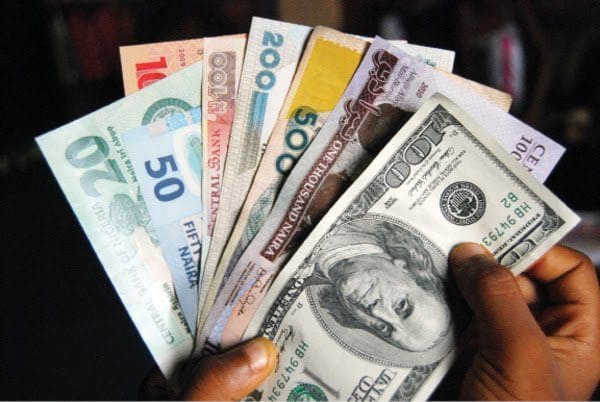

THE Nigerian local currency, the naira, is suffering from multiple FX market-related depression that has reduced its purchasing power significantly since the beginning of the new administration.
These pressures have remained unresolved by the monetary authority which is practically under the watch of President Bola Tinubu over previous infractions currently under investigation.
At the beginning of the week, the naira depreciated by 3.3% to N773.25 at the Investors and Exporters FX window, and the exchange rate worsened to N1,000 per greenback in the parallel market. For the naira, a weak forex supply has remained a downside to exchange rate rebounds across the markets. There has been a relatively weak FX inflow into Nigeria.
This was a result of low-interest yield on naira assets in the fixed income market. The apex bank spotted foreign investors and the authority resumed special OMO Bills sales. Yet, this has not worked sufficiently to attract foreign currencies,
The World Bank has supported Nigeria with $1.95 billion between June and September 2023, according to an ICIR report. The amount is split as $700 million for adolescent girls’ learning and empowerment.
Another $700 million loan was allocated to Nigeria to expand the AGILE projects to eleven states, thereby accommodating more out-of-school children. Also, there was a $750 million loan for power projects
The rush effects of economic reforms have made things worse for more than 133 million Nigerians who, probably, have not touched foreign currencies in their lifetime.
While Nigerians were struggling to heal from Muhammadu Buhari’s weak economic performance, the new president launched two major reforms that spooked household finances, and raised both costs and standard of living altogether.
The National Bureau of Statistics put the headline inflation rate at 25.80%, and some market critics have started raising eyebrows. The risk of discrediting Nigeria’s data is growing after the statistics office announced a 4.1% unemployment rate under its new methodology.
Also, foreign interest could raise the country’s risk higher, which may reflect on borrowing costs in the future following growing doubt about the Central Bank of Nigeria’s net foreign exchange balance.
JP Morgan has different estimates, while both CardinalStone Partners and Cordros Capital among other investment banking firms have pushed out different estimates.
MarketForces Africa noted that none of these numbers tally with the CBN’s FX reserves balance recorded in its audited report. Reacting to the development, Fitch Ratings said in its report that the apex bank made it difficult to allow independent estimates.
On Monday, Brent crude was down by 0.08% to $93.19 per barrel, while WTI crude dipped by 0.50% to trade below the $90 market at $89.58 per barrel.
Meanwhile, WTI crude futures hovered near the $90 per barrel mark on Monday as the market balanced tightening global supplies with demand uncertainties. The surge in oil prices, up nearly 30% since June’s end, was fueled by OPEC+ leaders Saudi Arabia and Russia extending supply cuts through the year-end, raising concerns of larger deficits in the fourth quarter.

