
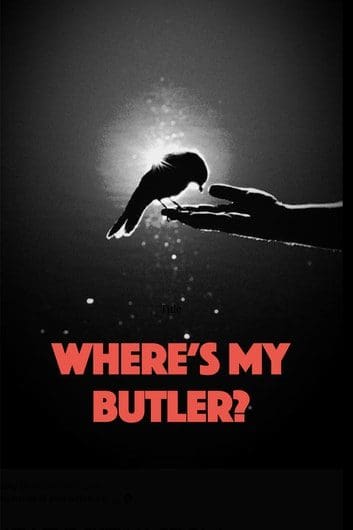

The author’s diction is a study of unconscious interruptions in creative outflows. Students of modern diasporan works of African literature should have a lot to chew on in Cash. Onadele fetches a story from deep wells of traditional African worldview. The lexical bucket, however, is sometimes helplessly Western. Yet, all these happen against the backdrop of what’s undoubtedly a planned portrayal of intense local culture
By Femi Alabi Onikeku
SOMETIME ago, I stumbled on a strange headline to a post on the internet. It was a list of ten foods. It appeared the author believed they were the best that could ever walk out of Nigeria. I looked through the order, relishing the names, tasting the ones I could – in my mind, and hoping for the ones I had never savoured. A challenge I had, though, was an ultimatum: these were foods I MUST eat before I die. However, I was not ready to die. I still am not. And I don’t believe you are either… No be so?
Frankly, I knew what the author was up to: he or she wanted to ‘by force’ me into reading. It worked. But I preferred another kind of allurement. Or do I say entrapment? It was images of good old Nigerian meals. Besides being delicious and ‘saving lives’ (since Mungo Park discovered the Niger where our fathers had always fished) – these foods were captioned as having been to the prestigious Harvard University!
It was a metaphor for what Nigerians love to call ‘packaging’. Thus, the likes of illiterate ogi, eko, fufu, eba, ewa, ekuru, amala earn degrees in culinary aesthetics and strut out of kitchens, muttering: “Hey mehn! I’m gonna gonna…mehn!” Happily, these educated foods are unable to get over their Nigerian-ness. And often, after the platter is wiped clean, we remind some: Akara yi, Ijebu-Igbo ko kuro lara re!
The erudite bean ball speaks to an author’s dilemma. At the core, he is of a particular essence. At the perimeter, however, he is a mix of many influences to varying degrees. And when he puts pen to paper, the result, like Cash Onadele’s Where’s My Butler, is a beautiful conflict of identities.
Landlocked between two worlds, the creative mind struggles for balance. On one hand, there’s the delicious feel of the akara storytelling essence: on the other, a reader is unsure whether the Harvard-ness isn’t intruding into the quintessence of the fried cake.
But ‘first of all: introduction…’
Where’s My Butler is triumph of the supernatural over the natural. A wealthy and influential uncle grabs the throne from young Prince Jomiloju Rotimi Arishe, who had been groomed from birth to become king. Disappointed and doubtful of the roles played by the kingmakers and the oracle, Jomiloju dumps faith. “From this point, count me out of the deity’s worship!” he declares. He shuns admonition to seek solace in counsels of the spirits and begins to steer his destiny, particularly, marriage.
Unwittingly, the prince walks into a vicious and determinate whirlpool fanned by the very powers he despises. He does not go down alone. One after the other: the major characters are sucked into confusion, heartbreaks and deaths.
Moments before Jomiloju sinks into his own “well of darkness”, he charges his son, Jomiloju Junior – a survivor of his tragic experiment with obstinacy, also the soon-to-be-crowned king and narrator: “There is something I must tell you, my son…be guided by our traditions!”
I find the swiftness of Onadele’s plot amusing. I would think it betrays a distinctive character of grassroots African storytelling. It reminds one of what the Yoruba really mean when they ask you to do or say something kpa kpa kpa!
The author tightly controls the route to his plot destination: there are no purposeless digressions or stopovers at boring aesthetical experiments. Every dialogue, every setting, every character propels the narrative towards resolution. At some junctions, Cash feels like the anxious groom, who enters into the chamber with his bride, fondles a series of twists and intrigues, and then scribbles his climax.
Onadele’s pen impregnates Jomiloju’s lover, Fisayo Busola Arigidi, in superfecundation; marries her to the prince; describes her trimesters in one paragraph; gifts them with the fraternal outcomes, and before you could say, mai tatsuniya! …evil Efunsetan is already rolling out machinery to “tear the couple apart”.
The author’s diction is a study of unconscious interruptions in creative outflows. Students of modern diasporan works of African literature should have a lot to chew on in Cash. Onadele fetches a story from deep wells of traditional African worldview. The lexical bucket, however, is sometimes helplessly Western. Yet, all these happen against the backdrop of what’s undoubtedly a planned portrayal of intense local culture.
I would describe some of the words Onadele puts on the lips of his characters as either those of American or European folks. If they aren’t, then they could belong to those hyper-elitist Nigerians that lived in the 70s – the setting of the novel. How representative these are of the rest, is of course, debatable.
Responding pessimistically to his friend, Kayode Kuye, about hopes of ever becoming king, Jomiloju, almost like an English poet, says: “That world stirred, slithered, and skipped. Its bouquet like moth was drawn to the roar of a flickering lantern. It’s fried.”
Onadele prefers “ruby” out of an array of rich African metaphors one could fall back on to qualify Fisayo. Even Fisayo fondly calls her husband “butler”. In this part of the globe, men don’t call women rubies. Did I hear a grumble? (Maybe, some do on Banana Island.) Fisayo has “chocolate skin”. There are mentions of “daffodils”, “hummingbird”, “summer”, “pine boughs”, “cauldron”, “gold bug”… And each time Efunsetan treats Paimo Rhodes (the first man to flaunt Fisayo’s panties as trophy) to some delicacies, it’s something called “pastries”. Onadele, what is “pastries”? Does it look like puff-puff?
Cash is full of matter. That’s an understatement. He is a pent-up volcano: can’t wait to spew his themes from every literary vent available. He tells a captivating story in prose. But it must be heavily subsidised with poetry. Did Onadele struggle at any point, whether to kuku submit inspiration for Where’s My Butler at the altar of the epics? (I learnt the man “built the world’s largest library of individual poetry work”.) Just as a reader begins to digest the fiction, Onadele emerges suddenly with a list of what he calls “Characters in Play”. Play ke? O ti o!
But Onadele manages the main body of his prose well. Yet, I should accuse him of talking too much. Not satisfied with: “In our living days, the world applauds; the monster of untruth, which overshadows; wrinkled truth” – the terse quotation at his opening pages, Cash gets unnecessarily loud with his “Author’s Spot: My Playful Moments?” where he gives away much.
On second thought, I wonder if it isn’t the helpless interior of the akara poking out its heart. Reminds one of the local mai suya, who before handing you a wrap of roasted meat, dazzles your tongue with a juicy slice. The Yoruba call it itowo. It also appears the Harvard-ness in Cash fails to disguise something else. At the end of the novel, the akara couldn’t resist the afro-pedagogic ki lo ko wa (what has been the lesson). This, the author, knowingly or unknowingly, disguises with a big Oyinbo word he calls “Synopsis”.
Onadele delivers an impressive adaptation of The Fates (Clotho, Lachesis, and Atropos) of Greek mythology and the Three Witches in Shakespeare’s Macbeth. In Where’s My Butler, they are the Mothers of the Earth (Sheire, do-truth; Sheiregun, indifferent; and Sheika, do-evil).
As in Macbeth, he makes the Mothers the supernatural arena around which all his characters are forced to dance, directly or indirectly. Like Macbeth also, the novel actually begins at the Mothers’ coven at Olumo Rock. But the author makes an ingenious departure from the English playwright. He conceals this plot epicentre and doesn’t reveal it till the very last pages.
“I will marry Vivour Alade Rhodes and if I don’t, one of my daughters must marry his son. Otherwise, my avowed daughter will lose control of her senses. I will eventually run mad on the streets of Alabata. Only when I die, will she return to her senses.”
The dreadful oath, before the three Mothers, was sworn by Fisayo’s mum, Rolake Amope Arigidi, when “we were young” and “thought it was fun,” she confesses after the truth was out. As years passed, her calculations had begun caving in. The woman’s desperation to “avert, fix and avoid the curse” sets the stage for all the heartbreaks and tragedies in Where’s My Butler.
One other thing: must you read Onadele before you die?
Hmm…Well, this is how I’ll put it: if you love a finely told story, generously spiced with traditional African ethos, and are certain you wouldn’t breathe your last in 215 pages, then I bet you should.

