

1983 was a remarkable year for Journalism in Nigeria. That year, two Newspapers- a broadsheet and a tabloid- arrived on the scene with arresting innovations. While The Democrat made a mark as the first of its kind to be printed in colour, The Guardian, modeled after The Guardian of London, prided itself as the flagship of the Nigerian Press.
In some terms, it was right. In setting up the Paper, its founder, a business mogul, Alex Ibru, who was in his Thirties had set up the publishing outfit, Guardian Publishing Limited to come up with the best and most authoritative Newspaper, to present balanced coverage of events and promote the best interest of Nigeria.
To achieve his mission, he assembled a formidable squad of professionals, which included Stanley Macebuh ( Managing Director) Lade Bonuola ( pioneer Editor, pouched from The Daily Times) Eddie Iroh, Femi Kusa, Ted Iwere, Andy Akporogu, Sony Ojagbese (Sports Editor) Doyin Mahmoud (Chief Sub Editor) Mac Alabi (Production Editor) Sunmi Smart-Cole ( Photo Editor) Alade Odenewu (first |Columnist) and Bisi Ogunbadejo (Cartoonist).
With such a team, the Newspaper cast, in the view of Press historian, Dr. Fred Omu, a dynamic influence on Nigerian Journalism. In a feature published in the 4th JULY 2008 edition of The Guardian, Kabir Alabi Garba quotes Omu as positing that:
In the poise and polish of its language, in its cultivated and intellectual approach to argument and controversy, in its penetrating and persuasive analysis and interpretation, in its promotion of ideological pluralism, and its endeavour to place events in their historical perspective, The Guardian has achieved great esteem in and outside Nigeria as one of the most authoritative newspapers in Nigeria.
Perhaps the most daring aspect of the Paper’s innovation was its brazen disdain for the trifling culture of titlemania among Nigerians as demonstrated by its adoption of a simply- Mr. policy and strict adherence to it. What this meant was that irrespective of the number of chieftaincy, academic, religious, and professional titles one acquired (deservedly or not, awarded or bought) one was simply accorded the modest title of Mr. or Mrs. (depending on the sex) on the pages of the Paper. Even military ranks were not prefixed to the names. For instance, General Babangida was referred to as Ibrahim Babangida, a General in the Nigerian Army. A Chief Ben Ekong would be, Ben Ekong, an Ibibio Chief.
Against the backdrop of such an elevated professional template, many of its Reporters perspired to earn a byline (a line in a newspaper indicating the name of the writer of a story or feature) as most copies ended in the Editor’s Waste Basket. Any Reporter who earned a front-page byline in the Paper was good enough to write for the best paper in the world.
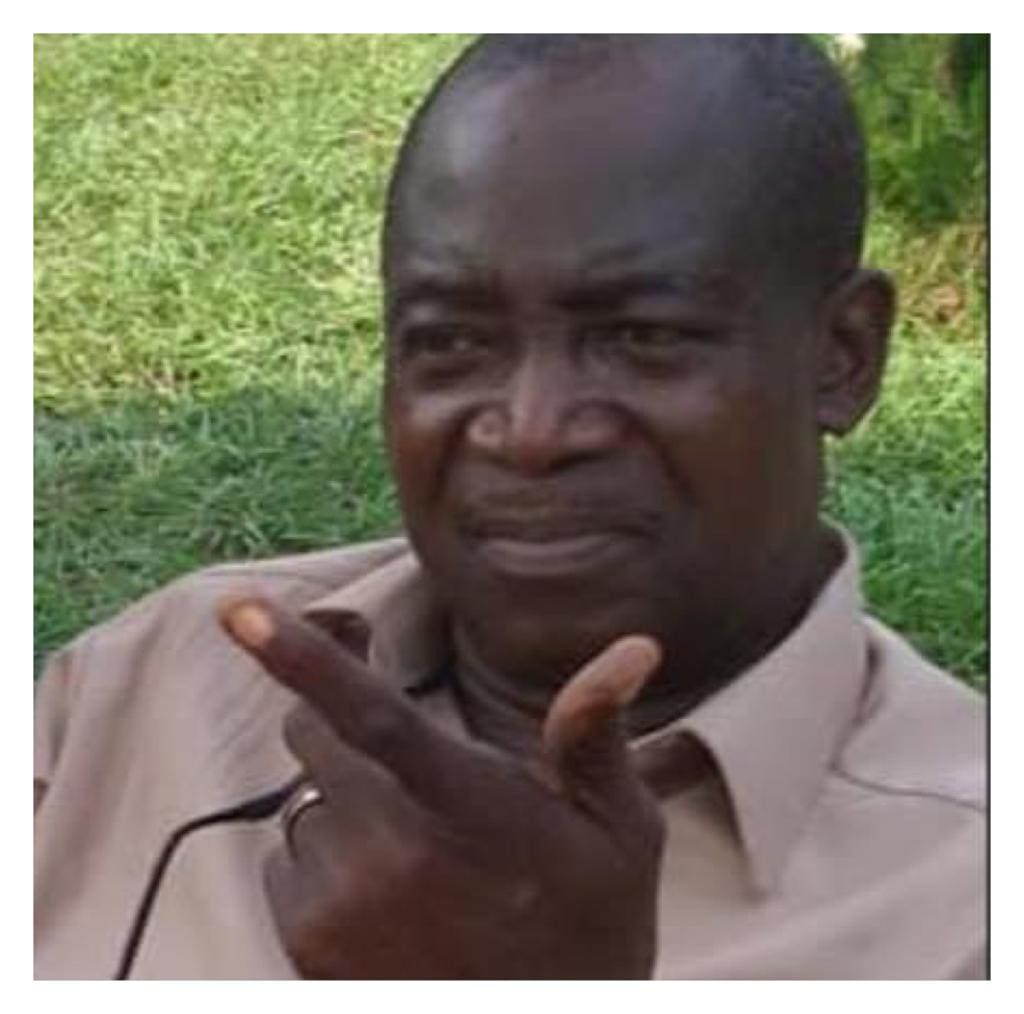
One of those who regularly earned a front-page byline was Bonny Sampson, whom I didn’t know was from Mkpat Enin Local Government Area of Akwa Ibom State, on account of his all-English name, until 1986, when he was transferred to Calabar as the State Correspondent of the publication.
At that time, my late father was the Public Relations Manager of the now-defunct Nigerian Newsprint Manufacturing Company, Oku Iboku, Itu, which, was a fledging to commence production as the second of its kind in Africa, coming after the one in Egypt. At this stage of its evolution, the Company was every Reporter’s port of call. On his very first visit, to the facility, Bony had struck a friendship with my father. He was delighted to know that the man was the father of a popular Cross River Radio, Calabar celebrity, which I was, on account of my exploits as an A-list Presenter and Anchor of the then-wave-making Programme, Y- Connection.
Also, a pleasant surprise to him was how the man could have fathered a boy of my age, considering my dad’s youthful and glamour boy bearing.
If we were fascinated by each other from a distance, we adored each other, the first time we met. It was one of those Friday night jam sessions at Metro Disco Palace. I had just come down from the DJ’s cubicle after, holding it down tight and steady on the Disco Machine and handing over to my co-DJ, Emmanuel O’neil. As I reached out for my cigarette lighter, after sinking into a chair at the celebrity table, an arm stretched across the table for a handshake, aborting the lighting of the cigarette (that was dangling between my lips) in the process. ‘ Hi Eddy, that was a real tight session’ he hailed me at the top of his voice, to be heard. ‘Oh! Thanks’ I replied, nodding my head in appreciation. Receiving compliments, genuine or bogus, from fans is as routine as sunrise and sunset for a seasoned broadcaster, hence doesn’t swell the head.
He took his time. After watching me down a couple of beer gulps and expel billows of smoke from the nostrils and the mouth in a skyward direction (to avoid choking him with the carbon dioxide-infested smoke) he knew that I had ‘stepped down’ enough for chat. So, pronto! he gestured that we talk outside.
‘What happened to your eyeglasses’? He asked, looking down at me, literally ( owing to his towering height) as we strolled down the lobby. ‘One of the legs broke, so I placed an order for a new pair’, I explained. ‘You like them on me? I asked as my eyes lapped up the radiance of his glittering ebony black skin. ‘Yes,’ He continued without waiting to be asked the reason. ‘It gives you an academic look’ We laughed over it. Thereafter he told me how he met my dad and their ensuing friendship. He spoke, in superlative terms, of my radio presentations and how my performance reminded him of Radio Nigeria 2 presenters. I reciprocated the compliment by commending his incisive interviews and reports.
In the course of our discussion, I realized why he was a Guardian Reporter. His diction was top-notch, resulting from his wide vocabulary. He picked his words with pinpoint or point-and-kill accuracy.
From that moment, we formed a tripartite friendship. While my dad was his senior friend, he became my senior friend. I called him Egbon, which means my senior brother in Yoruba- a language he spoke fluently. On his part, he called me Aburo -Yoruba for my junior brother. Our friendship became stronger later that year when I gained admission into the Mass Communication Department of the then Polytechnic, Calabar. Despite my admiration for his writing skills and expression of interest in undergoing the compulsory internship programme, under him in The Guardian, Bonny encouraged me to focus on radio, where he said I had already made an impact.
He loved Journalism and was devoted to it as a passionate professional. Before he retired from active practice, he held many elective positions in the various Chapels of NUJ, where he served. In the League of Veteran Journalists, where we belong as noble members, he once served as a Caretaker Chairman- a position he used to instill a vigorous momentum in the League.
Apart from his physical, mental, and professional acumen, I admired his civility, peaceable disposition, affability, effervescent personality, hard work, and industry.
At 65, Bonny, you left too early. Why? God knows the reason!
As his remains are led to rest today, I wish his soul a blissful repose.
Journey well, Egbon mi!
*Eddy Ekpenyong is the General Manager of Comfort FM in Uyo

