

Governor Eno’s first year accomplishments are hopeful signs of what is to come. But truth be told, history will remember him not as the most admired governor, but as the elected leader who latched on the opportunity to improve the quality of life of the common man
MAY 29, 2024 would be one year since Pastor Umo Eno was sworn in as the fourth Executive Governor of Akwa Ibom State since 1999.
While it seems like yesterday, it has been one year full of pleasant breathtaking activities in all facets of the State’s socio-economic life. More importantly, new paradigms are being evolved that are sufficiently innovative and capable of redefining our social, economic and political climate. These off-the-curve thinking and projects/program execution, such as the bottom-up model of infrastructure provision which targets the rural communities, is are bound to impact on the State’s development indices in a few years to come.
From his actions, Pastor Umo Eno, it would appear, is not looking to hypnotize anyone to a frenzy of tenuous praise singing. Rather, he is intentionally futuristic. He is concerned with sustainability that will produce elating socio-economic indices that would guide government’s transformation efforts. It would, once and for all, drive a wedge on cynical derisions of our dear State by people of bad virtues.
Governor Eno’s emphasis on the provision of life-saving infrastructure in rural communities could be seen as unpopular, but it has its beneficial value. Viewed differently, it is an efficacious remedy that will end the hackneyed rebuttal of National Bureau Statistics (NBS) periodic survey results which we often disagree with. His unique approach is already seen in our healthcare delivery system where model healthcare centers are being built across many rural settings in the State. Equally important manifestation of the approach is the model schools which will reduce the alarming urban/rural disparities in education. His determination, and success, to bring the of Bank of Industry (BOI) representative office to the State is well worth celebrating.
Those who are aware of the costly task of having to go to Lagos and Abuja in search of investment-friendly interest loans from BOI would better appreciate this effort. BOI’s catalytic effects on industrial development, mostly as they affect small medium enterprises development and entrepreneurship in an economy of double-digit interest rate on borrowing will definitely understand the savings in time and resources experienced by having this development Bank here. As an entrepreneur, the governor knows that any economy that is not based on a sound credit system cannot grow beyond its nose. No individual funding can berth accelerated industrial growth. This is why His excellency pursued the presence of the Bank in the State. With this singular action, the Governor is evolving a partnership synergy that will support the growth of the private sector in the State.
To further underscore His Excellency’s commitment to growing a critical mass of enlightened entrepreneurs, He has established the Akwa Ibom Leadership and Entrepreneurship Development Center (Akwa Ibom-LED) where entrepreneurs are already undergoing training under the able leadership of very knowledgeable professionals. The aim is to bring knowledge to bear in the way we conduct our businesses. This is the age of knowledge, and we expect future entrepreneurs to be intellectually armed with the nitty gritty of business management. Akwa Ibom business leaders need to be equipped with managerial tools for efficiency, comparative success stories and pitfalls and the need to manage business professionally. This is what Akwa Ibom-LED aims to achieve among other things. You want to ask how these things define, or create a metaphor for his governance? It is his implementation fluidity in style, the linear interconnectivity of thoughts and its disarmingly and effortless delivery methodologies that stand him out as unique. He knows how to fill in the development gaps without making noise about past errors.
It must not be lost in mind that Governor Eno was not given a chance compared to other highly favoured candidates for the office of governor. But his endearing humility made him a natural fit in a state part of the electorate increasingly felt alienated from government. He is imbued with a deep sense of respect for everyone he encounters, regardless of social status. This has rekindled hope in governance and given the common man confidence in elected office. This should not be taken for granted, for it is on this pedestal that his uniqueness is defined and becomes something to talk about along with his performance. It is this non-confrontational mien that continues to endear him to Akwa Ibom people. A man’s gift maketh a way for him. Brashness, intellectual fecundity, worldview, and experience among others, all count for something; but God’s choice who knows? No doubt, Governor Eno’s first year accomplishments are hopeful signs of what is to come. But truth be told, history will remember him not as the most admired governor, but as the elected leader who latched on the opportunity to improve the quality of life of the common man.
Belittled by opponents and those who objected to his choice as governor, Pastor Eno has so far exceeded general expectations and surprised his detractors with his vision, especially with the policy thrust and development prospects of his ARISE Agenda. As the people’s governor enters the second year of his first term in office, he will no doubt benefit from suggestions on areas where additional rejigging could further strengthen the governor’s development efforts. The Governor himself has always emphasized his preference for constructive input that could help bolster his efforts. We must be co-development content creators. This time demands all hands to be put on the deck in order for us to focus governance towards a new development trajectory.
Next year will experience good harvest and increased farm output other things being equal. What with the creation of awareness in agriculture more hectares of farmland will be cultivated. Increasing food prices will encourage people to farm and also seek alternatives to current staples. The “Back- to-Farm initiative backed by two free work days every week for workers to grow foods, and the distribution of farm inputs will all go to boost food production and drag down agric commodity prices (provided market unions allow). In the medium run, the Songhai Farm project, will further point the direction to large scale agrobusiness.
These are laudable initiatives aimed at repositioning agriculture in the minds of our people, to boost crop production to a point where the people will see this vital sector from a business perspective. George Washington said that “agriculture is the most healthful, most useful and most noble employment of man”. I wish to humbly suggest an even more robust engagement, under a public-private partnership initiative, to establish even larger-scale integrated farm settlement in the areas of poultry, fishery and goat cultivation and processing. An example of this could be found in Majestic Farm in Jigawa State. This is, perhaps, the single largest farm in Northern Nigeria at present where about 45,000 birds are breed, as much as 300,000 crates of egg are produced every month. That is about 9 million eggs monthly. The farm also breeds 30,000 fish. It is self-sustaining as they produce and market fingerlings, day-old chicks, and feeds for both the fish and birds. In our case, goat rearing should be added to assuage our preference for goat protein. It should be solar-powered. Together with the Songhai Farm, this should lay the foundation for animal protein cultivation and processing in the State. It was Thomas Jefferson, a former American president, who said that “agriculture is our wisest pursuit, because it will in the end contribute to real wealth, good morals, and happiness”. Thus, no investment in agriculture can be said to be too much more so given our insufficiency in this sector.
Every human being is susceptible to emergency health challenges. Unfortunately, our healthcare system has little, if any, provision for a well-managed emergency service. There should be a Medical Emergency Management system (MEMS) with ambulances. With this in place, moving patients to the hospital during emergencies would be addressed; and this should be done at fees that is economical enough to be afforded by the people and yet be self-sustaining. The number of lives lost to the non-availability of this service is enormous. Added to this is the need to expand emergency facilities in our hospitals and the training of quality care givers with empathy to attend to distress patients.
Recently, there was a national disapproval of the abysmally poor performance of our children in the 2024 UTME examination where over 70 percent scored 200 and below. It has always been this way, particularly since the introduction of computer-based test model. While this is related to generally poor teaching and learning in public schools, it is obvious that schools in rural communities fare worse than those in urban centers. A further statistical analysis would reveal that private schools fared better than publicly run schools. One of the reasons for this mass failure is the non-availability of IT facilities in schools in rural communities. While many other factors are attributable to this, the non-availability of IT facilities in rural schools take the greater blame. The disparity between urban and rural schools in terms of number and quality of teachers, IT penetration, management of schools by principals, etc. need to be checked through more effective supervision. There should be significant policy changes in teachers’ postings to rural communities. Indeed, it should be a standing policy that any teacher who has not served in rural schools at least for three years should not be promoted. Those who desire to remain in the rural schools after three years should be encouraged with incentives to drive up voluntary interests.
It is possible to bridge the IT gap in schools over ten years with 10 percent annual increase. Otherwise, the rampaging IT incursion into every facet of life in the world will largely elude our children, putting them at a disadvantage. Added to this, is the training and the development of special tools for the evaluation of teachers annually.
The Ministry of Economic Development needs a more effective research capability. The staff of that unit needs to be retrained as a matter of urgency to appreciate the value of research in modern planning and new research methodologies that would generate and interpret data as veritable management inputs in the planning process. It is also very necessary to conduct socio-economic surveys and impact assessment surveys at least every 5 years. Every new regime needs baseline data that would help government to measure its performance realistically. Such data would point to several areas where actions are needed to bring all sectors at par in terms of development index. A plan without data is like a man looking for a black sheep in the night.
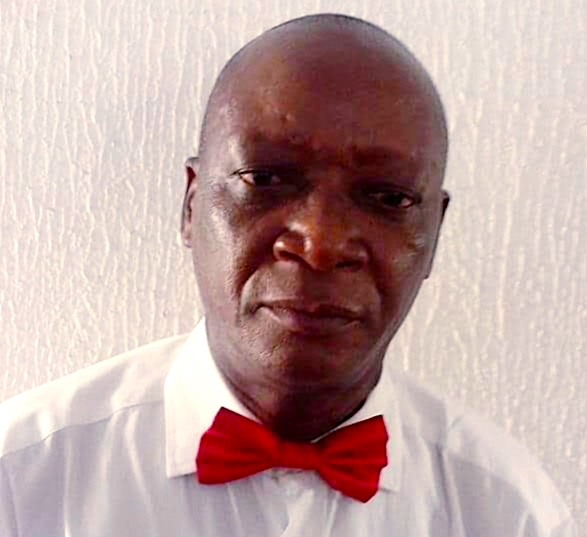
*Mr. Owoh is an Author, Researcher and enterprise-wide Management Consultant.

