

It is no longer news that on October 1st, 1960, Nigeria gained independence from her colonial master, a feat that was seen as heroic by the men who pushed for it, top on the list were late Chief Obafemi Awolowo, late Dr Nnamdi Azikwe, late Sir Ahmadu Bello, among others.

National and pan-Africanism was finally paying off, the decolonization process had ended, and a coalition government with a parliamentary system was set up. What a glorious day!
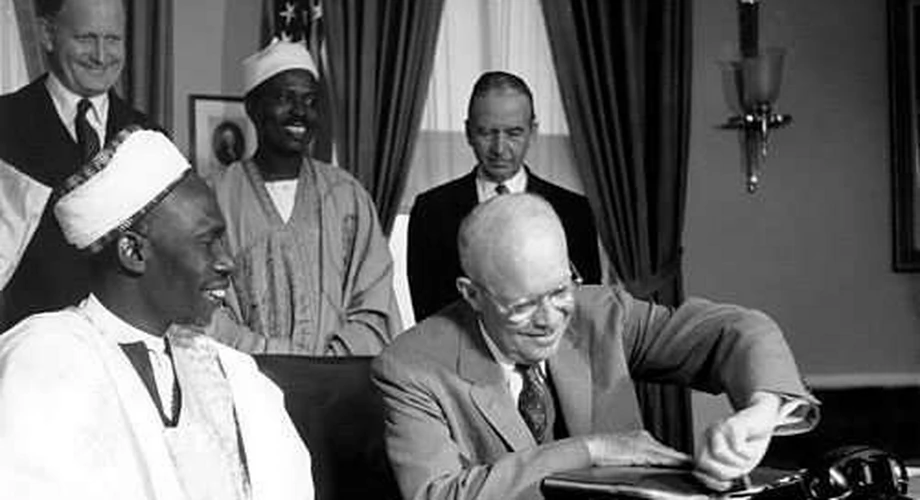
Lagos, the capital of Nigeria, was the meeting point with the Europeans in the pre-colonial and colonial era, hence was the Capital of Nigeria.
The streets of Lagos, especially, Marina, where the government house was located were donning green and white, an offshoot of the nation’s green-white-green flag.

Nigerians flooded Race Course now known as Tafawa Balewa Square (TBS) in Lagos to be a part of the celebration of the long-awaited independence of Nigeria on Saturday, October 1, 1960.

The air was filled with the anticipation of taking over the reins of the central power from the British and handing it over to our very own; a Nigerian.
TBS, filled to the brim, showcased cultural dances, masquerades, students, and others who were excited that Nigeria was finally theirs to rule.

Parties were held across the country, but none beat the one held in Lagos.
The event at TBS was kicked off with the speech of prime minister Sir Abubakar Tafawa Balewa.

First of the Prime Minister at the Race Course
An excerpt from his speech
‘’In these days of rapid communications, we cannot live in isolation, apart from the rest of the world, even if we wished to do so.
All too soon it has become evident that for us, independence implies a great deal more than self-government…I promise you, we shall not fall for want of determination. And we come to this task better-equipped than many.’’

This speech was followed by the newly adopted National anthem, sung with pride and meaning, voices echoing Frances Berda’s tune of
“Nigeria we hail thee
Our own dear native land
Though tribes and tongue may differ
In brotherhood, we stand
Nigerians all, are proud to serve
Our sovereign Motherland.”
This anthem would only last till 1978 when “Arise O compatriots” replaced it.

Taiwo presenting the flag in 1960
After the national anthem was sung, the Nigerian flag, designed by a 23-year-old student, Taiwo Akinkunmi in 1959 during a competition was hoisted in the stead of the British Union Jack.

The Freedom Charter which represents Nigeria’s freedom was received by Nigeria’s first indigenous Speaker Jaja Wachukwu, from Princess Alexandra of Kent, who represented Queen Elizabeth at the ceremony.

By evening, Race Course was filled with animated displays of fireworks and thrilling shouts of Happy Independence! Followed by dance troupes and masquerades from different parts of the country showcasing their dance mastery in acrobatic displays to the delight of the audience.

Afterwards, a state banquet was held, witnessing dignitaries from Nigeria and other parts of the world who mingled, dined and danced in celebration of a new dispensation.
More pictures from the independence celebration

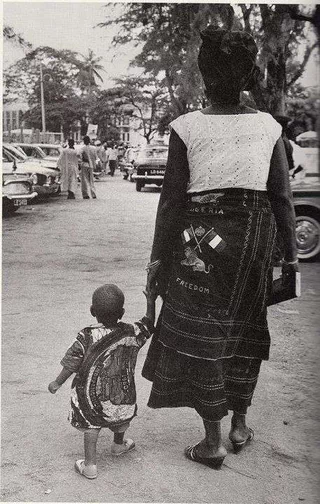
a woman wearing a wrapper that celebrates the independence

Nigerians in jubilation mood

