
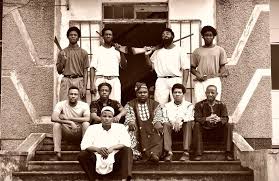

Directed by Nigeria’s cross-disciplines artiste, Onyeka Nwelue, the film moves beyond being a literary device intended to partially refocus audiences’ consciousness on the less regarded traits of a great man, Odimegwu Ojukwu, to becoming a story of friendship, of youthful idealism and exuberance, and of pristine aspirations eventually arrested by the disruptive and gruesome crosscurrents of post-colonial African statehood
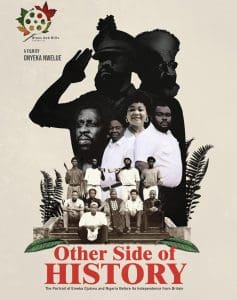
BETWEEN September 10-14, a soft fascinating clip of Nigeria’s chequered history will be exposed to global audience(s) as The Otherside of History, a 2012 film inspired by one of the key protagonists of the Nigerian civil war, otherwise called Nigeria-Biafra war, screens at the famed Toronto International Film Festival, TIFF.
Running September 5 – 15, the 49th edition of the TIFF presents an 11-day feasting on Canadian and international cinema; accompanied by special events and talks with some of the biggest names in film; and TIFF’s Industry Conference: a place to connect with film professionals and explore the art and business of cinema. https://tiff.net/events/the-otherside-of-history.
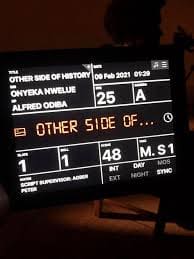
DIRECTED by Nigeria’s cross-disciplines artiste, Onyeka Nwelue, the film, according to the synopsis, provided by the producers, Blues and Hills, “focuses on the life of Emeka Ojukwu, between 1954-1960, before Nigeria’s Independence, as he spends time frolicking with different women and throwing parties for his friends, inviting highlife originator, E.T Mensah, from Ghana to play for him with Bobby Benson, singing at his birthday party.
“When he returned to Nigeria in 1955, he returned with an exquisite British accent, and, as he would later attest to, an extensive wardrobe of impeccably cut English suits and a sundry collection of high-class supercars. As a wealthy, smooth-speaking young man with glowing skin, Ojukwu became the cynosure of young ladies in Nigeria, and as you would see in Other Side of History, he left no room for doubt that he was a thoroughgoing Casanova. Oxford also bequeathed to him a consciousness of Africa, groomed from his membership of the Oxford West African Students Union.
“With Africa on the cusp of decolonization at the time, unions like that helped animate an apprehension among Africans studying in Western universities about the continent’s future. Little surprise then that Ojukwu was inspired to return early to Nigeria so he could serve his home country. Again, on this, he and his father disagreed. And yet again, his will triumphed over his father’s as he eventually joined the Nigerian Army.
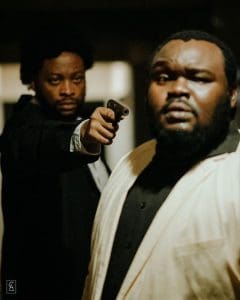
“In Other Side of History, which covers Ojukwu’s life in the years before Nigeria’s independence, that is, between 1954 to 1960, viewers will be treated to an intimate portrayal of the much-vaunted poetic side of Ojukwu, which he charmingly deployed in wooing the women he encountered during his lifetime. His equanimous voice, exotic accent, thrilling oratory, and urbane mannerisms were all attributes of someone worthy of the appellation of a Poète Romantique.
“Ojukwu’s romance poetry was deemed head-spinning by those who were close to him, and Greg Ojefua — famous Nigerian thespian and protagonist playing Ojukwu in this film — has done a remarkable job of bringing that to life.
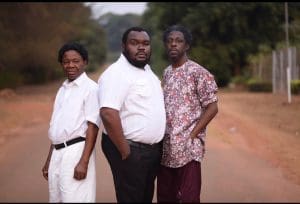
Greg Ojefua (middle) Ojukwu, with Chiwetalu Agu (Ojukwu’s old chef) and Makinde Adeniran (Soyinka) in the course of the shoot
“The film also features several acts portraying Ojukwu’s Nigerian contemporaries and friends across the literary, entertainment and political domains like the dramatist, poet, and first African to win the Nobel Prize in Literature, Wole Soyinka; the preeminent Nigerian writer, Chinua Achebe; the extraordinary Nigerian poet who died fighting for Biafra during the civil war, Christopher Okigbo; the extremely talented Nigerian playwright and poet, John Pepper Clark; the First President of Independent Nigeria, Nnamdi Azikiwe; former Military Head of State and later President of Nigeria, Olusegun Obasanjo; former Military Head of State Yakubu Gowon; the first Black African to win a Gold Medal at an international sports event, Emmanuel Ifeajuna; the Ghanaian highlife pioneer, Emmanuel Tettey (E.T.) Mensah, among others.
“Other Side of History has made the first attempt ever to portray these people and the private relationship they all shared with Ojukwu as clearly and enjoyably as possible.
“In its portrayal of these highly consequential figures in Nigeria’s history, the film moves beyond being a literary device intended to partially refocus audiences’ consciousness on the less-regarded traits of a great man, to becoming a story of friendship, of youthful idealism and exuberance, and of pristine aspirations eventually arrested by the disruptive and gruesome crosscurrents of post-colonial African statehood.”
******
DIRECTOR BIO
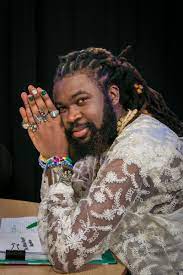
BORN in 1988, Onyeka Nwelue is a Nigerian scholar, filmmaker, jazz musician and publisher, who has published over 25 books, the most popular being the crime fiction Lovers’ Awards-winning The Strangers of Braamfontein, described by Nobel laureate, Wole Soyinka, as ‘raunchy.’
He left for India when he was 18 years old, where he wrote his first novel, The Abyssinian Boy, which won the TM Aluko Prize for Fiction and the Ibrahim Tahir Prize for First Book in 2009. He was nominated for the Future Awards Africa thrice.
Nwelue was an Academic Visitor to the University of Oxford and Visiting Scholar at the University of Cambridge. He was a Visiting Research Fellow at Ohio University; and Research Associate at the University of Johannesburg.
Currently director of Africa Center Mexico, Nwelue’s latest offering, “The Nigerian Mafia: Mumbai,” is first in a 10-book series, set in 10 countries. It was longlisted for the 2023 Chinua Achebe Prize and won the 2023 ANA Prose Prize. It’s currently being developed for film by Indian filmmaker, Ramesh Raparthy.

