
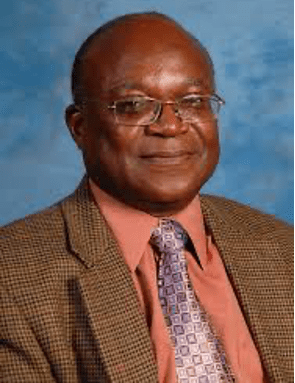

The post-humous celebration of Prof. Peters, though fitting, may be an inadequate tribute to the work of the late professional, whose contribution to learning, the scientific community and the world he has left behind is immeasurable
HIS has been a fruitful, productive, fulfilled life journey, a purposeful striving that touched everyone on his track. He was dedicated, addicted to educating others and community development-minded.
Let us look back. On September 7, 2020, Honorable Ini Ememobong, then the Commissioner for Information, Akwa Ibom State, announced an initiative to engage Akwa Ibom people in the commemoration of the anniversary of the State’s creation. Reaffirmed by the current Administration of Governor Umoh Eno, the initiative sought to honour indigenes of the state for “strategic contributions they made in the development of the state, the country, and the world at large.”
The response from Diaspora organisations was fascinating. With one accord, they enthusiastically recommended those whose contributions made, and have continued to make lasting impacts with unquantifiable values added.
Among the nominees was the Austin, Texas-based Prof. Ekwere Johnson Peters, 77, whose death on March 17, 2025, has denied him the opportunity of being honoured in his lifetime.
Prof. Peters overcame significant challenges in rural Nigeria. After graduating top of his class at the Methodist Boys High School (MBHS) Oron, with Division 1 in the West African School Certificate Examination (WASCE), he was adjudged academically outstanding to attend Leicester University, United Kingdom, and the University of Alberta, Canada. There also, he earned First Class Honours in Engineering, MS and later a PhD in Petroleum Engineering respectively.
His birth and nurture in the village of Ikot Eyo, Ubium, Nsit-Ubium Local Area (LGA), Akwa Ibom State, Nigeria, neither deterred nor limited his blazing forth and stamping his locality on the global map. But in all his upward mobility, Prof. Peters never in a jot of a moment forgot his roots.
When the University of Uyo’s Chemical and Petroleum Engineering Department lost its accreditation, Prof. Peters led a team of technicians from the USA, bought and installed laboratory equipment, which helped the department to regain its lost accreditation. This testament is contained in his yet-to-be-published memoirs. Upon his return to the USA and under the auspices of Akwa Ibom State Association of Nigeria, USA, Inc. (AKISAN), he embarked on establishing a “School of Excellence” programme in Akwa Ibom State.
This was targeted at gifted students to foster “well-rounded development of students, not just their academic abilities, but also their emotional, social and behavioral skills.” He worked hard to meet all requirements for the launching of the school and secured a commitment from Mobil Producing Nigeria Unlimited to sponsor the “School of Excellence” project. He noted sadly, the programme was exploited and derailed by self-serving individuals.
Prof. Peters had a keen interest in improving the lives of young people. When UCEP, a youth intervention programme designed by the Ubium Development Association in the USA (UDA) to encourage self-employment among unemployed youths in Ubium, was initiated Prof. Peters secured a $10,000 grant for its take-off but insisted that the programme be followed up and diligently monitored with consistent reporting of the outcomes.
At the international level, where he was widely acclaimed and respected as a professional engineer based on his character and scholarship, Prof. Peters, was invited to the nation of Iraq, and there, established the Petroleum Engineering Programme at the American University of Iraq in the Kurdistan Region of Iraq.
During the global oil supply crises of the 1970s, he was widely consulted for expert views as a professor of petroleum engineering and consultant to Mobil Research and Development Corporation. “Any act of over-production would have devastating consequences,” Prof. Peters, an industry expert, warned in the NewsWatch header of September 3, 1990: “Good Times for Oil.”
During that period, American oil-based companies benefited severally from his seminal ideas, as reported in a NewsWatch header on January 1, 1991, “Nigeria Whiz-Kid makes Waves Abroad. Peters, Petroleum Engineer, develops Schemes that have set oil experts running.”
In his seminal publication, “Towards Intellectual Excellence,” Bishop David O. Oyedepo tells the story of Prof Peters’ accomplishments in science and technology.
According to official publications of the University of Texas, Austin, where he taught, “Peters retired in 2011 after 30 years of conducting innovative research and excellent teaching at UT PGE, leaving his mark on generations of engineers.”
In addition, according to one of the publications, “As the Frank W. Jessen Endowed Professorship and the George H. Fancher, Jr. Endowed Professorship in Petroleum Engineering, Peters taught a variety of classes, including drilling and well completions, production technology and design and pressure transient analysis. He wrote three industry-wide respected books on Advanced Petrophysics. In addition, Peters published a three-volume set of textbooks based on his research, teaching notes and 140 class exercises he developed for his Advanced Petrophysics graduate course.
“The University of Texas System Board of Regents approved Dr. Ekwere J. Peters as a professor emeritus. In the 85-year history of UT PGE, only five other professors have received the prestigious title: Folkert Brons, Sylvain Pirson, Harry H. Power, Ben H. Caudle and Robert (Bob) Schechter.
“Recognized as an expert in flow through porous media and petrophysics, Peters published more than 70 papers and research reports. He helped pioneer the application of computed tomography (CT) and nuclear magnetic resonance (NMR) imaging technologies to evaluate fluids in permeable media for improved oil recovery and environmental remediation.
“Peters established a positive teaching reputation consistently receiving high student ratings for his courses. He won numerous teaching awards often many times over, including the prestigious Texas Excellence Teaching Award (1984); the Petroleum Engineering Teaching Excellence Award (1987,1992 and 2010); the Petroleum Engineering Faculty Leadership Award (1985, 1988 and 1996); and the Cockrell School Engineering Foundation Faculty Excellence Award (1981, 1989 and 1998).”
In his biography, “Professor Peters is the author of Advanced Petrophysics Volumes 1, 2, & 3, which are sold worldwide by Amazon. He has taught over 50 continuing education courses for the petroleum industry in Canada, Nigeria, the USA, the UK, Indonesia, Japan, Mexico, Brazil, Venezuela, Ecuador, the Kurdistan region of Iraq and Trinidad & Tobago. He is a registered professional engineer in Texas and a Distinguished Member of the Society of Petroleum Engineers International. He has been honored by the University of Texas System Board of Regents with the establishment of the Ekwere J. Peters Endowed Scholarship in Petroleum and Geosystems Engineering at the University of Texas at Austin.”
The post-humous celebration of Prof. Peters, though fitting, may be an inadequate tribute to the work of the late professional, whose contribution to learning, the scientific community and the world he has left behind is immeasurable.
His passing is a sad reminder of the mortality of every living being, an affirmation of the Psalmist’s saying, “We finish our years like a sigh,” a clarion call to prepare to meet our maker.
Adieu, Prof. May your soul rest in peace.
- Samuel Essien, a retired hospital administrator, lives in Queens, NY.

