
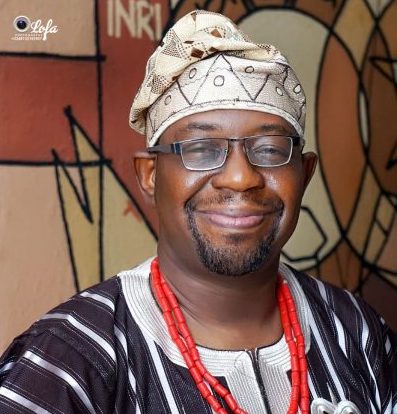

Dada has long been a pillar of the gospel music scene, both as a creator and a mentor. He first made his mark in church music circles, serving for years as a music director in various congregations where he trained choirs and wrote original gospel songs that are still sung today
FONDLY known as ‘TJ,’ Dr. Babatunji Oluseyi Dada, is a multifaceted Nigerian musicologist, composer, producer, and cultural icon, whose work has struck a chord both at home and abroad, seamlessly blending traditional African sounds with modern technology.
Born in Ibadan, Oyo State, Dr. Dada’s musical journey began in southwestern city, where he was immersed in the rich Yoruba musical heritage. Growing up in a community alive with rhythm, he absorbed the fundamentals of African rhythms in his local communities, school playgrounds, local festivities and the church. At 13, he was already the organist and a soprano singer in his church choir alongside his mother.
His story spans an early passion for music, an academic detour into computer science, a career in music production with hundreds of produced songs, scholarly research into African rhythms, decade plus experience in university-level student tutoring and mentorship, local church music ministry, and leadership in Nigeria’s vibrant gospel scene.
Notwithstanding his evident musical gift and expressed desire to study music, he succumbed to parental pressure to pursue what they felt was more commensurate with his intelligence and promise. He enrolled to study Computer Science at the University of Ibadan – a decision that seemed inconsistent with his musical calling.
It was a time when personal computers were just becoming tools for creative work in Nigeria, and Dada’s curiosity about technology hinted at how he might later merge both worlds. Still, even as he parsed algorithms and code, the pull of music never let him.
While in the university, Dada spent time singing and playing music with the University choir, University Chapel and campus fellowship choirs. His mandatory 3-month student industrial attachment at a digital recording studio (Agos Studios Apapa) in 1991 marked a turning point in his quest to discover purpose.
From Computer Science to Musicology
In a bold move driven by passion, Dada pivoted from programming to performance after completing his initial degree. His undergraduate thesis was designing a Computer-Aided Instruction (CAI) to teach music.
Effectively, he got a dual education in bytes and beats. This unique combination of tech-savvy and musicality would later become one of his trademarks. After 17 years of post-graduate career as a recording studio owner and digital music producer, he returned to academia – this time to study music full-time.
Dada pursued formal training in music theory and composition at the University of Lagos, determined to master the art form he loved. His technical background became an asset rather than a detour: he applied the analytical rigour of a scientist to the study of harmonies and rhythms, bringing fresh perspectives to the Department of Music.
Professors and peers quickly noticed his unique blend of skills, and he delved into musicology research with zeal. His academic climb culminated in a Doctor of Philosophy (PhD) in Musicology from the University of Ibadan.
His doctoral work zeroed in on something distinctly Nigerian – the “standard pattern” rhythm – a fundamental West African rhythmic motif. He investigated the structure and parameters of this indigenous element in Naija hip-hop music.
“My tech knowledge helps me visualize music in structures,” he explained, noting how programming logic informed his musical perspectives and compositions.
As a music producer, Dr. Dada has worked on over 500 songs, spanning gospel, folk, and popular music. He has also composed original works, including the Oyo State Anthem, Asiwaju Ni Wa. This uplifting Yoruba-English anthem (meaning “We are Leaders”) celebrates the heritage and aspirations of Oyo State.
In a gesture acknowledging the anthem’s importance, Governor Seyi Makinde in 2024, approved a ₦25 million cash grant, to compensate the anthem’s composers and producers. Along with the funds, Dr. Dada and his co-composer were each allocated a parcel of land and even had streets slated to be named after them.
For him, the recognition was less about the money and more about validation. “I did it for the love of my state,” he said, dedicating the honour to all unsung artistes serving their communities. The anthem, today, is played at official events and installs pride in indigenes of the state. His other works include the University of Ibadan’s Faculty of Science and College of Postgraduate Studies anthems.
Orchestrating high-profile events on international stages
Dr. Dada’s talents have carried him far beyond Nigeria’s borders, leading to key roles in major international musical events. In recent years, he has become known for directing and orchestrating multi-cultural concerts that showcase African musical elements on global stages.
One such event is “The Sound of Christmas – Kérésìmesì,” an annual cross-cultural Christmas carol concert held in Los Angeles. Dada served as the band director and orchestrator for this spectacular production, which is renowned for its immigrant community outreach and synergetic blend of diverse cultural expressions with West African percussion.
Under his direction, familiar Christmas classics like Joy to the World and his premiere composition Kérésìmesì are reimagined with talking drums, Yoruba choral arrangements, and even a dash of Afrobeat.
The result is a truly international carol service – Nigerian-Americans dancing to gángan drum rhythms alongside other Angelenos. “It feels just like back home, but in Hollywood,” one attendee remarked of the 2024 concert, marveling at how seamlessly Dada brought a Nigerian festive flair to an American stage.
Even more ambitious is the “God of Kross Kulture” multicultural concert, a massive interdenominational event in California that Dr. Dada helped musically to direct. Pioneered by Dr Kunle Pinimiloye, a well-known Nigerian cultural ambassador, the vision of the concert is to unite people from every tribe, tongue, and nation in praise.
Hosted at the Redondo Beach Performing Arts Center, Los Angeles in July 2024, the event featured a 50-piece orchestra and mass choir of 120 voices drawn from different ethnic backgrounds.
“It was a logistical feat and a cultural mosaic of choristers from African, Hispanic, Asian, and American communities all singing in unison,” Dada explained.
Pillar of the gospel music community
Dada has long been a pillar of the gospel music scene, both as a creator and a mentor. He first made his mark in church music circles, serving for years as a music director in various congregations where he trained choirs and wrote original gospel songs that are still sung today.
His deep involvement in gospel music goes beyond performance, as he has also contributed to its scholarship and organisation. In 2010, he co-authored a seminal paper on the training of gospel musicians in South-West Nigeria, highlighting the informal mentorship and apprenticeship methods that shaped many church musicians (much as he himself was shaped).
This unique blend of practical and academic expertise has earned him a position of authority in the gospel genre. Recognising this, the university lecturer has been elected into key roles in national gospel music associations, including Fellowship of Gospel Music Ministers of Nigeria (FOGMMON).
Within the Oyo State chapter of the organisation, Dada has played a significant role in organising musical workshops, benefit concerts, and networking events for Christian musicians.
As a testament to his enduring legacy, Uncle TJ as he is affectionately known by younger gospel singers, remains a pillar of Nigeria’s gospel music scene, inspiring generations of musicians and shaping the future of the industry.

