
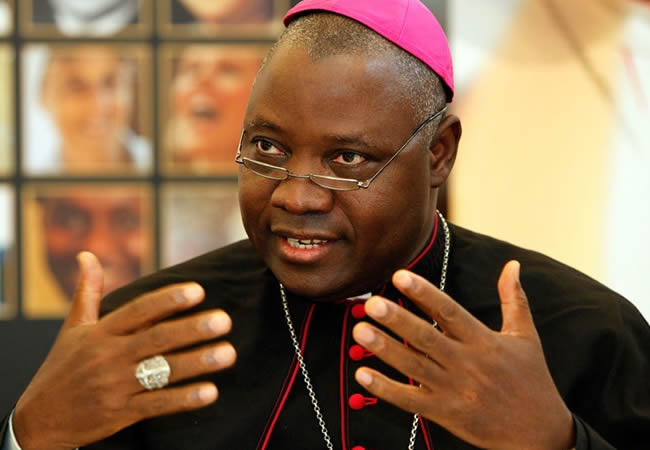

AMID the ongoing wave of violent attacks in Plateau, Benue, and other parts of Nigeria, Archbishop Ignatius Kaigama of the Abuja Catholic Archdiocese has called for a more decisive and unrestricted response from security agencies.
In a wide-ranging interview, the former Archbishop of Jos decried the politicisation of security operations and urged national leaders to allow security operatives the autonomy needed to effectively tackle the worsening crisis.
Speaking with deep concern for the lives lost in these consistent attacks, Archbishop Kaigama said the root problem is not necessarily the absence of security forces, but the limitations placed on their operations.
“When you send security agents there to deal with these issues, you should give them a free hand to do so,” he said. “Most times, you hear senior officers saying they haven’t had directives from Abuja. Sometimes, just as they’re about to make progress, they’re ordered to stop.”
He recounted a conversation with a retired general who had been removed from his position just as he was making headway in rooting out criminal elements in Plateau. “Before you know it, someone says ‘this man has come here to kill people of our religion or tribe,’ and he’s withdrawn,” Kaigama lamented.
As calls grow among some citizens for communities to arm themselves in self-defense, Kaigama strongly opposed such measures. He warned that this could escalate violence rather than stop it. “Before the criminals came, they [security forces] were better armed. Remember, it is their profession to kill. Even if you arm yourself, they come better prepared,” he cautioned.
Instead, the Archbishop called for a “global approach” to peacebuilding, stressing the importance of hope and faith in national restoration. “Despite all this, we shall rise again. Nigerians, I believe, by the grace of God, will rise again. Nigeria will rise.”
Reflecting on the Legacy of Pope Francis
The Archbishop also used the interview to pay tribute to the recently deceased Pope Francis, describing him as a global model of humility and peacebuilding. “Everything he did was about peace. He didn’t just talk — he acted. He sent food, ambulances, and emissaries to war-torn areas. He kissed the feet of leaders to encourage peace,” Kaigama said.
He called on Nigerian religious leaders to emulate the Pope’s simplicity and selflessness. “He didn’t live in the grandeur of the Apostolic Palace but chose a simple place. No private jets. No extravagance. This was someone deeply in touch with the poor and marginalised.”
Kaigama subtly criticised what he described as a rising culture of materialism among Nigerian church leaders. “They’re loud about wealth. To them, material success is God’s blessing. But that wasn’t the example Pope Francis left us,” he stated.
Prosperity Gospel vs. The Gospel of the Cross
Asked about the increasing popularity of prosperity teachings in Nigerian churches, the Archbishop did not mince words. “There is no gospel of prosperity; we only have the gospel of Jesus Christ. The gospel of the cross — of sacrifice, service, and hope,” he declared.
He recounted a conversation with a pastor who called the church “a business,” expressing deep concern over such ideology. “It’s a business for the salvation of souls, not for making money or living luxuriously,” he clarified.
On Criticism of the Catholic Church
Acknowledging the criticisms the Catholic Church has faced — especially concerning sexual abuse scandals — Kaigama urged for a balanced perspective.
“If a priest does something wrong, it is wrong. But don’t let a mistake rubbish all the good work done over the years — in education, healthcare, and social justice,” he said. He reminded viewers of the sacrifices made by Catholic missionaries who brought education and hope to remote communities like his own in Taraba State.
Engagement with Government
Kaigama also addressed backlash received after a recent visit by Catholic bishops to President Bola Tinubu. He denied insinuations that the visit was politically motivated or financially induced.
“We didn’t go there to collect envelopes. That’s an insult. We went to remind him of what we told him even before the election — about what we hope to see in a new Nigeria,” he clarified.
He reiterated that issues raised with the President included worsening insecurity, economic hardship, and rising hunger. “If things have improved, you would know,” he added pointedly.
A Vision for Nigeria’s Future
Despite the daunting challenges, Archbishop Kaigama’s message was one of hope and faith in Nigeria’s potential. “With the right leadership and direction, Nigeria will become a formidable nation,” he concluded.
When asked whether he could envision a Nigerian Pope in the future, he smiled and said, “Any lay Catholic man qualifies to be Pope. So, yes, it could be anybody.”

