
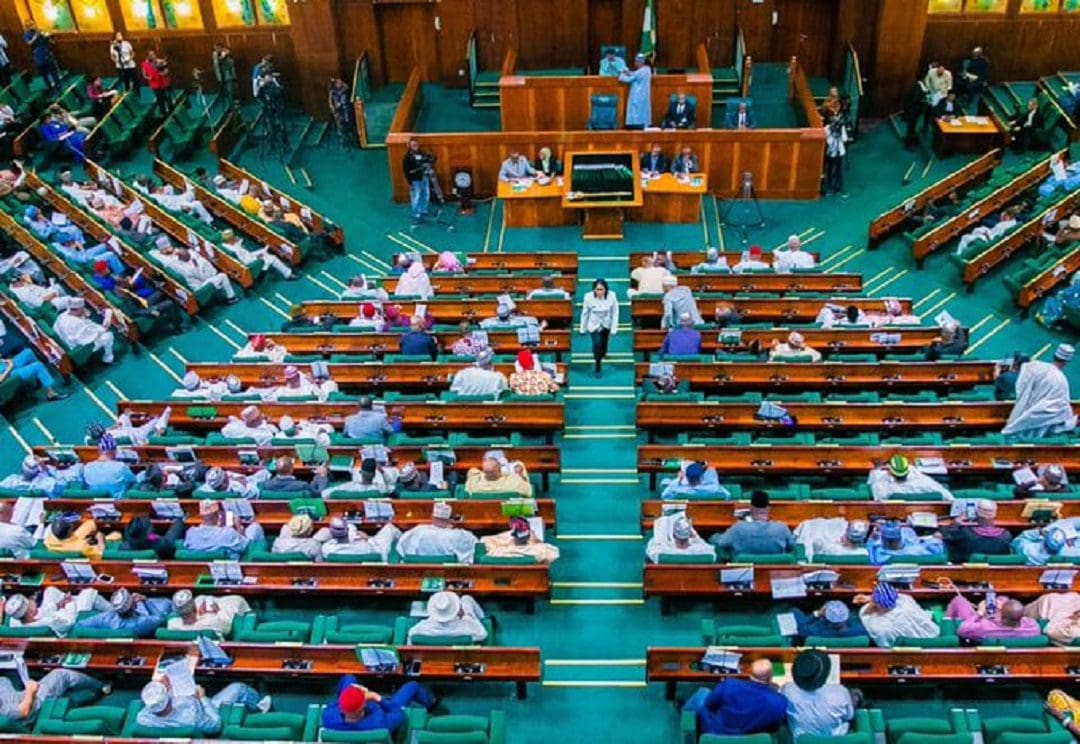

AS the National Assembly reconvenes after a prolonged break, tensions have flared between the House of Representatives and the Benue State Government over the continued spate of killings in the state.
The Deputy House Spokesman, Philip Agbese has blamed Governor Hyacinth Alia for neglecting the state’s anti-open grazing law, which he claims has worsened the killings.
In response, Governor Alia accused Agbese of lacking understanding of legislative procedures, emphasizing that laws cannot be suspended arbitrarily without due process.
Over the past three weeks, violent attacks in Benue’s Ukum and Logo LGAs have claimed at least 56 lives. Governor Alia recently appealed for federal intervention to curb the escalating violence.
The National Assembly had originally scheduled to resume on April 29 following the Eid-el-Fitr and Easter recess, but resumption was pushed back due to Workers’ Day celebrations.
During the recess, Nigeria witnessed increased violence, particularly in Plateau, Benue, and Zamfara States. This prompted widespread calls for President Bola Tinubu to return from his vacation in France to personally address the deteriorating security situation.
In a recent interview, Agbese emphasized the House’s commitment to tackling insecurity. “We’re tired of holding moments of silence. It’s time for decisive action to protect Nigerians,” he stated. He warned that if security chiefs fail to present new solutions, the House may urge President Tinubu to replace them.
Agbese also reaffirmed Speaker Tajudeen Abbas’s dedication to safeguarding lives and holding government agencies accountable. “Nigerians expect more from us. We must raise our voices when things go wrong,” he said.
Regarding the crisis in Benue, Agbese, who represents Ado/Ogbadigbo/Okpokwu Federal Constituency, criticized Governor Alia for sidelining the anti-grazing law and relying on the ECOWAS free movement protocol, which he argued doesn’t justify undocumented migration.
In a related development, Agbese called on Governors Alia (Benue) and Dauda Lawal (Zamfara) to appear before the House Committee on Public Petitions. The committee, acting on a petition from the Guardians of Democracy and Rule of Law, summoned the governors and their state assemblies to justify why the House should not assume their legislative duties.
Despite reports that the state assemblies hadn’t received the summons, Agbese urged them to cooperate, citing Section 11(4) of the Constitution which permits the National Assembly to take over state legislative functions under certain conditions.
In response, Governor Alia, through his media adviser Solomon Iorpev, dismissed Agbese’s accusations. He argued that democratic processes must be followed to alter laws and reiterated the administration’s commitment to fully enforce the anti-open grazing law.
Meanwhile, the Benue State House of Assembly confirmed it will meet today to decide on responding to the House summons. Speaker Dajoh Hyacinth acknowledged receiving the invitation and assured that members will deliberate on the matter.
A senior official revealed that the state Attorney General, Fidelis Myimn, is currently reviewing the legality of the summons. However, no official statement had been released as of yesterday.
In Zamfara, the governor’s media aide, Mustafa Kaura, rejected the summons outright, claiming that only a state assembly can summon a governor, not the National Assembly. He also questioned the urgency of the lawmakers’ actions while on recess.
Zamfara Assembly Crisis Deepens
Nine members of a parallel faction in the Zamfara House of Assembly have vowed to continue legislative activities despite alleged intimidation from the state government.
In a statement led by Aliyu Kagara (Talata-Mafara South), they accused Governor Lawal’s administration of abusing power and using the judiciary to suppress opposition.
The members claimed they had been unlawfully suspended and were targets of politically motivated threats. They pledged to uphold the rule of law and continue representing their constituents regardless of external pressure.
Senate Set to Prioritize Tax Reforms, Insecurity
On its part, the Senate plans to address two key issues upon resumption: passage of President Tinubu’s pending tax reform bills and the widespread killings in Benue, Plateau, and Borno States.
Senate Leader Opeyemi Bamidele listed four key bills – Nigerian Tax Bill, Tax Administration Bill, Revenue Tax Board Bill, and the Nigerian Revenue Service Establishment Bill – as top priorities. Their passage, he said, is vital for boosting national revenue and funding development.
Bamidele also stressed the urgency of addressing escalating insecurity. He assured that the Senate would engage security stakeholders to find lasting solutions and will fast-track the review of the 1999 Constitution and the 2022 Electoral Act to strengthen democratic governance.
Efforts to resolve the political turmoil in Rivers State will also be pursued through committee engagement and reconciliation among stakeholders.

