
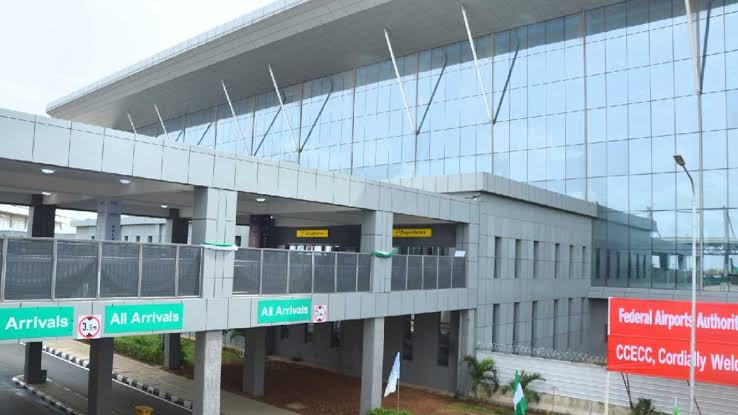

HADI Sirika, the Minister of Aviation, has stated that the current administration has established the foundation for the expansion of local aviation, which has the potential to generate $14.16 billion in revenue and contribute 5% of GDP annually.
Sirika said a series of policy and infrastructure reforms taken out in the last seven years has repositioned local aviation during the inauguration of the Murtala Muhammed International Airport (MMIA) terminal-two in Lagos.
He noted that when the current administration took office in 2015, the aviation industry faced numerous challenges, including professional unemployment, a lack of foreign exchange, budgetary constraints, the sustainability of waivers on aircraft and spares, deteriorating and ageing infrastructure and obsolete equipment, poor and intolerable conditions of airport facilities and equipment, and blocked airline funds, to name a few.
He explained: “We have been working to reduce them to the barest minimum. Consequently, the aviation roadmap was developed and graciously approved by Mr. President on October 18, 2016, which includes, the national carrier, airport concession, Maintenance , Repair and Overhaul Centre (MRO), Aviation Leasing Company, Agro-Allied Cargo terminals, as well as Aerospace University, and so on.
“The roadmap projects are being undertaken through Public Private Partnership (PPP) and the Ministry has been working very closely with Infrastructure Concession Regulatory Commission (ICRC) to ensure we have a credible and transparent process,” Sirika said.
The minister went on to say that the airport concession project, which includes the newly opened terminals, is approaching the end. Before the end of March, the ministry will issue a Request for Proposal (RFP) to the selected firms, with an announcement of a partner in the second quarter of 2022 and handover in the fourth quarter.
Those initiatives, according to Sirika, are already yielding huge results. “The overall number of passengers in 2015 was eight million. The number of passengers increased to almost 18 million in 2019, thanks to the realization of several components of the roadmap, making aviation the fastest-growing sector of the national economy prior to the COVID-19 pandemic.
“Despite devastating impact of the pandemic on the global aviation industry, the domestic industry has grown in leaps and bounds, becoming the third fastest growing sector of our economy. The overall goal is to grow the aviation sector’s contribution from the current 0.6 to five per cent, with approximately $14.166 billion in earnings.
“A recent aviation sector study for Nigeria by International Air Transportation Association (IATA) in June 2020 showcased the significant contribution of air transportation to the national economy, through providing 241,000 jobs (direct and indirect) and a contribution of $ 1.7 billion to the national economy.
“In the same vein, IATA projects the air transport market in Nigeria under the ‘current trends’ scenario to grow by 174 per cent in the next 20 years. This would result in an additional 9.4 billion passenger journeys by 2037. If met, this increased demand would support approximately $ 4.7 billion of GDP and almost 555,700 jobs”.
He emphasized that aviation is the only global rapid transportation network, making it the most vital and essential infrastructure for the global logistical ecosystem. It fosters economic growth, provides jobs, and facilitates international trade, commerce, and tourism, according to the minister, ultimately boosting the living conditions of the teeming people. Aviation remains the sole means of achieving continental integration and engagement, as envisioned in the African Union’s Agenda 2063, and the federal government should continue to support it.

