
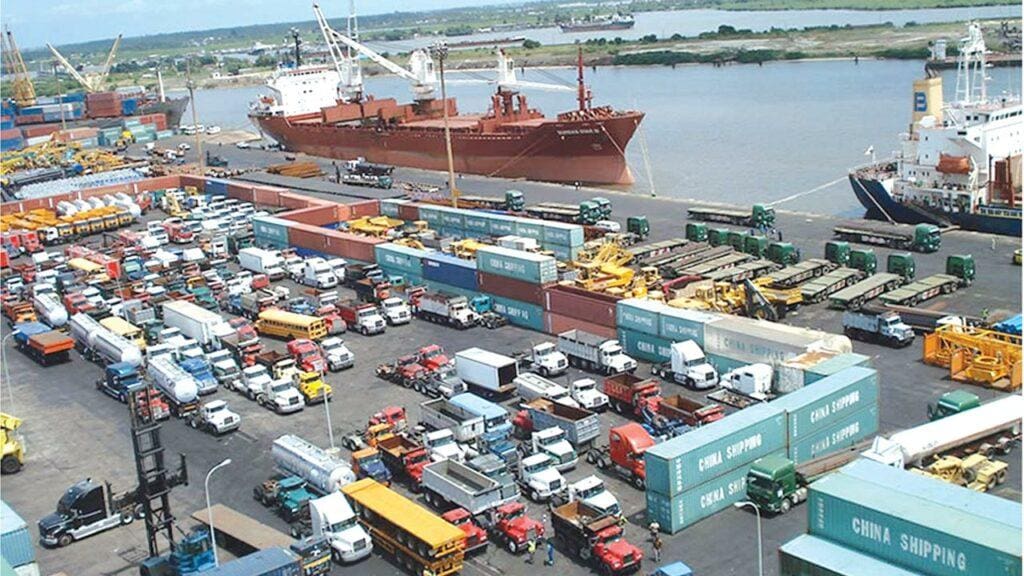

TO eliminate traffic gridlock and curb illegal extortion along the Apapa/ Tincan axis, the state government has reached a consensus with the Nigerian Port Authority (NPA) to streamline the checkpoints along the corridors and feeder routes.
In a statement, today, the Special Adviser to the Governor on Transportation, Oluwatoyin Fayinka, at a stakeholder meeting with transport unions, declared that the state government will enforce zero tolerance on illegal extortions and activities of miscreants along the corridor through Special Mobile Courts created to address the aforementioned challenges.
Fayinka also explained that in streamlining the corridor, illegal extortion points will be disbanded and the agencies charged with the role of managing traffic flow along the axis have been clearly defined and assigned to prevent any illegal activity that can hinder the smooth port operations for all stakeholders.
The special adviser further stated that trucks will no longer be stopped for ETO at Ijora Badia (LPC axis), Mile 2 under and over the Bridge, UBA (TCIPC corridor), adding that truck movement will not be interfered with at NAGAFF, Area B, RRS Marine Bridge, 7up, Fidelity Roundabout, Etisalat Roundabout (LPC axis) and RRS (TCIPC corridor).
Fayinka also revealed that the agreed checkpoints have been assigned to specific agencies. He explained further that some checkpoints will be manned by the NPA alone, while some other checkpoints will be assigned to NPA and the state government.
In the same vein, the special adviser stated that the State Traffic Management Authority (LASTMA), Rapid Response Squad (RRS) and the Nigerian Police will manage some points independently without interference from the other agencies, while military checkpoints will no longer exist along the port corridors.
Fayinka, however, warned unions and hoodlums extorting motorists along Tincan, as their activities will no longer be allowed on the corridors because they are also inimical to seamless traffic flow.
The special adviser urged all stakeholders to cooperate with the new strategy and coordinate themselves accordingly, as this will improve movement along the port access roads, which will better economic activities.

