

Rachel Sylvester talks to Westminster insiders about the new chancellor. What does his £45 billion tax-cutting gamble say about the man himself and his ‘Kami-Kwasi economics’?
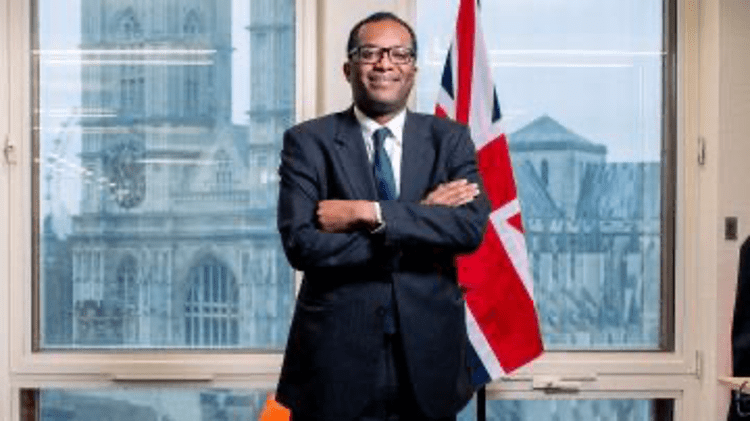
Photo: Kwasi Kwarteng in his office in January last year, when he was business secretary
SOON after Kwasi Kwarteng was appointed as a parliamentary private secretary to the chancellor of the exchequer, Philip Hammond, in 2017 he bumped into an old friend from university at Henley Royal Regatta. He had clearly had a few drinks and was expansive in setting out his delight at finally getting a junior job at the Treasury, a department he had studied for so long as an economic historian at Cambridge and Harvard. “He told me that, while it had taken him seven years since becoming an MP to get the job, he’d discovered that Stanley Baldwin took eight years and was prime minister seven years later,” the friend recalls.
There is no doubting Kwarteng’s determination to get to the top. His swaggering performance in the House of Commons as he announced £45 billion-worth of tax cuts in last week’s dramatic mini-budget demonstrated that he also knows how to wield power. The chancellor showed not a glimmer of doubt as he unveiled a package that even supportive Tory MPs admit is a huge political and economic gamble. So sure was he of his plan that he smiled as he announced that he was abolishing the cap on bankers’ bonuses introduced by David Cameron in 2014.
Within hours the pound had tanked, but Kwarteng doubled down, promising that he had “more to come”. As the markets reacted to the UK’s biggest tax cuts in 50 years, the pound fell to a record low against the dollar. One senior figure in the City described the fiscal statement to me as “economically reckless”. Yet the chancellor did not blink, with an ally suggesting that this was just “the City boys playing fast and loose with the economy” and insisting, “It will settle.”
The stakes could not be higher and the next two years will be critical to Kwarteng’s – and the country’s – fortunes. The Old Etonian son of Ghanaian immigrants has been appointed chancellor at a time of extraordinary economic turmoil. The cost of living crisis, soaring inflation and rising interest rates are already hitting households and businesses hard. Kwarteng is embarking on a fiscal revolution that will not only make or break his own career, but also determine whether the Tories win or lose the next election, and whether Britain goes into a deep and prolonged recession or, as the government hopes, returns to growth. The ideological certainties long promoted by free market think tanks are being put to the test in the real world.
REX FEATURES
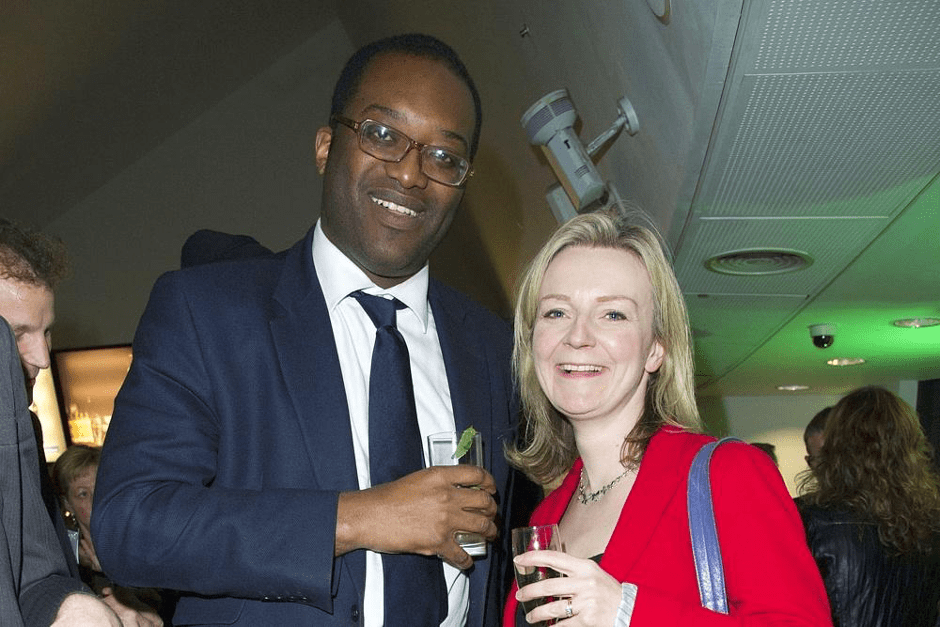
At 47, Kwarteng is the same age as Liz Truss and is one of her closest political allies. Earlier this year, he moved into a house just down the road from her in Greenwich and now they are neighbours in Downing Street. His appointment as chancellor was one of the first decisions she made when it became clear that she was likely to win the Tory leadership contest. Truss and Kwarteng have been working for weeks on their “shock and awe” shake-up of taxes, including changes to stamp duty and the abolition of the top 45p rate of income tax. The blueprint has been in their dreams for years.
Like Truss, Kwarteng is a liberal free marketeer who wants to reduce the size of the state. One of his first acts as chancellor was to fire Tom Scholar, the respected permanent secretary to the Treasury. In his fiscal statement to MPs he declared that he wanted “a new approach for a new era focused on growth”. He is determined to get the government “out of the way” of business and is proposing to tear up planning laws, clamp down on public sector strikes and deregulate childcare.
Yet he has also approved a massive spending splurge by the state to help households and companies through the energy crisis, funded by billions in increased government borrowing. Last week’s statement not only upended the traditional Treasury assumptions, it also overturned decades of Conservative economic orthodoxy, including the idea of balancing the books. “He’s quite an enigma,” says one Tory MP. “On the one hand, he’s a self-styled Thatcherite, but on energy he’s been hugely interventionist.”
At 6ft 5in, Kwarteng is a big man both physically and intellectually. He speaks French, Italian, German and Greek, writes poetry in Latin and has recently been learning Arabic. He read Thomas Piketty’s Capital in the Twenty-First Century in the original French. He has also produced several history books.
With a booming laugh and what one old friend calls a “jolly hail-fellow-well-met” manner he can dominate any room. Sarah Sands, the former deputy editor of The Daily Telegraph, who commissioned him to write a column more than 20 years ago, says that when she first met him, “He wasn’t particularly Tory – just exceptionally clever. I used him as a ringer in a quiz team. He only once got a question wrong, misattributing an Hilaire Belloc quote.”
The chancellor’s political supporters are convinced he has the intellectual and political clout to make a success of the most difficult job in the cabinet. Jo Johnson, the former universities minister who was at Eton with Kwarteng, says he is a “very bright guy”. “He knows what he thinks, he doesn’t suffer fools and that’s a good thing. He will most likely be pragmatic not ideological, because that’s what you have to do to survive.”
George Freeman, who served as science minister alongside Kwarteng at the Department for Business, Energy and Industrial Strategy, says, “He’s ferociously bright, business savvy, full of political conviction and dismissive of lazy orthodoxy, on a mission to turn the Treasury into a department whose defining goal is business growth and unlocking private investment.”
But the markets are jittery. A senior figure in the City tells me that confidence has plummeted after the mini-budget. “The biggest obstacle to the UK’s success is ideology getting in the way of facts,” he explains. “Most in my world were appalled. We are the last people who should be getting tax cuts. The mood was furious.” An old friend of the chancellor’s texted a one-word response to the chancellor’s statement: “Kami-Kwasi.”
Kwarteng’s parliamentary critics fear he lacks any real understanding of poverty or empathy for those struggling to heat their homes and put food on the table. One former minister, who until recently sat around the cabinet table with him, says, “He’s very cultured but I don’t get a sense of burning injustice from him. I do worry that levelling up will be hollowed out, that there will be a lot of rhetorical lip service paid to it but that what’s required, the passion and energy, will go out of it. If you want to have a low tax, economic liberal deregulatory approach, then Kwasi has the intellect to be able to deliver on that. But the question is, is that enough overall? The worry for the government is that it speaks to a particular flavour of Toryism rather than to Britain.”
A bon viveur and raconteur, the chancellor enjoys being part of the Conservative establishment. A few weeks ago, as the energy crisis bit, his distinctive guffaw was heard rattling the chandeliers at White’s, the London gentleman’s club favoured by Old Etonians. He has also just been elected as a member of the Garrick, the all-male club frequented by politicians, journalists and actors. One Tory MP recalls smoking cigars with him late into the night in another plush St James’s bar.
Kwarteng has been described as a “black Boris” but his allies say he has never defined himself by the colour of his skin. “I don’t think it would even occur to him to be proud to be the first black chancellor,” says one. “He’d be proud to be a reforming chancellor.” Another political friend suggests, “I think it’s irrelevant to Kwasi. He’s much more culturally, ideologically and intellectually a product of the education system that he’s been through in the UK than his Ghanaian heritage. If the expectation is that the first black chancellor brings something to the job that comes from being an outsider, then that’s not going to be fulfilled. He has middle-class Ghanaian parents; he’s been bred to be an insider.”
An only child, Akwasi Addo Alfred Kwarteng was born in Waltham Forest, northeast London, in 1975. His parents had come to Britain as students in the Sixties. His father, Alfred, an economist for the Commonwealth Secretariat, was educated in Ghana at an Anglican school with a Winchester-educated English headmaster. His mother, Charlotte, a successful barrister, was an admirer of Margaret Thatcher. “It was a self-reliance thing,” Kwarteng once explained. She instilled in her son a ferocious work ethic and education was of fundamental importance to the family.
When his father was posted to Switzerland, Kwasi was sent at the age of eight to board at the fee-paying Colet Court – now St Paul’s Juniors – in southwest London. He admits it was probably too young to be separated from his parents but he not only survived, he thrived. He won a scholarship to Eton where friends recall a “lanky malcoordinated” but hard-working teenager who was determined to make the most of the opportunity he had been given.
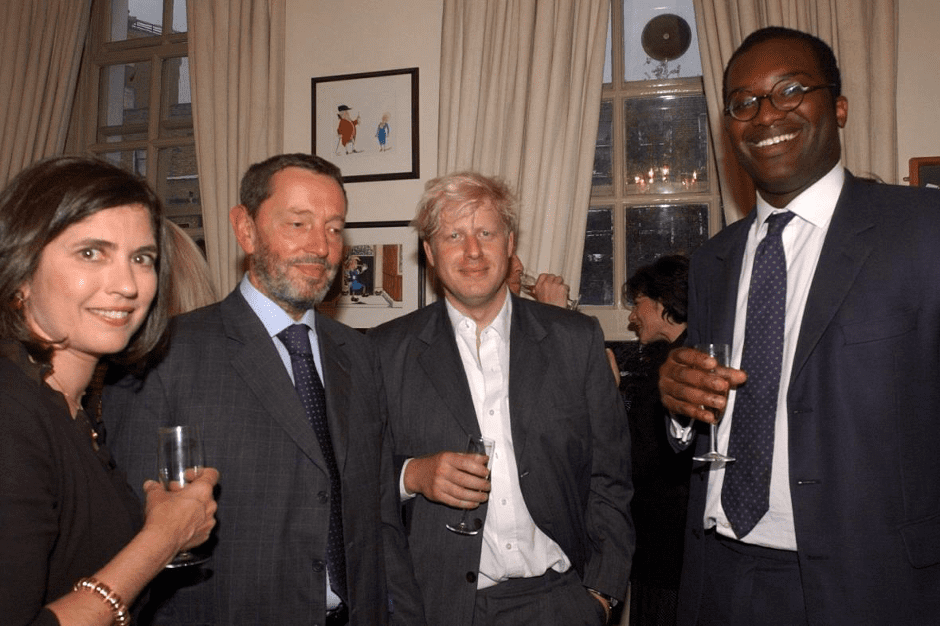
Like Boris Johnson, Kwarteng played the wall game – a brutal mixture of football and rugby. “He’s so tall that he was a great addition to any team,” one fellow pupil recalls. Like the former prime minister, he also won the Newcastle scholarship, the school’s most prestigious academic prize. But Kwarteng never expressed his desire to be “world king” in the way that Johnson did. “I was slightly surprised when he went into politics,” says a contemporary from Eton and Cambridge. “He wasn’t in a political activist circle at university. People sometimes think one Etonian is just like another, but Boris and Kwasi are very different. Boris wants to rule the world; Kwasi wants to solve problems, rather than just being in power for the sake of it. He’s not going to go out there to break rules. Kwasi does listen to people and wants to discuss ideas.”
At Cambridge, where he initially read classics before switching to history, Kwarteng was a fogeyish figure who occasionally smoked a pipe. Tristram Hunt, the head of the V&A and a former Labour MP, who shared a room with him, remembers, “He had a uniform of deep corduroy and thick tweed, which he also wore – with brogues – during college football matches.” Last year, when his old room-mate joined the cabinet, Hunt observed that there was “a breadth and richness”, an “iconoclasm” to Kwarteng, that made him “completely ungovernable”.
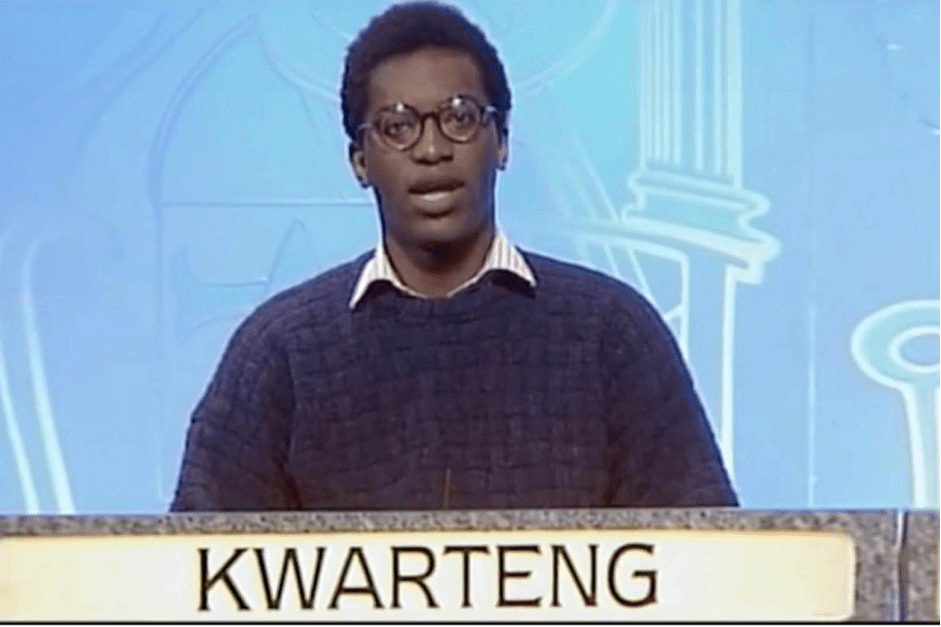
At his interview for Trinity College, the 17-year-old Kwarteng reportedly told the tutor, who had arrived late and was new to the job, “Don’t worry, sir, you did fine.” In his first year, he gained notoriety as part of the winning team on University Challenge after muttering, “Oh f***, I’ve forgotten,” when his mind went blank during an episode. He appeared on page three of The Sun under the headline “Rudiversity Challenge”. “As a student he was charismatic and a bit chaotic,” says a friend from that time. “He was scholarly. The everyday run of things didn’t worry him. He would be immersed in his books.”
This may be why the future chancellor was spotted by Dr John Casey, an English fellow and legendary figure among Conservative thinkers, who invited him to his dining club, the Michael Oakeshott Society. There Kwarteng met Tory politicians and journalists such as Norman Lamont, Geoffrey Howe, Norman Tebbit and Charles Moore. Casey insists it was never a political society: “It is devoted to intelligent conversation and strong views don’t go with that.
“He has a first-rate mind and a first-rate personality,” Casey continues. “He is intellectually and personally equipped to be chancellor. He’s a cultured man, an intellectual – there are very few in politics. He’s not like anybody else; he’s himself.”
Not everyone who attended the soirées was so impressed. “There were all these clever clogs around a big dining room table and everybody had to sing for their supper,” recalls one guest. “Kwasi launched into a disposition on the Roman Empire. I remember thinking, ‘Who the hell is this guy?’ He was clearly very clever, but there was also a confidence that was slightly overbearing. He gave the sense of being an effortless member of a room full of privilege and power. I think it’s fair to say that Kwasi Kwarteng has absolutely no idea about poverty.” Some find his self-assurance intimidating. One Cambridge contemporary says, “Kwasi was always very affable… But I always found he made me feel rather inadequate and not his equal. It’s grammar school v Eton, I’m afraid, and Kwasi is very much an Etonian.”
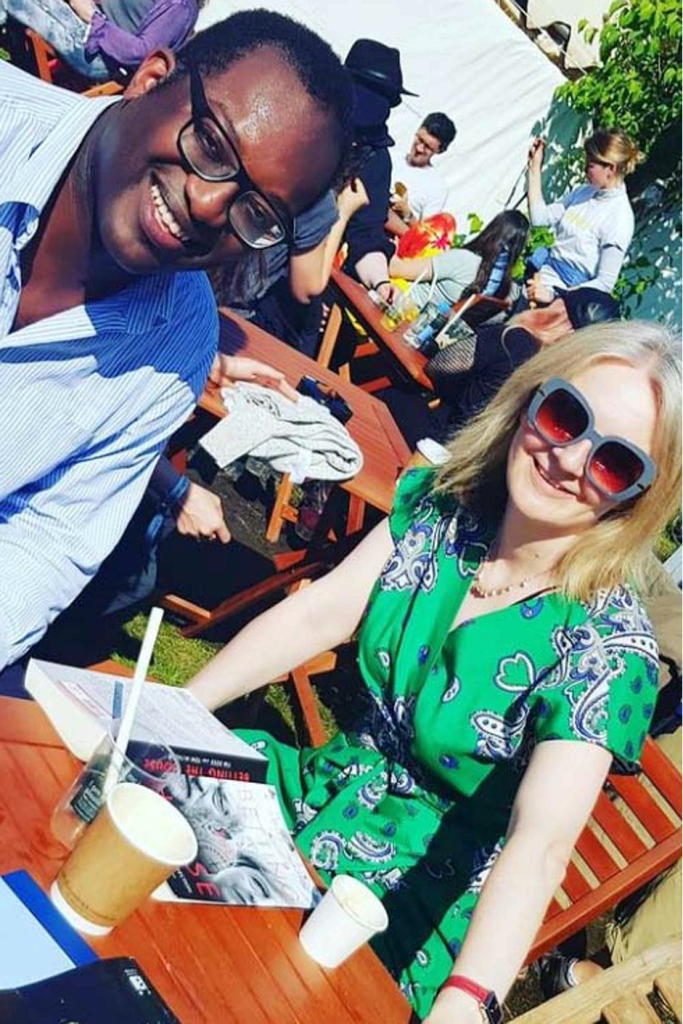
After completing his first degree, Kwarteng won a Kennedy scholarship to Harvard University before returning to Cambridge to study for a doctorate in economic history. He then worked as a fund manager at the bank JP Morgan and at Odey Asset Management, run by the Brexit-backing investor Crispin Odey, as well as chairing the Bow Group, a conservative think tank.
In 2005 he stood as the Conservative candidate for Brent East, coming third, before being elected as MP for the safe Tory seat of Spelthorne in Surrey in 2010, the same year as Truss entered politics. He spent several years on the back benches after criticising coalition policies including the help-to-buy scheme. “He’s genuinely clever, with a very strong academic, scholarly mind,” one old friend says. “But that academic, scholarly mind meant he was happy to speak out against David Cameron and George Osborne and didn’t really worry about the consequences.”
Untroubled by self-doubt, Kwarteng does not care what other people think, or need to be liked, which is both a blessing and a curse at Westminster. A chancellor must be willing to make unpopular decisions when necessary, but cannot afford to become totally detached from the public or parliamentary mood. In government, Kwarteng can be dismissive of people or issues that do not interest him. “The thing with Kwasi is the grind,” says a former cabinet colleague. “Will he apply himself with the painstaking, burn-the-midnight-oil energy that is required to subjects that bore him at the Treasury?”
A female Tory peer describes “enduring” a dinner party with him a few years ago. “I couldn’t wait to leave. He was just such a brayer and so loud and proud of himself. He was one of those absolutely stereotypical Old Etonians, holding court and forgetting that actually this wasn’t a gathering to hear the views of Kwasi Kwarteng. He was not in the ‘nice guy’ category to women.”
Kwarteng went out with Amber Rudd, the former Home Secretary, for a bit but they split up. He is now married to Harriet Edwards, a lawyer, with whom he had a daughter, Ida, last year. Friends say fatherhood has mellowed Kwarteng. “He’s married. He’s happy. He’s got a child, which changes people.”
His allies say his politics have also evolved. In 2012 the chancellor was one of a group of free marketeers – including Truss – who published a pamphlet called Britannia Unchained, which described British workers as “among the worst idlers in the world” and railed against a “bloated state, high taxes and excessive regulation”. He has since distanced himself from the controversial text.
Kwarteng’s 2011 book Ghosts of Empire is a far more nuanced analysis than the rose-tinted version of British history favoured by Tory traditionalists. He rejects the “sterile debate” over whether “empire was a good or bad thing” and concludes, “Much of the instability in the world is a product of its legacy of individualism and haphazard policymaking.” According to those who know him well, the chancellor is uncomfortable with “culture war” politics and describes his own philosophy as “relentless pragmatism”. One aide insists, “He is sometimes lazily pigeonholed as a ruthless, black and white free market ideologue. It is true that he is a low-tax Conservative. He’s a free marketeer, but there are occasions when the state does need to intervene.” In 2019, the chancellor told a Tory party conference event: “There’s nothing [better] to convert someone from being a radical free marketeer to seeing the virtues of government action than making them an energy minister.”
As business secretary, Kwarteng had a whiteboard in his office at the top of which he had scribbled the letters “MSH”, short for “Make shit happen.” Below was a list of all the investments the government had supported to generate growth, including five offshore wind farms and two gigafactories for electric cars. “They were all heading to different parts of Europe and we provided taxpayers’ support to get them to the UK,” according to an ally.
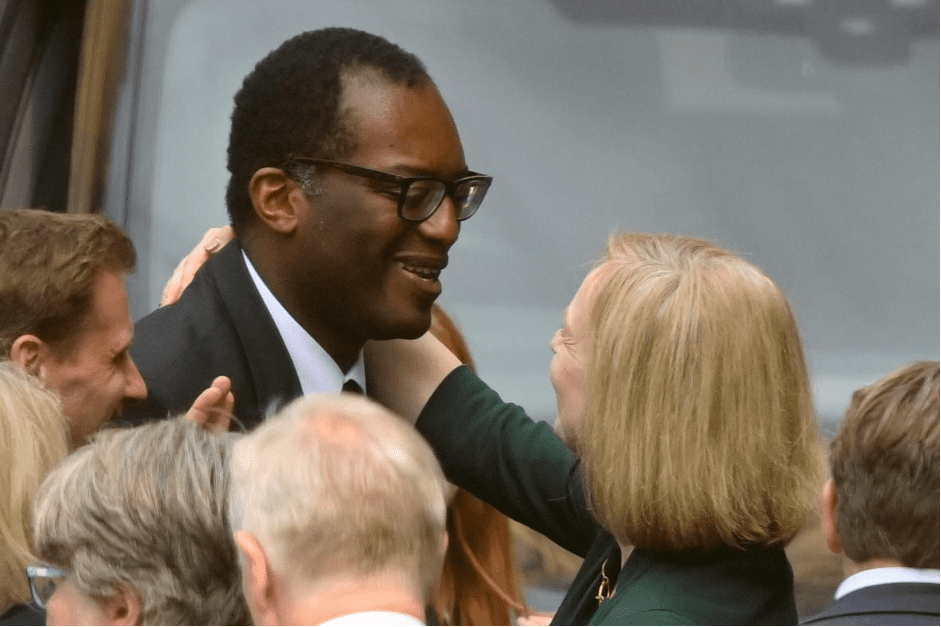
In Whitehall, Kwarteng has a reputation for making decisions quickly. “It’s quite remarkable,” says one member of staff. “He knows what he wants and he communicates that clearly. He says, ‘You need to always boil things down to simple propositions and cut through the crap.’ In government, you are constantly warned about the risks and he will say, ‘We need to crack on.’ He doesn’t scream and shout; he just does it.”
At the department for business, Kwarteng went against official advice to give planning permission for the Sizewell C nuclear power station and to launch an inquiry into the sale of Britain’s largest microchip factory to a Chinese company. “The official advice was that there was no risk,” says an aide, “He called it in under national security legislation.”
At the Treasury he has been equally assertive. According to a close ally, “He will have to be a bold chancellor because of the circumstances we are in.” His relationship with his civil servants could be tricky. One former minister says, “He hates fudgy nothingness; he gets frustrated with officials whose natural instinct is to compromise. He likes the hard edges. He’s a risk-taker.” As business secretary Kwarteng was “constantly expressing his frustration with the Treasury machine”, one colleague recalls. “I remember Kwasi saying, ‘These guys would have done a value-for- money assessment on the D-Day landings.’ He’s not one to be soft-soaped by Treasury officials, or flattered by great mandarin minds telling him everything is fine. He goes in with quite a strong ideology of, ‘We’re going to shake things up.’ If you are a conciliatory Treasury mandarin, you are in for a tough ride.”
But those who know him well say that Kwarteng will not want to take orders from the right-wing ideologues at No 10 either. One former minister recalls how he would privately rail against Truss when she was too rigid or uncompromising as foreign secretary. “We used to come out of cabinet meetings and he would say, ‘Liz has gone off on one again.’ ”
A businessperson who recently attended a dinner with Kwarteng points out that as chancellor he will have nowhere to hide. “If you are business secretary, you can blame the Treasury for everything. But it’s very different when you are chancellor. You have to take responsibility. There will be winners and losers from the decisions he makes.”
For now, Kwarteng and Truss are united on economic policy. The chancellor tells colleagues that his role is to support the PM, explaining: “I will facilitate; I won’t emasculate.” One ally says, “Kwasi was completely disillusioned with the battles between No 10 and No 11 under Rishi and Boris. When No 10 and No 11 are at war, nothing works. Kwasi will deliver what the prime minister wants. She is the first lord of the treasury, Kwasi is the second lord of the treasury. That will change the entire mood and approach of government. The institutions will try to break No 10 and No 11 apart,but they underestimate the strength of the relationship between Kwasi and Liz.”
The question is – will that last? If inflation continues to rise, interest rates go up and the pound fails to rally, will the chancellor’s “relentless pragmatism” start to make him challenge the ideological certainties? David Gauke, the former chief secretary to the Treasury – who has known Kwarteng for nearly 20 years – believes tension will inevitably grow as the chancellor is confronted with the economic consequences of policies. “Treasury officials will be professional and work with the chancellor they’ve been given, but if they have got evidence suggesting the government is taking undue risks, their task is to ensure that the chancellor is aware of those risks,” he says. “Kwasi and Liz have been close allies for a long time, but he will be more exposed to the Treasury arguments than she will. If he starts to become persuaded that there are risks, then you can see a scenario where she starts to believe he’s been captured by the Treasury.”
A Conservative MP says the contradiction between the “big-thinking ideologue and the pragmatic commercial brain” will be the defining lens of Kwarteng’s chancellorship. “I suspect he is thinking he ducked a bit of a bullet here. He will be able to acquit himself as a heavyweight chancellor in an impossible time under an ideological prime minister who will be pretty Marmite. Liz will play the populist tunes. Kwasi’s instincts will tell him to be rather more serious about the global economy. In 2024, if he survives these two years, he will be a very interesting candidate for the leadership.” That all depends on his gamble paying off.

