

ACCORDING to Buhari, his administration is committed to restoring teachers to their proper status by fully executing the criteria set forth in the professional teaching and teacher qualification framework.
He said that this will invariably have an effect on students’ academic performance and outcomes at the primary, secondary, and tertiary levels.
Buhari stated that the new teachers’ policy is already being implemented at the Federal level and in some States, and he urged States that have not to do so immediately because “the gains are already showing.”
He was speaking at an event to commemorate World Teachers Day in 2022 with the theme “The Transformation of Education Begins with Teachers.”
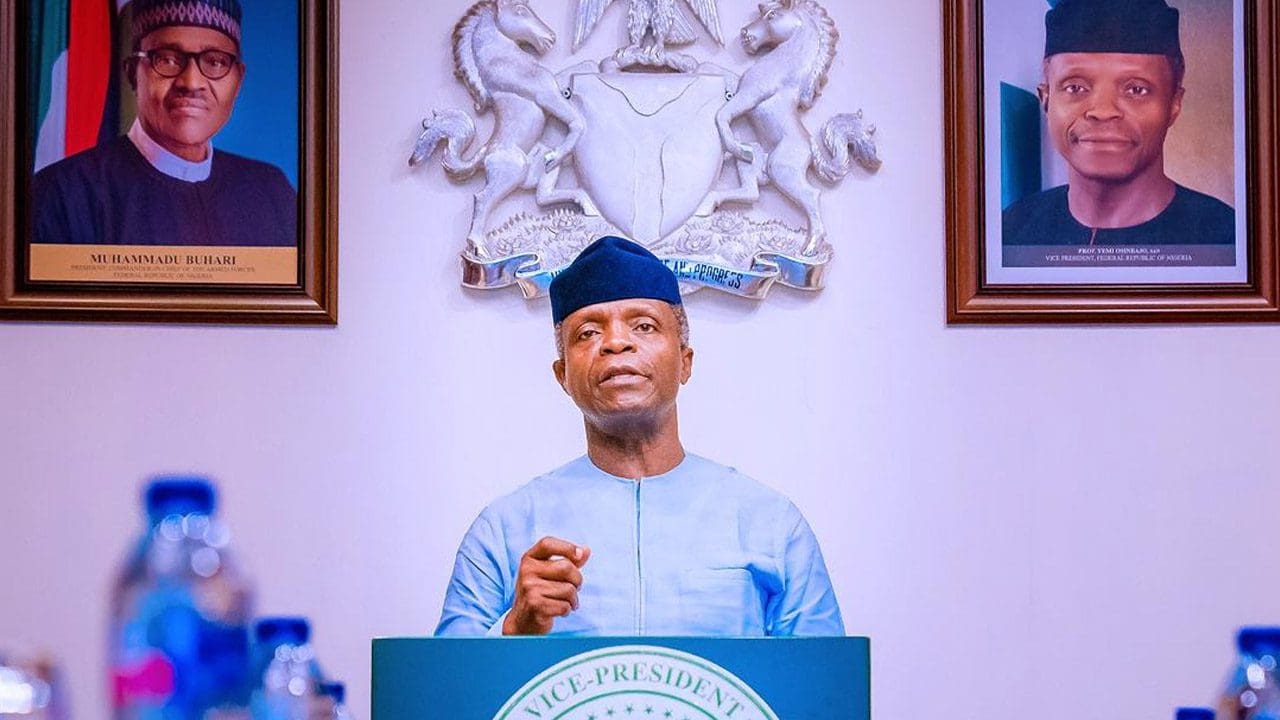
Represented by the Vice President, Prof Yemi Osibanjo, Buhari said: “We are also developing a verifiable database of teachers in Nigeria, already the Teachers Registration Council of Nigeria (TRCN) has registered 2, 108, 342 teachers and licensed 1,250,000 teachers.”
“No society can grow beyond its educational attainments, one of the major differences between healthy, well functioning and prosperous societies and poorer societies is education. We owe so much of our well-being as a nation to our educators at every level,” he said.
The theme, according to him, emphasized the significance of teachers in the transformation of education while also introducing the crucial responsibility that teachers themselves have, notably, to be at the forefront of educational advancements, particularly the use of technology and contemporary teaching methods.
“Education must respond to the dynamism, speed of development and massive changes in society. Educators must understand the skills required to take full advantage of a world dependent on technology. In addition to listening, education today includes writing, ideation, imagining, and critical thinking skills. It is no longer merely learning by rote,” he said.
While pointing out that they have a fantastic potential to use technology to accelerate educational advancement, he stated that in order to do this, they must continue to invest in increasing their capacity as teachers.
“We cannot integrate technology successfully, as urgently as we need to, without training and equipping teachers,” he said.
Malam Adamu Adamu, the minister of education, acknowledged that despite the profession’s noble nature, teachers are now less respected, have smaller positions, and have their welfare neglected.
“Our teachers, especially at the basic and secondary levels have been at the receiving end of some of the most unfavourable and sometimes intolerable policies, practices and experiences,” he said.
He however said the federal government has implemented the retirement age of Teachers to 65 years with a corresponding increase in service years to 40 years, restored the practice of attracting and retaining the best brains in the teaching profession among others.
“The National Salaries, Incomes and Wages Commission has completed work on the reviewed remuneration package for teachers in basic and secondary schools including provisions for rural posting allowance, science teachers’ allowance and peculiar allowance. Implementation is awaiting conclusion of consultations with state governments and the National Assembly,” he said.
He said that the government has started implementing a teacher conversion program with ICT training, commencing with the Federal Civil Service, in order to address the existing shortage of qualified instructors in the educational system.He mentioned that the plan has also been adopted by several states.
“We have revamped the curriculum and introduced history and religious knowledge as stand-alone subjects. We are also working with professional associations and religious bodies including the Nigerian Historical Society to address the shortage of teachers in specialized subjects,” he said.
,The national president of The Nigerian Union of Teachers, Comrade Audu Titus Amba stated that the Nigerian educational system is in crisis.
He said that at the tertiary level, public university students have been out of classes for around seven months as a result of the extended industrial dispute, and the Basic and Secondary Education sub-sectors are dealing with significant difficulties.
“These include non-implementation of the N30,000.00 Minimum Wage for teachers in some States, shortage of teachers, poor infrastructure, lack of instructional materials, insecurity in schools, inadequate funding and poor conditions of service in general,” he said.

