
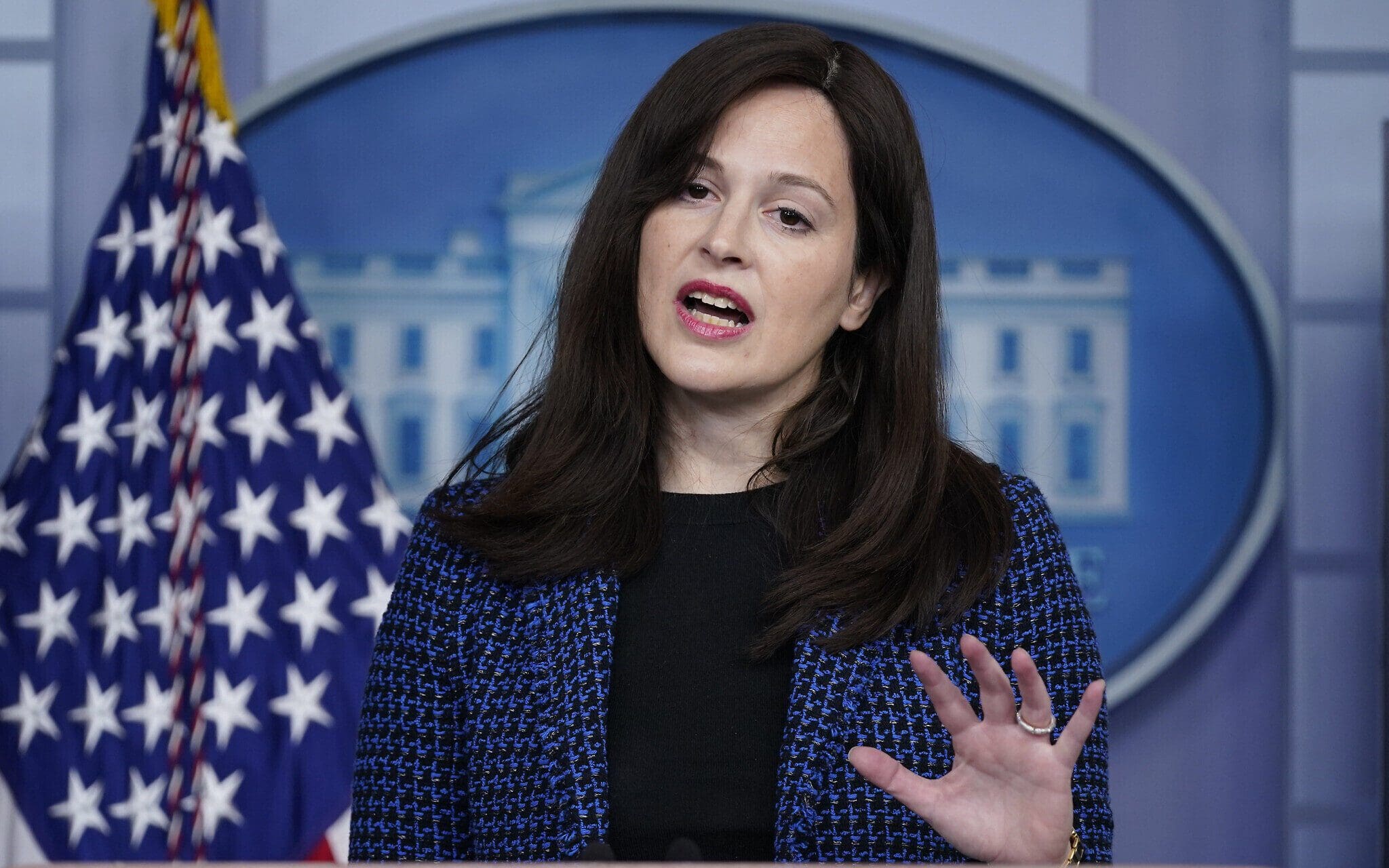

THE Deputy National Security Advisor for Cyber and Emerging Technologies in the United States, Anne Neuberger, has said the Joe Biden administration is working with the UK, India, Singapore, Germany and others to address cyberattacks.
Neuberger, who spoke at a briefing organized by the Foreign Press Centre, said one of the threats the administration is battling is ransomware.
Ransomware, she explained, is a transnational threat, affecting hospitals, schools, companies, energy companies all around the world.
“The United States convened 36 countries and the European Union on October 31st and November 1st to review the work of the Counter Ransomware Initiative, which the United States launched a year ago; review threats; look at what we have seen communally as a set of countries around ransomware attacks; and plan our work together over the next year to that,” she said.
According to her, seven countries are leading the working groups of the Counter Ransomware Initiative with Lithuania and India championing the resilience work to determine what are the right cyber security investments countries need to make to improve their cyber security, adding that Singapore and the United Kingdom are leading efforts to counter illicit finance.
The advisor said: “Ransomware is a financially driven problem, and we want to make it riskier, costlier, and harder for criminals to move the illicit proceeds of their cyberattacks around the world. Germany, which led the diplomacy working group, where countries set a set of agreements around the kinds of things they will not do in order to reinforce international norms – for example, not harboring ransomware criminals, doing due diligence when one country raises concerns about cyberattack activity coming out of that country. During the Counter Ransomware Initiative, Nigeria agreed to co-lead the diplomacy work with Germany, which is particularly exciting for us.
“Next, Australia, with thanks to Australia for leading the disruption working group that seeks to disrupt criminals, the infrastructure they rely on, and the movement of funds around the world. And we will continue to double down and reinforce that work coming out of the conference. And finally, the public-private partnership led by Mexico.
“I will note that at the conference the members brought in 13 international companies to hear their insights on what we can do between governments and the private sector to better counter the threat. So, over the two days, we discussed an action-oriented agenda. Those items include standing up a joint ransomware task force to really deepen our disruption work; countries agreeing to implement financial action task force agreements over the next – within the next year; policies around ransom payments, policies around how we leverage insurance companies; the Regional Cyber Defense Centre in Lithuania; bringing countries together to produce joint products regarding threats and how to detect and counter them; and a number of other ways that we deepen coordination.”
She went on: “I’ll now shift to our work to reinforce our ironclad commitment to strengthening NATO at the NATO Cyber Defense Pledge Conference just last week in Rome, which the U.S. co-led with Italy. During the last NATO Summit in Madrid, NATO members announced that they would seek to build a virtual cyber incident response capability. We’ve seen multiple countries face cyberattacks. NATO needs a way for NATO members to come together, exercise together, and be prepared to support a NATO member when under attack. One of the key topics of the Cyber Defense Pledge Conference was discussing particular countries’ commitments towards that virtual response capability and finalizing the planning over the coming months to where the capability can be formally in process and in place for all NATO members to use. In addition, we discussed updates to each country’s cyber defense pledge, the kinds of cyber security commitments countries make to ensure their critical infrastructure, their water, their power is secure from cyberattacks.”
Ms Neuberger said the U.S. paused discussion with Russia on cyber security when it invaded Ukraine, but will continue to hold Russia and all countries accountable for cyberattacks that come from their borders.

