
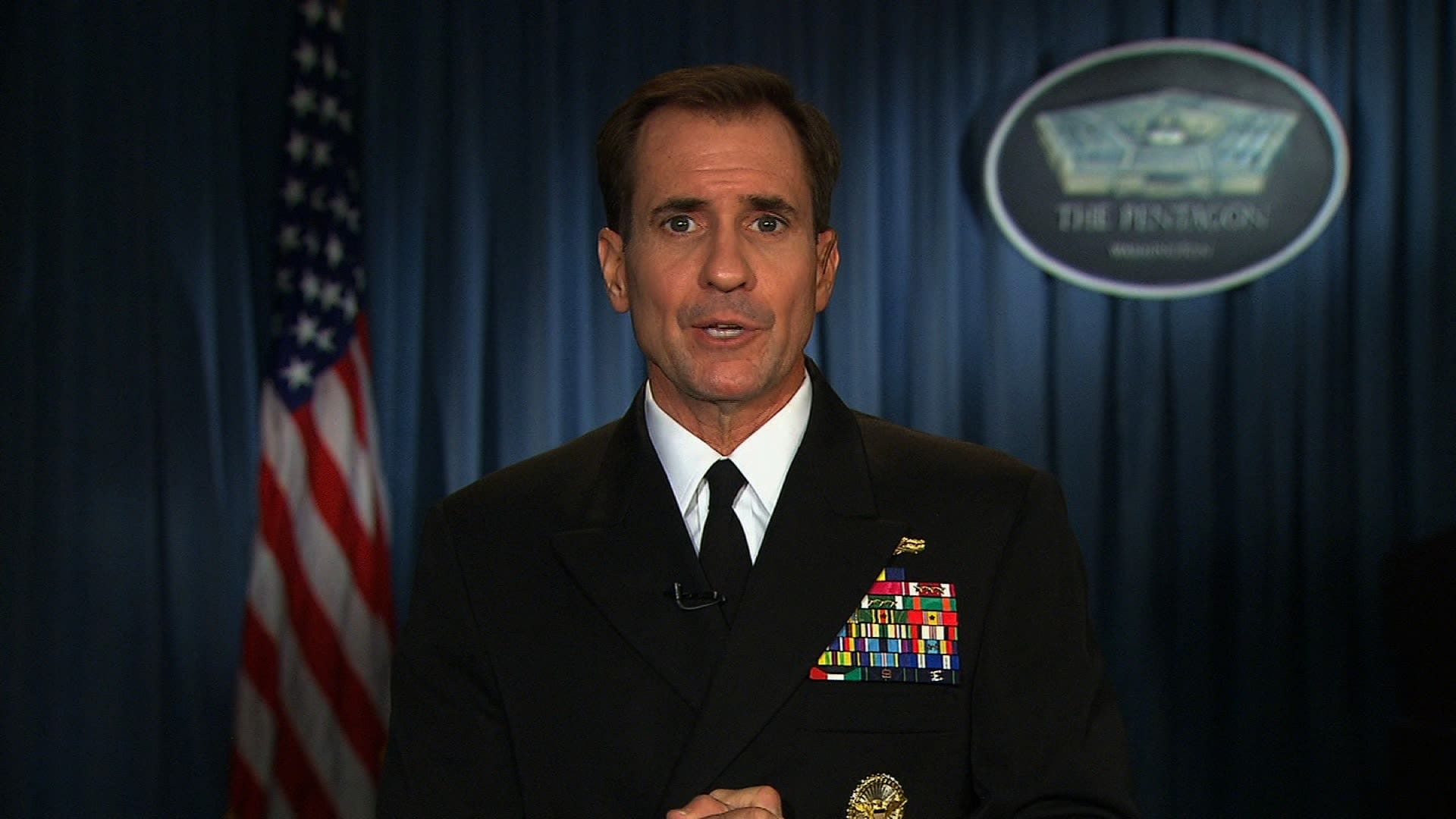

REAR Admiral John Kirby, previously an assistant secretary and spokesperson at both the State Department and the Pentagon, now coordinates America’s interagency efforts to explain U.S. policy, and is a senior administration representative on many vital global issues. He speaks on the Biden-Harris Foreign Policy Agenda. Excerpts:
Turkish earthquake
I can report today that our two urban search and rescue teams are now on the ground and they are moving into position out of Incirlik Base. And these are two nearly 80-person search and rescue teams. Our Disaster Assistance Response Team is also setting up their base of operations in Incirlik, and they are beginning to coordinate needs with the Government of Türkiye.
At the request of the Government of Türkiye, of course, USAID is looking to provide some support for field medical services. They’re still in talks about that and what that could look like. USAID is also evaluating assistance to support both emerging housing, food, hygiene, and other needs as well. And of course the Department of Defense is working closely with their counterparts in the Turkish Government to identify any future capabilities that might be needed to support the response. I don’t have anything to support specifically about military assets, but we’re in constant contact with our Turkish counterparts on that.
And as the President made clear, the United States will do anything and everything that we can to help the people of Türkiye recover from these devastating earthquakes. We all know that the casualties continue to climb as more people are found in rubble and the devastation, and so our thoughts and prayers go out to them as well as to the people of Syria, who also suffered from these earthquakes. And we are working with partner – U.S. partner humanitarian assistance groups to assist in Syria as well. As you know, we don’t have a diplomatic footprint there. But we’re doing everything we can through partnered groups and organizations to provide that kind of assistance.
Africa
As you know, even during the summit, President Biden announced that a new special envoy for implementation of the Africa Leaders Summit initiatives – by the – his name is Johnny Carson, working out of the State Department – he’s already been on the job since before the summit ended. And we are beginning to already put into place some of the obligations and commitments that nations made about climate, food security, energy security, and some other things. So there is work going on right now, and I’ll leave it to Mr. Carson to describe in greater detail. But the bottom line is even before the summit ended, we had identified a leader, a known leader, to take charge of our implementation program and put it into place.
It was a robust few days there with the Africa Leaders Summit, and the President was grateful for the time that he had to spend with those leaders. And we all recognize that while there are certainly many challenges on the continent, there’s also a lot of opportunity, and the United States needs to be a significant partner.
US, the Netherlands and Japan
I don’t have any announcements to make with respect to any arrangement between the U.S., Japan, and the Netherlands. There were some good discussions last week trilaterally. Certainly supply chains, in particular micro-electronic supply chains, were a part of that conversation, but so was an awful lot else, like the war in Ukraine and China’s growing influence throughout the Indo-Pacific and around the world. So there was a lot on the agenda.
So I don’t have anything to speak with that – speak to specifically with that. But I can tell you that we’re going to – and this kind of gets to your second question – we’re going to continue to work with allies and partners around the world to help build more resilient supply chains. And as the President noted last night, that certainly has to start here. We’ve got to do it, too. And in the President’s view, this has got to be a whole-of-government effort for the U.S. Federal Government. It can’t just be owned by any one agency. We all have a hand in this, whether it’s the Department of Defense or Department of Homeland Security, Department of State, the Department of Energy. So there’s a lot of work to be done.
I will tell you the Department of Commerce will continue to lead the charge on our export controls, and all departments and agencies across the U.S. Government are involved in that process as well. So it’s a real team approach under President Biden, and we’re going to continue that. And that team approach includes not just intra-U.S. Government but our efforts with allies and partners around the world.
I think we all saw throughout the pandemic how fragile, in some cases, supply chains can be. And the President’s committed to making sure that we shore that up and make them more resilient, more viable, particularly in times of crisis.
President Putin
On Ukraine, I wish I could tell you you’re wrong. I would love nothing better, honestly, today than to be able to say: Mr. Putin has decided to give up his war in Ukraine and pull his troops out, as they should be pulled out, and end this brutal invasion. Sadly, we can’t do that. He has shown no indication of being willing to negotiate – in good faith or not – negotiate at all. In fact, quite the opposite. He continues to show a lust for more bloodshed and a desire to visit war on more Ukrainians in more places. And this is not just continued air attacks on their – on infrastructure, energy, and water, but also attacks particularly in the Donbas on places like Bakhmut and Soledar. In Bakhmut, there’s still vicious fighting going on.
So everything we see out of the Kremlin tells us that Mr. Putin wants to continue to fight this war, which is why we’re going to do what we can – not just the United States but nations around the world – to support Ukraine and their ability to succeed on the battlefield. Now, yeah, that has a lot to do with weapons and systems, and I’ll get to your question about that in a second. But it also has to do with financial assistance as well, making sure that Ukraine can still govern itself, that they have the resources to keep paying government employers and keep hospitals open and schools open. So there’s a lot of work being done to help support Ukraine, and you heard the President talk about this last night. We’re going to continue to do that for as long as it takes.
Now, what kind of systems are coming in the future, I’m obviously not going to get ahead of decisions. We have – we just announced another package a week or so ago that included some longer-range capability for these HIMARS that the Ukrainians are using, as well as artillery ammunition, small arms and ammunition, more vehicles. And we’re going to continue to do that going forward.
You can hardly blame the Ukrainians for wanting more, given what they’re facing every day. We understand that, and that’s why we’re in constant communication with them, almost every day, about what the capabilities are, what the needs on the battlefield are. And we’ve evolved that over time. When the war first started and (Russian) tanks and columns were moving on Kyiv, it was Javelin anti-tank missiles that they needed the most and we were trying to get them to him in a hurry, and Stinger air defense missiles. And as the war changed, it became more about long-range fires and artillery pieces, howitzers, the HIMARS. Then it became more about air defense because of what Putin has been doing with Iranian drones and cruise missiles. Air defense is still a significant capability.
And now, as the Ukrainians prepare for what will likely be more fighting in the spring when the weather improves – and I won’t get ahead of Ukrainian plans, but as they prepare – they’ve identified that they need to get better at something called combined arms maneuver. This is the ability to take large units and maneuver them and fight effectively across open terrain – oftentimes open terrain. And that’s why the Department of Defense is doing battalion-level training outside of Ukraine, so that they can get better at this combined arms maneuver and those kinds of operations. And it’s why we have, in the last few support packages, included armored vehicles like Bradleys and Strykers, and it’s why our allies and partners who have done the same, providing additional armored vehicles, so that they can perform better and more effectively come spring when the weather improves.
Security assistance
I’m just simply not going to get ahead of any announcements of future security assistance. Yes, the Ukrainians have made clear that they want some advanced capabilities. They’ve talked about fighter aircraft. We’re going to continue to talk with them again in real time about capabilities and what can be provided. But what can be provided by the U.S., what can be provided by allies and partners?
President Lula
We’ll have more detail later this week about President Lula’s visit on Friday. We’re looking forward to that, and I think you can imagine they’ll be a wide range of issues to be discussed between President Lula and President Biden, not just regional – certainly not just issues in Brazil, but hemispheric issues as well as global issues because the war in Ukraine is affecting everybody. And that – that’s going to lead me to your first question. But anyway, we’re looking forward to President Lula coming and having a robust discussion with him, and we’ll have more to say about the agenda as we get closer. And certainly we’ll have an ability to characterize the visit for you after the fact.
But on the agenda, I think you can imagine it will be the war in Ukraine because it has had an affect around the world. Food security and energy security are two of the biggest ways in which Putin’s war has affected nations all over the world, and it’s had a profound impact, particularly in Latin America as well as throughout the African continent.
The Russians would have you believe, as Mr. Lavrov likes to say, that this is a war started by the West, and it’s the West’s fault that places throughout the world, particularly in Africa and Latin America, are having issues with energy and food security, which is farcical. It would be a laughable comment if it wasn’t so serious, the impact that it’s having. It’s Mr. Putin’s decision to – it was his decision to conduct this war, to make this invasion. And it’s because of that decision that energy and food security have been so drastically affected over recent months and affecting particularly low and middleincome countries, which is why President Biden worked so closely with the G7 to put in place a price cap on Russian oil – not to take it off the market, but to make sure that Mr. Putin could limit his profiteering ability so that he couldn’t use all those revenues off of oil to fund weapons programs and keep his soldiers in the field conducting atrocities against the Ukrainian people. And it’s why it was so important for us to have the African Leaders Summit and to bring leaders together through the continent so that we could talk about things like energy and food security.
And you said something about the Chinese and the influence in Latin America and whether we can catch up, and I would just take issue with that. I mean, you make it sound like we’re on our back feet. We have worked closely with our Western Hemisphere partners on many issues. Just yesterday, the Vice President held a conference of sorts to talk about her call to action and the work that we’re doing to get at the root causes of migration throughout the hemisphere.
We are seeing historic movements of people. Not since World War II have we seen this many people on the move, and a lot of it’s coming in the Western Hemisphere. And, yes, the Chinese want to take advantage of that, and they roll into places with empty promises and high-interest loans, and they don’t care what they leave in their wake. That’s not the way the United States does business. We work in partnership with our friends and our allies around the world, and that’s going to continue, and certainly in Latin America as well.
We all have shared threats. We all have shared challenges. We all have shared opportunities, and that’s what we’re – and that’s what we’re working on. That’s what we’re focused on. But I would take issue with the fact that we need to catch up. I’ll tell you what is catching up: the Chinese reputation for self-interest and selfishness and exploitation. That narrative is catching up for the rest of the world.
Staying with Turkey
We are going to stay in close contact with our counterparts in Türkiye to make sure that we are communicating every day about what their needs are, what they want, and what we can provide.
But President Biden began to lean forward – as soon as the news broke, he wanted his team leaning forward, not waiting necessarily to be asked, but making sure that we had in place and that we alerted agencies and organizations to lean ahead. Obviously, we have to do that in lockstep with Türkiye. They get to decide who comes into support aid and assistance. We respect that. But we wanted to make sure that in anticipation of requests, that we were leaning forward, and we did that, and we’re going to continue to do that.
So I can’t tell you right now how much more aid and assistance the United States is going to provide because we have to work that out in real time with the Government of Türkiye and President Erdogan and what his needs are. What I can promise you is that the United States will continue to have those conversations and will continue to lean forward and be as ready as we can to support with as much as we can, obviously in lockstep with the Government of Türkiye. We understand.
Chinese spy balloon
What I can tell you is that we are – we’re going to be reaching out to allies and partners all over the world who we believe need to know more about this Chinese spy balloon program. And I think you’re going to hear more from us later today about that, so I don’t want to get ahead of conversations. But we are going to be making sure that our allies and partners around the world have the same sort of context about this program that we do.
I can’t speak for the track of this particular balloon. We did acknowledge that there was a second one flying over parts of the hemisphere south of us. We did not assess that that balloon was a physical military treat, any more than the one that was flying over the continental United States. And obviously, we routinely take appropriate action to preserve our own informational and physical security in situations like this, just like we did last week. But I won’t get into more detail about what that looks like.
But again, we’re having conversations with our allies and partners so that they understand the same context that we have now about this spy balloon program by China. We are certainly not the only nation in the world that has been overflown by these balloons, and we’re going to be sharing some of that context. But again, I’ll reserve additional comment until later today when I think we’ll have more to say about that. Does that help?
Beijing
One of the purposes of Secretary Blinken’s travel, planned travel, to Beijing was to try to work out a resumption of those communication vehicles. It was also – there was climate, bilateral climate conferences that got suspended. So the whole – coming out of Bali, both presidents agreed, let’s see if we can move this relationship forward in a better direction, and let’s start by having our teams get together and see if we can’t restore some of those communication vehicles. And you’re right, the military- to-military was one of them.
We think it’s important for those vehicles to be open and we continue to seek open lines of communication with China because without those lines, misunderstandings can lead to miscalculations, and nobody wants to see that. And the military-to-military channels are particularly important (inaudible) comes to reducing the risk of miscommunication and miscalculation, reducing the risk of some kind of conflict.
So it’s very important to get those channels back open again, but obviously, now is not the appropriate time to have those discussions. Now is not the appropriate time for Secretary Blinken, as he said himself, to travel to Beijing. So unfortunately, not a lot of movement has been taken on those particular lines of communication. We seek competition with China, not conflict. You heard the President talk about that last night. Nothing has changed about that.
And as the President said last night, we believe we’re in a really good position to compete – strong economy; jobs coming back – actually, roaring back here in the United States. We have got terrific programs for innovation, terrific public partner – private-public partnerships with respect to high tech, and the United States, he believes, is poised to compete quite well in this competition. But that’s how we look at it, a strategic competition. We don’t seek any conflict with China.

