

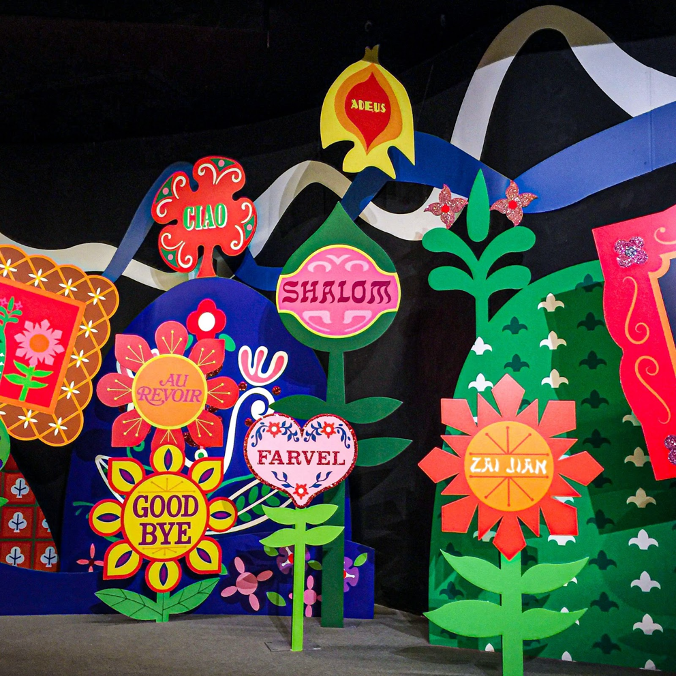
ACCORDING to the Oxford Dictionary, “translation” is the process of translating words or text from one language to another. In today’s poetry space, many people are creating verses in their own unique languages while also imbuing these poems with meaning.
Translating poetry can be a most challenging task. Poetry frequently relies on wordplay, cultural references, and stylistic devices that can be difficult to capture in another language, making it hard to retain the poet’s original meaning and intent while ensuring that the poem is accessible and readable in the target language.
Additionally, there are technical difficulties with form and structure. Poems in different languages may have various rhyme schemes, meters, and poetic devices, making it challenging to reproduce the same effect in translation.
Despite the challenges involved, however, translating poetry can be an enriching experience, allowing readers to gain access to works they might not have been able to understand or appreciate otherwise. It can also help to bridge cultural divides and bring people from all over the world together.
In this regard, translators must make creative decisions about how to adapt the poem’s form and structure to fit the target language without diluting its meaning or impact. They must strike a delicate balance between preserving the poem’s original language and style and making it understandable to readers who are unfamiliar with the cultural and historical context in which it was written.
However, in some cases, it may not be possible to translate a poem without losing its unique cultural and linguistic nuances. I like to call this the “je ne sais quoi” of the poem.
Yusuf Alabi Balogun, a performance poet who goes by the stage name “Aremo Gemini” and has a strong interest in Yoruba arts and culture, believes that the subtleties of some languages cannot be fully captured in translation.
“In a world saturated with putting out indigenous pieces with English subtitles, I don’t believe in it. And I don’t tow that line either. Most of my works are not subtitled. If you don’t understand my language, learn it or just flow with it. So much more gets lost in translation than words can capture.”
Gemini shared one of his most popular works, “Iya Mi Osoronga,” and then discussed how many people want a direct translation of the title “Iya Mi Osoronga,” but it will never happen. “Many have interpreted it as ‘witches,’ ‘occult,’ or ‘the divine mother,’ but that doesn’t even come close to the sharpness and heaviness of the language,” he said. He also asked, ‘”Iya Mi” implies “my mother.” ‘Osoronga’ encompasses so many adjectives. “heavy, deft, powerful, crafty, kinky, clever, huge, magnanimous, tall, sorcery, consuming.” Osoronga will always be Osoronga.’
https://audiomack.com/yusuf-balogun-gemini/song/iya-mi-osoronga
“The piece’s opening line is “Laworijiwo,” and there are a lot of people who want a direct translation of the word,” he continued.
“Many assumed it would end up in the canon of “honour or incantation.” “But, as in Nollywood, when translators and transcribers generalise certain statements as ‘incantation or homage,’ the breakdown and nuances of those words are far more powerful and rooted in Yoruba historical lineage than that,” he explained. Finishing with a “Do you really want to finalise ‘Laworiwojiwo’ as ‘homage’ when the mere chanting of it without the necessary foreground rites bends one’s mouth? Lmfao”
Gemini also shared another of his works, OBNRIN ILÉ WON (The Women Of Their Homes), in which he explains in detail how most of the words lost their power during translation.
OBÌNRIN ILÉ WỌN
(The Women Of Their Homes)
1. Awo Egúngún ni obìnrin le ṣe,
— A woman can be initiated into the cult of Egungun,
2. awo Gẹlẹdẹ ni obìnrin le mọ,
a woman can be initiated into the cult of Gelede,
3. bi obìnrin ba fi ojú kan Oro, Oro aa gbé.
but a woman dies the day she comes in contact with Oro.
4. Awọn obìnrin ilé wọn ni labalábá ti n mú orí wọ igbó,
The women of their homes are stray butterflies,
5. àwọn obìnrin ile wọn ni ìrẹẹ ti n ba ògiri sọrọ,
the women of their homes are opossums, left to the wall,
6. ijoko ọlọgbọn ni ijoko ilé wọn, àà ki ba abo níbẹ —
their women are to remain absent, from intellectual meetings,
7. iṣẹda obìnrin ilé wọn
ni kò gúnyán mẹlẹmẹlẹ,
she is destined to pound yam meticulously,
8. ayanmọ rẹ ni ki o ro àmàlà lafun bi o d’ọsan gangan,
she is fated to make amala by noon,
9. bi o ba tun di alẹ́, ko na fẹlẹ fẹlẹ fún are ẹrẹbẹ,
and by night, she is ready for sex,
10. obìnrin ile wọn ni àpáàdì to da ojú d’ogiri, t’ogiri ni n ṣe o jare.
their women are potsherds, left to the wall.
11. Aaka o gbe ọdan, igbó ni n gbe,
Forests are for outcasts,
12. Obìnrin ilé wọn ko gbe ààfin, ahere lo n kú sí.
their women are to die in huts and not a palace.
13. Agunbajẹ n t’olodo,
The pounder pounds to destruction,
14. aloogbo, alopa bi sálúbàtà ni obìnrin ile wọn,
like footwears, their women are left to merciless use,
15. obìnrin ile wọn ni Àbíkú –
their women are “born to die”,
16. ìyá wọn ni Ab’ọkọkú, awọn gan ni Kaṣhimáwò
their mothers are to die with their husbands and the offsprings, time will tell…
*****
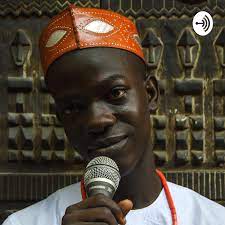
Brief interview with Aremo Gemini
What does OBÌNRIN ILÉ WỌN (The Women Of Their Homes) signify?
“Obinrin Ile Won is a poem that centres around the consistent trampling of women’s rights, using old-school ties and misogynistic laws as yardsticks.”
Can you please provide a detailed breakdown of the poem before and after translation?
“In context, Line 1 to Line 3, which is actually an actual Yoruba proverb, could be translated as “the Egungun cult can be joined by a woman, the Gelede cult can be known by a woman, but if a woman maintains eye contact with Oro, then Oro will carry her.”
The weight of the proverb itself is far greater than the English inverse implies. Understanding the surrounding concepts of “Egungun Gelede Oro” will be necessary for an English reader or translator before fleshing out the meaning. In so many ways, English undermines the weight of that particular proverb.
Oro procession is one of the Yoruba ritual processions that occur at specific times, and whenever Oro is on the prowl, there is always someone on the receiving end waiting to be captured as “prey.” Even if there is always a forewarning (coupled with the media in this day and age) before Oro goes on the hunt, there is always an unavoidable victim, someway, somehow.
Unlike Egungun/Gelede, which can be considered ancestors dressed in masks and covered regalia(s), it is now accepted that women can participate in their procession and rituals. However, it is stated that a woman encountering Oro is extremely dangerous. In fact, many people believe that a woman’s encounter with Oro is more dangerous than a man’s. Of course, there are real-life examples and practical samples of places like Ikorodu, Surulere, and Ijora (even in sophisticated Lagos) where stuff like this happens occasionally.
This is a proverb that draws nuances from Yoruba elements, and unless you are Yoruba at heart and mind, any contextual translation such as “encountering the masquerade will set a woman free, but encountering Oro will doom her” will result in total confusion. In fact, Egungun and Gelede are not the same in so many ways that they deserve to be separated to highlight who they are.
If English struggles so much with the potency of the line, what happens when that proverb is attempted to be translated into Swahili, Dutch, or other languages? When you translate a piece from one language to another, you are, in my opinion, creating a new piece. And, no matter how similar the meanings are, they can never be on the same wavelength. There will always be something lost in translation.”
*****
In conclusion, poetry is a beautiful and complex form of literature that can be appreciated and enjoyed in various ways. Yes, poets should consider translating their works to make them accessible to a broader audience. But it is important to note that, while understanding the meaning behind a poem can enhance the experience, it is not necessary to fully appreciate the beauty of the language and imagery used.
Finally, as listeners, we should allow ourselves to enjoy the beauty of poetry without always searching for a deeper meaning. Even if I don’t understand all of the words or meanings, I can attest to loving and appreciating Aremo Gemini’s poetry. That is the beauty of art—enjoying it at its finest.

