
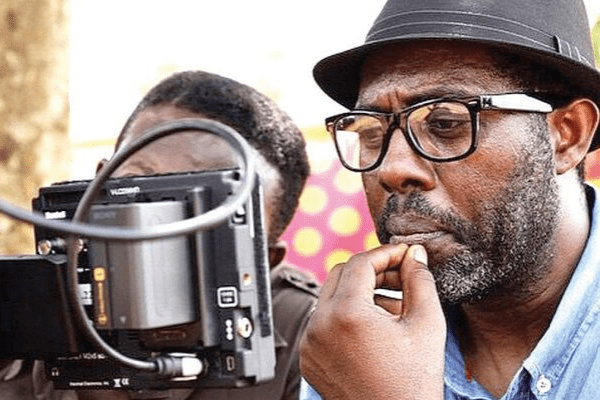

(Being text of a presentation at the 60th birthday “conversations around the work and career” of the storyteller and cultural content producer held Tuesday, June 6 at the Freedom Park, Lagos and virtually)
‘Femi Odugbemi’s body of works is an embodiment of what he stands for as a human being, a lover of people, and one who respects those that he encounters irrespective of their age and status. His willingness to help younger filmmakers and talents develop is an indication of his enthusiasm to see others succeed. He is always willing to offer both creative and human assistance when events demand such application. A complete gentleman and visioner par excellence, whose craft surpasses even that of his contemporaries’
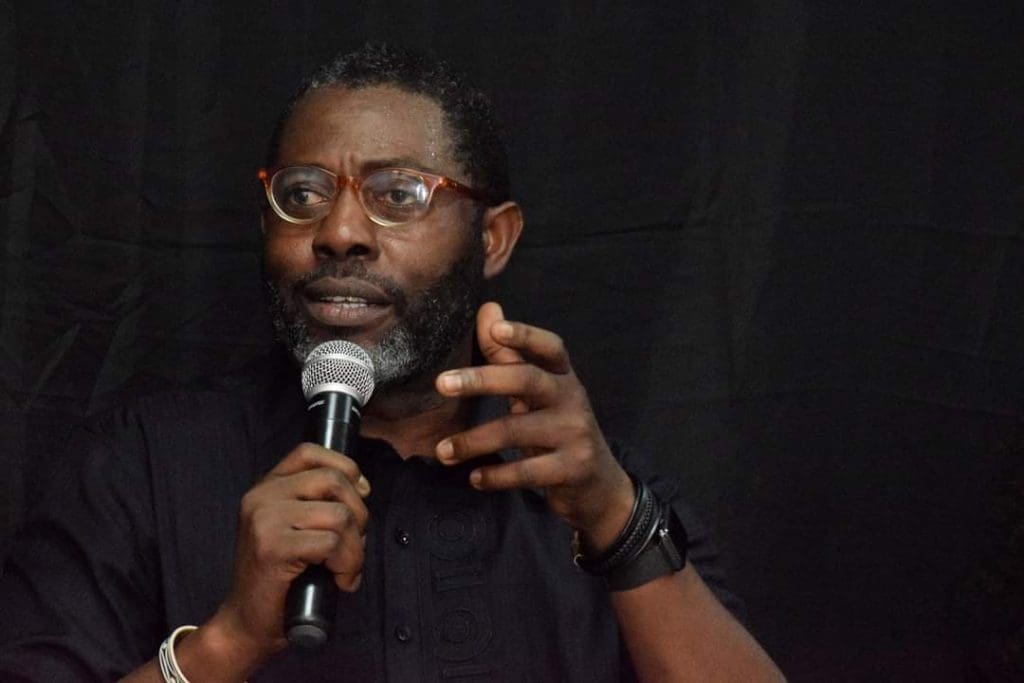
A LOT of people have talked eloquently about Femi Odugbemi’s many and vast accomplishments as a filmmaker, a photographer, a gentleman, a linchpin, an elder, a friend, an intellectual in his right, an entrepreneur, a visioner, and much more. The question for me is: What marks Femi Odugbemi out as an important filmmaker or cultural producer? This question can be interpreted by Odugbemi’s admirers differently. The interpretation will depend on what impression each person has of Odugbemi as a person, his works, and heavy lifting as a festival director, curator, juror, storyteller, and documentary filmmaker, among other things. Perhaps, the conclusion many will draw is that he embodies everything and it is always delightful to see Femi Odugbemi divide his time to carry out the numerous tasks he has on his plate – even with equal creative energies and mental resourcefulness.
From his many physical and virtual appearances at local and global events, to his frequent posts on Facebook, Instagram, and LinkedIn platforms, and to his engaging interventions on the Whatsapp groups, it is exciting to realise how active he is in dispensing and distilling information on the field of cinema (and allied professions), in very exceptional and detailed manner.
These painstakingly accomplished tasks, efforts and duties inspire younger people to take their own art seriously, in order to break boundaries and take territories, as they strive to show commitment to their own art, much like the way Odugbemi has inspired and mentored.
For me, Odugbemi’s work as a documentary filmmaker speaks more about his forte as a creative producer, and his humanitarian ideals. His ingenuity as constantly displayed in this field spreads across a body of works that have changed the culture of documentary filmmaking in Nigeria; setting template for what it means to create and shape discourses in the country, on the continent, and the world.
From Makoko: A Future Afloat, to Bariga Boy: Segun Adefila and the Crown Troupe, Oriki, D.O Fagunwa, Ibadan: The Cradle of Nigerian Literati among other important films, Odugbemi has contributed meaningfully to the social history of the art of documentary film in Nigeria, while venturing into territories that were hardly taken seriously by others. For instance, a work like D.O Fagunwa is not just a chronicle of the growth and reputation of the late indigenous (Yoruba) storyteller. Among other things, D.O Fagunwa, as a documentary is a cinematic narrative that captures the importance of a literary tradition that not only popularised the Nigerian literary landscape during the early rise of post-colonial Nigerian literature, but reveals how important it is for the present generation of students to return to the classics that were read in high schools and universities in the early 60s, into the 1970s and 80s. It should not surprise us that many of the teachers of Yoruba literatures in Nigerian high schools today hardly teach Yoruba literature. Perhaps, they no longer exist. Perhaps, they may have even been scrapped from the syllabi, which indeed troubles our decolonial efforts even in the 21st century. By making a documentary film on life and works of D.O Fagunwa, Odugbemi also reminds us of how important it is for us as Africans to safeguard cultural heritage even in an age of globalism and globalisation.
Makoko: A Future Afloat is Odugbemi’s most affective and socio-psychological film which enables him display the extent to which his humanity as a filmmaker can go. Odugbemi is defined by this production as a human rights activist who condemns the neglect of people thar suffer human rights abuses or social, psychological or physical disabilities. Until the making of Makoko, there seemed a paucity of African film productions that illustrated the ways in which needy victims seek help in their ways or from others. The characters and individual subjects are often depicted as the margins, and viewed as people with disabilities in African cinematic narratives and therefore, not given the desired attention in the numerous discourses around human rights.
Indeed a good number of advocates “have emphasised how the process of representing human rights exploitation in order to attain reparation can be a tricky enterprise sometimes ending in misunderstanding and unintended consequences” (See Sheila Petty and Babatunde Onikoyi forthcoming essay). Some have also argued that there is indeed a significant number of African filmmakers who use the medium of film to deal with and highlight issues of sociocultural injustices. This will include Femi Odugbemi, who rightly fits into this category.
Makoko: A Future Afloat, is not a documentary that depicts or illustrates the inadequacies and deplorable state of marginalised people and their location; it focuses in an engaging way on the strength, survival, and the willingness to strive to create a world for themselves in the face of neglect. While other films before the making of Makoko, whether features or documentaries, did not construct or offer ways to reflect on issues toward emancipation, redress and a change of narratives, Odugbemi’s cinematic intentions were significantly based on reflecting on those issues. Therefore, his documentary challenges such frames and depictions of the discursive representation of disability and inadequacy, and thus, presenting these crucial issues as critical sites for debate in very different ways. Given this context, in Makoko, Odugbemi was not interested in simply exploring disability and human rights tragedies; he shifts further towards the depictions of their own accomplishments, successes and strength, and showing why the people of Makoko chose not to fret over their condition, but are determined to eek out living for themselves, create viable economy, fashion out a sustainable governance strategy, and design an educational system for themselves.
What was Odugbemi’s social and creative responsibility to the narrative of these people in his documentary and within such a form? He was imaginatively and critically asking if we can go beyond the narrative of suffering victims to narratives about the subjects who equally deserve, and also have a right to be called human beings within the social scheme of existences.
In this film, he surreptitiously raises another important question: How can equality and justice be attained as a goal through a socially engaging film-form such as the social-documentary a narrative form that can affect universal audiences, but a form that has also served to uphold a society’s every day episteme?
I have briefly offered a part of what it means to understand who Femi Odugbemi is. I believe he is much more than a “biographer, historian and human rights activist”, in relation to his cinema. The films contribute “to constructing and giving new subtexts to documentary filmmaking in Africa and its aesthetics, and as Frank Ukadike (of blessed memory) says, a “new global attitude towards art and freedom of expression”. The films speak in the reverse and claim again the voice to offer one’s original narrative in an active voice that seeks “change” while showing a commitment that is yet aesthetic[H1] .
Femi Odugbemi’s body of works is an embodiment of what he stands for as a human being, a lover of people, and one who respects those that he encounters irrespective of their age and status. His willingness to help younger filmmakers and talents develop is an indication of his enthusiasm to see others succeed. He is always willing to offer both creative and human assistance when events demand such application. A complete gentleman and visioner par excellence, whose craft surpasses even that of his contemporaries.
Although, it is said that dance should stop when the ovation is loudest, my prayer for you is that your song will go as long as there is a voice to sing. Live long and celebrate your life as you live it to the fullest
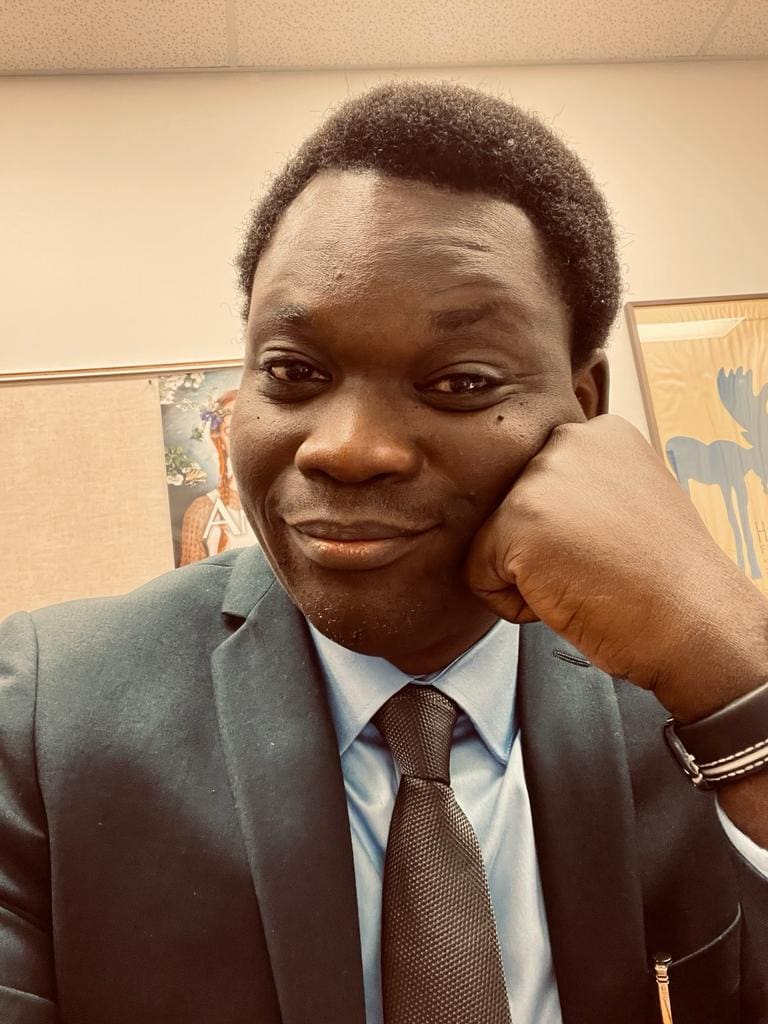
*A researcher and lecturer in the Film Department at the University of Regina in Canada where he is also a member of the board of the Humanities Research Institute, Dr Onikoyi is involved in research programs in “Transnational African Screen Media Practices: Safeguarding Cultural Heritage” in Canada. His essays and articles on African cinema have appeared in prestigious journals and book volumes. He is a member of the Editorial Board of African Studies Review -the flagship journal of African Studies. He is co-editor of The Cinema of Tunde Kelani: Aesthetics, Theatricalities and Visual Performance (Cambridge Scholars, 2021). He is currently co-editing two other books: “The City of Lagos in New Nollywood: Poetics, Culture and Metropolitan Aesthetics” with Olaoluwa Senayan, and a book on the cinema of Bolanle Austen-Peters.

