


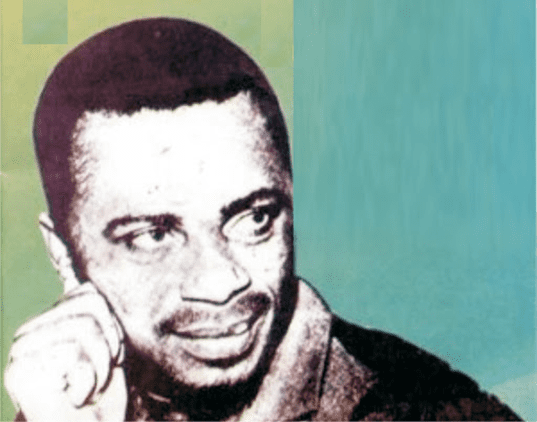
THE legendary status of Rex Jim Lawson continues to reign. He was a virtuoso who stood out like a colossus; and played highlife so creatively well that his music has become a legacy and source of inspiration to all.
The late Roy Chicago introduced elements of African music to highlife around 1960, using the talking drum as an essential element for establishing indigenous rhythms; and bringing Yoruba folkloric melodies into prominence.
But this phenomenon was as short-lived as his popularity because it was Lawson that institutionalised this idiom in later years. Lawson derived his own rhythmic concepts and melodies from the culture of the Rivers people.
He succeeded because he had a voice that was able to capture all the emotions of the songs. In addition, his band whose frontline consisted of saxophone, trumpet and trombone with a guitar-bass-drum format at the rhythm section level, accentuated by calves and conga was a showpiece and reference point in configuration and choice of musicians. The band came out clearly and distinctively mainly because Lawson had ear for good music.
I heard Lawson’s band often times at Osuala’s Central Hotel, Yaba where he was resident; but I saw him in his elements, in fact, at his best in 1965, during a highlife competition organised by veteran musician and impresario Steve Rhodes at Federal Palace Hotel, Victoria Island, Lagos. Later that year, he performed on the same bill with Fela Ransome-Kuti and his Koda Lobitos at the yearly Havanna Dance organised at the time by the University of Ibadan. His greatest asset was the ability to get his band perfectly in tune at all times and at short notice — an artistic capability which most bands are yet to come to terms with today.
From beginning, Lawson did not dabble in the imitative music that derived its melodies from Ghana, as was the practice in those days when most Nigerian musicians were totally influenced by Ghanaian highlife. Lawson’s style was original and culturally significant, establishing the fact that Nigerians could evolve their own individual highlife sounds.
As a trumpeter, he had a good tone which manifested itself in contributions to ensemble sound for stating themes and melodic lines. And in addition to singing, he shared thematic solos with an alto saxophone player whose tonal conception in the Etim Udo-Rex Ofosu Martey tradition, was also pleasant as he improvised within the confines of the theme; without pretending to be progressive or adventurous in his approach.
The star of the band, ironically, was Tony Odili, the conga player whose solo stints created quite a stir by attracting dancers to the floor and introducing dance steps which were stylish and innovative. Instead of slapping the conga, he employed the violent approach of hitting it with sticks, bringing the rhythm of the music down to grassroots level, and creating patterns which called out, occasionally, for the group-vocal response of the entire band. All these traits helped to lend creativity and authenticity to Lawson’s highlife music which immediately pushed audiences into dance party ecstasy.
LAWSON served with almost all the top highlife bands of the 50s — Bobby Benson, Victor Olaiya (for whom he composed a string of hits), Roy Chicago, Baby Face Paul, Chris Ajilo, Tunde Amuwo among others — and was exposed to a variety of styles, approaches and backgrounds. But no one influenced him to the point of imitation; and by 1960 when he formed the Nigerphone Studio Orchestra and later Mayors Band of Nigeria, he created a sound identity that bore him out as an innovator.
Lawson recorded singles on Nigerphone and Philips labels. He did not live to enjoy the advent of the seventies which brought with it multi-track recording devices and Long Playing recording facilities – which the likes of Celestine Ukwu and The Ramblers Dance Band took full advantage of.
He however has two albums in the market for posterity. One of them, Highlife King in London, was recorded in the late 60s and waxed in Germany for Philips Records. The other album titled Rex Lawson’s Victories contains reissues of some of his best. These albums, which have since been transferred to compact discs for enhanced clarity and audibility include such songs as Bere Bote, Sawale, Ibinabo, Osuala Onene, Angelina, Love Adure, Jolly Papa Isoboye, Kasung Kasung among many others.
Over the years, these and other evergreen hits have been performed by various musicians — both young and old. In particular, they have been created by the young generation who have given their treatments modern interpretations that attest to Lawson’s legendary status.
EMMANUEL Tetteh Mensah may have introduced Ghanaian highlife to Nigeria to heighten awareness for the music; but Lawson later brought Nigerian highlife to the same musical parallel.
Nigerian highlife was initially considered by critics as inferior to its Ghanaian counterpart because it lacked harmony in terms of arrangement even though full of vigorous rhythms as exemplified by the efforts of Eddy Okonta. Lawson changed this perception with the unchained harmonies that characterised all his releases in the sixties. Not only that. He created melodies that were tuneful, original and African.
To sum it all up, it cannot be too far from the truth to say that E-T. Mensah dominated the West African highlife scene of the 50s, while Rex Jim Lawson ruled the decade of the 60s and beyond.
BORN in his native town of Kalabari in Rivers State of Nigeria, he started by playing trumpet for his school. For his age, he sounded quite promising and talented. He showed some promise – enough to indicate that he could make music a profession if he persisted.
Determined to advance his career further, he decided to approach Lord Edison, leader at the time of the Starlite Melody Orchestra in Port Harcourt.
Nervous and unsure of himself he said, (as he summed up courage to meet him) “Sir, I’d like to be one of your band boys, sir. I can blow trumpet small. I play am for my school.” The band leader immediately signed him on; and put him under the supervision and tutelage of the legendary trumpeter, Sammy Obbot who was last heard in the 60s with the Broadway Dance Band of Ghana as leader – even as it eventually transformed to Uhuru Professionsl Dance Band.
The rest, as they say, is history.
- First published January 18, 2006 on occasion of the 35 years after Lawson’s death
(Excerpted from the book The Great Highlife Party, by Benson Idonije; Festac Books; 2014 to mark Idonije’s 80th birthday anniversary celebration)


4 comments
… [Trackback]
[…] Read More to that Topic: naijatimes.ng/the-great-highlife-series-rex-jim-lawson-50-years-after/ […]
… [Trackback]
[…] Find More here to that Topic: naijatimes.ng/the-great-highlife-series-rex-jim-lawson-50-years-after/ […]
… [Trackback]
[…] Read More on on that Topic: naijatimes.ng/the-great-highlife-series-rex-jim-lawson-50-years-after/ […]
… [Trackback]
[…] Information to that Topic: naijatimes.ng/the-great-highlife-series-rex-jim-lawson-50-years-after/ […]
Comments are closed.