
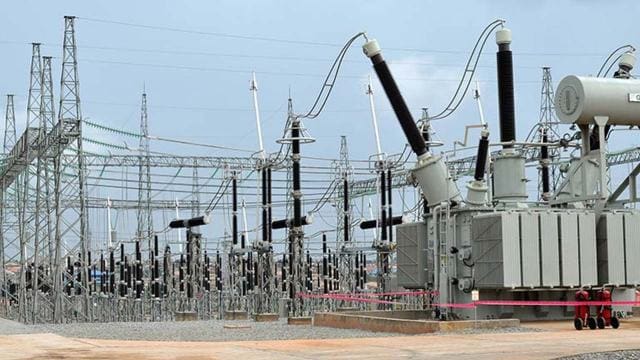

THE federal government has initiated the process of unbundling 11 electrical distribution businesses in order to increase efficiency.
This was revealed by the Minister of Power, Adebayo Adelabu, during his address before the Senate Committee on Power, chaired by Senator Eyinnaya Abaribe, yesterday in Abuja.
Adelabu declared that the enterprises’ privatisation would not be reversed, but that the Discos would be divided into more efficient organizations along state lines in order to carry out their responsibilities.
He also revealed that over 100 projects of the Transmission Company of Nigeria have not been completed since 2001, a space of about 23 years.
Adelabu said, “We are unbundling the Discos along state lines. Some of the Discos are too big for efficiency. They are too big for effectiveness. Ibadan Disco covers seven states. It is practically impossible for them to be efficient.
“So we are rearranging and restructuring the Discos along state lines so that each state government will know the responsible Disco for their states. Also, the federal and state governments should start exercising their rights in the operation and management of the Discos because we still own 40 per cent in the firms.
“But we have left it for the private sector operators for too long and they have messed it up. So the government must come back to take over its own right in the Discos. We are also planning to franchise the unserved communities under the Discos.”
This came as the Federal Government also ordered the sale of Discos that had been taken over by banks and the Assets Management Corporation from their original investors/owners.
Currently, four discos are managed by banks and Amcon.
The United Bank of Africa (UBA) handles the Abuja Electricity Distribution Company, while Fidelity Bank oversees the Benin Electricity Distribution Company, Kaduna Electricity Distribution Company, and Kano Electricity Distribution Company.
AMCON manages the Ibadan Electricity Distribution Company.
The four discos are now under new management due to their failure to repay their loans to banking institutions.
The government said that people who bought the Discos when they were officially privatized in November 2013 had the necessary skills and financial resources to run the businesses.
This happened as the Senate Committee on Power criticized the Discos for being so inefficient since taking over the privatized assets more than ten years ago, calling for an overhaul of the power companies.
The minister remarked, “We will begin to see regulations about franchising. The fact that you are an Eko Disco does not exclude you from having smaller Discos that are willing to invest in underserved neighbourhoods. So we’re looking into franchising.”
Adelabu also revealed that the Oyo State Government has written to the Federal Government, expressing its desire to exercise its rights in Ibadan Disco.
He stated that the Nigerian Electricity Regulatory Commission has been made aware that it must fine Discos that fail to deliver, as some of the power businesses’ licences may be revoked for non-performance.
“We are transforming the Discos and very soon you’ll see that a lot of tough decisions will be taken against these Discos because they are the last mile in the sector. If they don’t perform then the entire sector is not performing.
“So we have put pressure on NERC to make sure that it raises the bar on the activities of the Discos. If it has to withdraw licences for non-performance, why not? If it has to change the boards and management, why not?
“And all the Discos that are still under AMCON (Asset Management Corporation of Nigeria) and some lenders (banks), within the next three months they must be sold to a technical power operator with a good reputation in utility management.
“We can no longer afford AMCON to run our Discos. We can no longer afford the banks to run our Discos. This is a technical industry and it must be run by technical experts,” the power minister stated.
Also commenting on the non-performance of Discos, a member of the committee, Senator Danjuma Goje said, “The Discos have not added anything significant to the power sector, but are just going about collecting money.
“The Discos are complete failures and should be overhauled. They have failed to live up to expectations and we have so many complaints about their poor performances.”
The Senate committee also authorized an investigative hearing on the electricity pricing hike, which will be place on April 29, 2024, at the Senate.
The power minister informed his guests that people who bought the Discos when they were privatized lacked the necessary competence and financial resources.
Adelabu said, “Our problem started from the privatization era. Not that the privatization has a problem in itself, but its implementation and execution have robbed the process of its laudable objectives.
“We believe that people who bought the power companies do not have the required expertise to run the utility firms. Secondly, they were not buoyant enough in terms of financial buoyancy to pay for the power plants.
“All of them used bank loans to pay for the assets. And we all know that the power business is a long-term business. It is not something you recoup your capital and make profit in a short time. So they were all under pressure to repay the bank loans that they used to acquire the power companies.
“This is why today a number of them have been taken over by their lenders, either AMCON or the banks, both local and international banks. They also promised to invest and enhance the distribution network, but they did not do this.”
The minister stated that the investors had promised to reduce the losses in the Discos, but stressed that up till now the losses had remained at about 40 per cent across the power value chain.
“So the Discos are not investing as expected,” Adelabu stated.
The minister told the lawmakers that over 100 power transmission projects have not been completed since 2001.
“Since 2001 till date we have over 100 uncompleted projects of the Transmission Company of Nigeria. So when we say the government has spent so much in the sector, it is true. But all the spending has not translated to a good impact on power users.
“This is because a majority of these projects have not been completed, though some of them are 80 or 90 per cent completed. We have over 65 projects on power substations that are still ongoing since 2001, which is 23 years ago.
“We have about 62 lines projects across the country that were started and have not been completed. And these are being affected by exchange rate calculations, inflation, variations, etc. One thing about power projects is that if they are not completed 100 per cent, you cannot energize them,” Adelabu stated.
He said all the investments are just there lying in waste, “but we are saying that this year we must ensure that a significant number of these projects are completed so that Nigerians can enjoy the investments in the transmission company.”
On the metering gap in the power sector, the minister stated that a company received $200 million in 2003 to provide three million metres but failed to do so.
“In 2003, the metering gap was less than four million meters and the Federal Government gave out $200m to a particular company to acquire three million smart meters for the industry. It was a revolving loan.
“But it is sad to let you know that this is 21 years after, no single meter was acquired by this company and the $200m which was N32bn at the time, nothing was got from the money until Mr President just gave us the approval to terminate this loan.
“He also asked us to implement the metering of the Nigerian Army formations to the tune of N12bn. You can imagine if we had acquire three million meters 21 years ago. Today the metering gap that we have is over eight million out of over 12 million customers of the power sector,” the minister stated.
Adelabu, however, noted that the federal government was working hard to close the metering gap.
“Mr President has come to our aid on this by forming a Presidential Metering Council, which I’m the Chairman, and he has given us a mandate that a minimum of two million meters should acquired and distributed to Nigerians every year.
“This is going to continue till the next four to five years, so that the current eight million metering gap that we have will be closed over the next four to five years.
“The funding for this project is being sourced. We have been given a seed capital of N75bn and the Nigeria Sovereign Investment Authority is coming to our aid in terms of capital for this,” Aselabu stated.
The minister also indicated that the Federal Government’s goal is to generate 6,000MW of power by the end of this year, and that this has been submitted to the President.
He requested that there should be payment of outstanding bills to gas companies and electricity generation businesses.
Adding that the government is now in talks with two investors about investing in the building of 3,000 MW of solar-power projects across multiple states to support the national grid.
The minister noted that Nigeria now has an installed power generation capacity of approximately 14,000 megawatts.
He said, “Today we have a total of 13,250MW installed capacity in all the generating units, including hydro plants and thermal plants. If we add the 700MW coming from the recently Zungeru plant we will have close to 14,000MW installed capacity.
“But it is sad to let you know that the highest we have ever generated in this sector is 5,800MW out of an installed capacity of over 13,000MW, which is less than 50 per cent. The infrastructures are there lying fallow without adequate maintenance and the turbines are getting rusty.

