
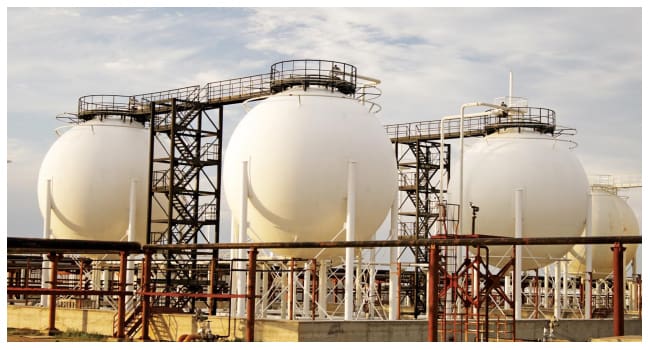

THE Federal Government’s technical commissioning of the 300MMscfd capacity Kwale Gas Gathering and Injection plant has been stalled due to the indefinite nationwide strike led by the leadership of the Organised Labour.
The Nigerian Content Development Monitoring Board (NCDMB) said in a statement that the facility’s formal commissioning ceremony, which was originally scheduled to be performed by the Minister of State for Petroleum Resources (Gas), Ekperikpe Ekpo, on June 6, 2024, has been postponed due to the start of the nationwide strike by the labour union.
This delay is a consequence of the nationwide industrial action launched by the labour union.
The strike, which commenced today, as confirmed after a four-hour meeting with the leadership of the National Assembly in Abuja yesterday evening remains non-negotiable.
The Kwale Gas Gathering (KGG) and injection facility, situated in the Niger Delta, stands as a collaborative effort between Xenergi Limited, NCDMB Capacity Development Intervention Company (NCDIC), and the NNPC Gas Infrastructure Company (NGIC)—a subsidiary of the Nigerian National Petroleum Company (NNPC) Limited.
The project aims to address stranded gas resources in Nigeria’s OML 56 oil province and facilitate independent operators in monetizing natural gas via the KGG’s infrastructure.
The KGG hub, which is connected to the NGIC-owned and operated 48-inch OB-3 gas trunk line, is now fully operational with gas injection capacity of approximately 50 MMscfd, comprising 20 MMscfd from the Nedogas Plant, located 3km away in Energia’s Ebendo field, and another 30 MMscfd from Chorus Energy Limited’s Matsogo Field. Injected gas volumes are gradually and continuously increasing.
The project is an important milestone in Nigeria’s decade-long gas programme, as well as a notable accomplishment in the attempt to supply gas to the OB3 trunk line and monetize natural gas resources from the OML 56 producer cluster.
With the successful injection of gas into the OB3 from the Energia/Oando JV and the Chorus-operated Ebendo and Matsogo fields, the KGG Facility will receive additional gas from nearby fields operated by First Hydrocarbon Nigeria (FHN), Pillar Oil, and Midwestern Oil & Gas, all aimed at positioning KGG as a fully-fledged gas-gathering facility and hub with a single point injection of up to 300 MMscfd of gas into the OB3 via the KGG tie-in.
In the second phase, the KGG facility’s capacity will be increased to 600 million cubic feet per day.
In addition to fulfilling the facility’s gas delivery requirements, the KGG will serve the Delta State Economic Zone (DSEZ) through an integrated supply node within the manifold at the hub.
Speaking about the initiative, NCDMB Executive Secretary Felix Ogbe expressed optimism that the success story of NEDOGAS in Kwale, Delta State, might be duplicated in other oil- and gas-producing communities to reduce gas flaring.
He expressed the board’s willingness to continue engaging with the company. “Their concept should be expanded to other sections of the country where gas flaring persists. They demonstrated that with the modular technology, we can swiftly eliminate flaring from our operations in Nigeria.”
The Managing Director of NDCL, Debo Fagbami, also noted that with the completion of the first phase of the KGG plant, the proof-of-concept to easily monetise gas has now been demonstrated, taking away the pain of seeing an invaluable resource wasted.
Rather than simply addressing gas flaring, Ogbe stated that the initiative presents prospects to harness the potential of flare sites from these oilfields, which he believes would eventually transform a “wasting” resource into an economic asset which will be used to generate cleaner energy.
Nigeria has the world’s ninth-largest concentration of confirmed natural gas reserves, at an estimated 180 billion cubic feet.
However, the country continues to flare substantial amounts of associated gas, which has pushed Nigerians’ health and environmental well-being to the back burner for more than 60 years.
According to the federal government, natural gas remains a reasonably clean fossil fuel and represents a possible transition to renewable energy, which is critical in driving the growth of developing countries such as Nigeria.
Ogbe stated that the KGG plant will generate hundreds of direct and indirect jobs for indigenes in the host and surrounding towns.
The labour unions have raised concerns about the current minimum wage, which they argue is insufficient for the well-being of the average Nigerian worker.
They emphasize the importance of updating the Minimum Wage Act of 2019 to align with contemporary economic demands.

