
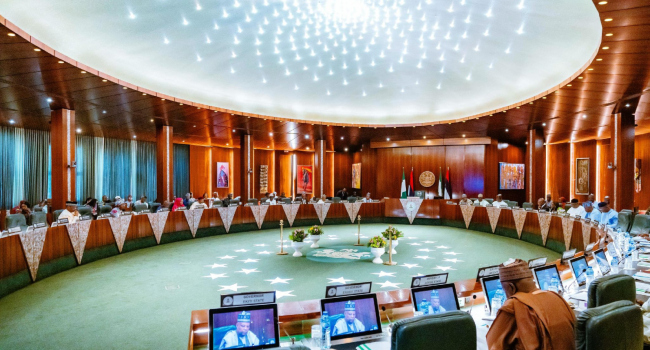

THE National Economic Council (NEC) in a bid to revamp Nigeria’s economy and address the root causes of insecurity, has approved the creation of a Cotton, Textile, and Garment Development Board (CTGDB), along with new strategies for agribusiness expansion and livestock sector transformation.
The initiatives are expected to generate up to $90 billion in economic value by 2035.
According to Senior Special Assistant to the President on Media & Communications (Office of the Vice President), Stanley Nkwocha, the CTGDB will operate under the Presidency and will be financed through the Textile Import Levy collected by the Nigeria Customs Service (NCS).
The NEC meeting, chaired by Vice President Kashim Shettima and attended by the governors of all 36 states, also approved the establishment of a national office for the Green Imperative Project (GIP) in Abuja, alongside regional offices across Nigeria’s six geopolitical zones. These offices are aimed at addressing the crises linked to the current practices in animal husbandry.
Board membership will include representatives from each of the six geopolitical zones, the Minister of Agriculture and Food Security, the Minister of Budget and Economic Planning, and the Minister of Industry, Trade and Investment.
In addition, the council endorsed further steps to modernise livestock management through the establishment of the Green Imperative Project offices nationwide, aiming to address pastoral conflicts and inefficiencies in the sector.
Vice President Shettima noted that the CTGDB aligns with President Bola Ahmed Tinubu’s economic revival plans, aiming to breathe new life into an industry that once sustained the Nigerian economy and provided widespread employment.
“Nigeria is a country where cotton can thrive in 34 states, yet our output remains drastically low at just 13,000 metric tons,” Shettima said.
“Meanwhile, we spend hundreds of millions of dollars importing textiles. This is more than an economic shortfall; it is a call to action. Our aim is not merely regulation but revival—an opportunity to reindustrialise, empower communities, and restore pride in homegrown production.”
Another key point from the NEC meeting was the presentation by the Federal Ministry of Livestock Development (FMLD) on the “Nigeria Livestock Growth Acceleration Strategy.”
This plan builds on the National Livestock Transformation Plan (NLTP) (2018–2028) and focuses on modernising the livestock sector, promoting cattle ranching, and fostering peace-building efforts.

