

THE United States (US) government has stated that corruption remains a significant obstacle to trade and investment in Nigeria.
In its 2025 National Trade Estimate Report on Foreign Trade Barriers, the Office of the United States Trade Representative (USTR) highlighted concerns over corruption and the lack of transparency in Nigeria’s tender processes, issues that heavily impact U.S. businesses.
“U.S. companies encounter operational difficulties due to inappropriate demands for ‘facilitative’ payments from officials,” the report said.
Efforts to curb corruption have been undermined by internal conflicts among ministries and political interference.
Additionally, the report questioned the Nigerian judiciary’s ability to secure convictions and impose appropriate sentences in corruption-related cases.
The USTR also criticized persistent delays in approving import permits for American agricultural products, describing them as a longstanding barrier that restricts market access.
Despite repeated efforts since 2019 to secure approvals for various food and agricultural imports, Nigeria has been slow to respond.
The report further pointed out that Nigeria’s limited capacity to review certificates, inspect goods, and conduct necessary testing leads to prolonged clearance times, often pushing traders toward informal routes. Inconsistencies in applying sanitary and phytosanitary regulations have also caused confusion among exporters.
“Nigeria’s inconsistent enforcement of technical regulations and sanitary and phytosanitary measures undermines compliance efforts,” the USTR stated.
However, Nigeria’s complex and restrictive import regime was faulted. Although the average Most-Favoured Nation tariff rate stood at 12% in 2023, agricultural products faced a higher rate of 15.9%, and non-agricultural goods 11.4%. Additional fees pushed effective import costs significantly higher.
“Nigeria applies combined duties and associated import charges exceeding 50% on 79 tariff lines, with 17 of them surpassing the 70% cap established by ECOWAS,” the report noted.
The report also criticised Nigeria’s ongoing import ban on 25 product categories, including poultry, beef, used vehicles over 12 years old, and certain consumer goods, labeling them as trade barriers.
In addition, systemic issues within Nigeria’s customs operations — including corruption, reliance on manual processing, and inconsistent application of trade regulations — continue to hamper trade activities.
“Importers face unpredictable customs practices, lengthy processing times, and corruption,” the USTR said.
Although Nigeria approved a $3.1 billion customs modernization project in 2020, aimed at automating systems, the initiative has faced delays and legal challenges.
Regarding public procurement, the report said U.S. firms struggle to secure government contracts due to opacity in the procurement process and frequent payment issues. Agencies often bypass guidelines requiring a “Certificate of ‘No Objection’ to Contract Award” from the Bureau of Public Procurement.
“Procurement rules are not consistently followed, and foreign government-subsidized financing sometimes plays a decisive role in contract awards,” the report added.
While noting progress with the enactment of the 2022 Copyright Act and other intellectual property reforms, the USTR pointed out that enforcement remains weak. Counterfeit goods, including pharmaceuticals and automotive parts, continue to flood Nigerian markets, posing serious health and safety risks.
The report also raised concerns about Nigeria’s data localization requirements, which mandate that data on Nigerian citizens be stored domestically. Although enforcement has been lax, these guidelines introduce uncertainty for businesses.
Additionally, taxes introduced in the 2020 and 2021 Finance Acts on digital services provided by foreign companies have raised concerns among U.S. businesses regarding their financial impact.
The USTR further highlighted restrictions in sectors such as reinsurance and advertising, including bans on foreign participation in oil and gas risk reinsurance and mandatory advertising registrations with the Advertising Regulatory Council of Nigeria.
Regarding foreign exchange, despite the Central Bank of Nigeria’s 2023 efforts to unify exchange rates and ease forex access for certain items, companies still report delays and difficulties repatriating funds. As of March 2024, $4.6 billion of an estimated $7 billion forex backlog had been cleared, with $2.4 billion still under review.
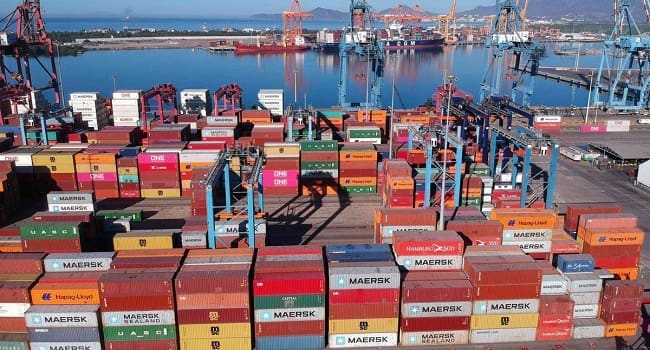
The report also criticized Nigeria’s port operations, citing Apapa Port in Lagos as one of the most expensive globally due to congestion, infrastructure challenges, and security issues. Clearing a container there reportedly takes an average of 30 days.
While acknowledging the creation of a Ministry of Marine and Blue Economy to enhance port efficiency, the USTR concluded that significant barriers to trade and investment in Nigeria persist.

